How to comprehensively prevent and control Newcastle disease in quail? Strengthening management is key
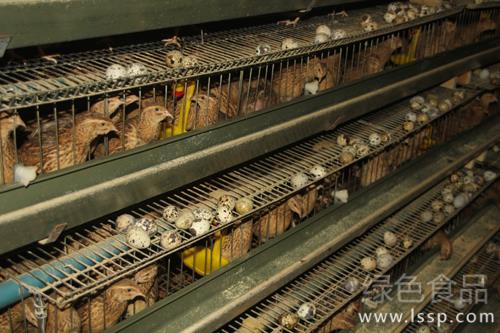
Quail farming
Newcastle disease, commonly known as fowl plague, also called Asian fowl plague or atypical fowl plague. The disease is caused by Newcastle disease virus and is an acute, febrile, septicemic infectious disease. Chickens, turkeys, guinea fowl, quail, and pheasants are susceptible to the disease, with chickens being the most susceptible, but in recent years the incidence in quail has shown an upward trend, and the route of infection is mainly through the respiratory tract and digestive tract.
I. Epidemiological characteristics
Quail Newcastle disease is caused by Newcastle disease virus, which after invading the body causes septicemia, with a relatively high mortality rate. The disease can occur in all four seasons, but occurs more frequently in late autumn, winter and early spring. The virus mainly exists in the saliva, feces, etc. of diseased quail, and infects healthy quail through feed, drinking water and equipment. When diseased quail cough or sneeze, the virus can also spread through the air. Young quail aged 40 to 70 days are more commonly affected, and the incidence is lower in those over 7 months old. The mortality rate is about 50% when the disease occurs before laying, and decreases to 10% when it occurs after laying, but the course of the disease is longer and egg production is significantly reduced.
II. Clinical symptoms
Quail Newcastle disease can be divided into three types: peracute, acute and chronic.
1. Peracute type. Onset is rapid and sudden, with almost no abnormal clinical symptoms in the quail, and death occurs quickly, but the mortality rate is not very high.
2. Acute type. At the beginning of the disease, the quail's body temperature rises, it is listless, and appetite is reduced or completely lost, but it is fond of drinking. As the disease progresses, the clinical symptoms increase and become obvious; the crop contains fluid contents or gas, and when held upside down a large amount of mucus flows from the oral cavity, the mucus is sour-smelling and dark gray. The diseased quail's feathers are ruffled, the wings and tail droop, it is unwilling to move, the eyes are half-closed or fully closed, it stands apart from the flock in a daze, with the neck drawn in, and the comb and wattles are purple; breathing is difficult, often with wheezing sounds; diarrhea is severe, with yellow-white or yellow-green droppings, and sometimes the droppings contain blood; in those with a long course of disease, nervous symptoms appear such as head trembling, extension of the head forward, unsteady standing or hemiplegia, and leg paralysis; in laying quail, egg production decreases and the number of soft-shelled and white-shelled eggs increases. Death generally occurs in 2 to 3 days, with a high mortality rate.
3. Chronic type. It mostly occurs in adult quail in the later stage of an outbreak, is sporadic, and has a low mortality rate, with nervous symptoms predominating, showing excitement, paralysis and convulsions, incoordination, unsteady gait, head and neck twisted to one side, occasional twitching, and little movement; the wings droop, the bird becomes emaciated, sometimes has diarrhea, and finally dies.
In recent years, the epidemic symptoms of quail Newcastle disease have shown atypical symptoms, with listlessness, a relatively large decline in both feed intake and egg production rate, and sporadic deaths. The color of the droppings is light green and somewhat loose, with mild respiratory symptoms, especially more obvious at night. Some nervous symptoms can appear in chronic cases.
III. Necropsy changes
The lesions are transparent secretions in the larynx and trachea, congestion of the tracheal rings, and congestion of the lungs; hemorrhage of the proventricular papillae, with purulent secretions when squeezed, and ulceration in severe cases; hemorrhage of the mucosa under the keratinous membrane of the gizzard; punctate hemorrhage of the duodenal mucosa, striated hemorrhage in the rectum, and pinhead-sized hemorrhagic spots on the coronary fat of the heart; congestion and enlargement of the kidneys.
The longer the course of the disease, the more pathological changes there are. The acute type basically has the above changes. The peracute type has relatively mild changes in the carcass, with only hemorrhagic spots on the spoon-shaped surface of the sternum and the epicardium, or no changes at all.
IV. Prevention and control measures
Prevention: ① Strengthen feeding management, and strictly prohibit raising other poultry together in the quail house. The feed should appropriately increase nutrients such as multiple vitamins, fish meal and trace elements, and multiple vitamins can also be added to the drinking water to improve the resistance of the quail. Reduce stress responses. Keep the quail house and exercise yard clean and hygienic, and insist on regular disinfection. Eliminate quail that are already diseased or weak, and carry out harmless disposal properly. ② Vaccination. Formulate a good immunization program according to the actual situation. At 5 to 7 days of age, chicken Newcastle disease strain II attenuated vaccine or Newcastle disease clone 30 can be used for intranasal and intraocular inoculation. Drinking water immunization is carried out separately at 28 to 35 days of age and 60 to 70 days of age. Before drinking water immunization, stop the water supply to make the quail thirsty, then put out water with the vaccine the next morning so that all quail can drink, and finish drinking within 2 hours.
Treatment: At present there is no specific drug treatment for this disease, and severely diseased quail should be eliminated and given harmless disposal. ① Isolate the diseased quail. Use Baidusha to thoroughly disinfect the environment inside the house, feed troughs and equipment, etc. ② Treat the diseased quail by intramuscular injection of Newcastle disease yolk antibody, and carry out emergency vaccination for the other quail; in farms with the conditions, combining with leukocyte interleukin can give better results. ③ Strengthen feeding management. Give the whole flock of quail oral rehydration salts to drink freely for 7 consecutive days. Increase the dosage of multiple vitamins and trace elements. Use antibiotics for the whole flock to prevent secondary infection and reduce the mortality rate. Maintain good ventilation and lighting.