Too Much Pond Sludge Is Highly Harmful: Four Solutions to Teach You
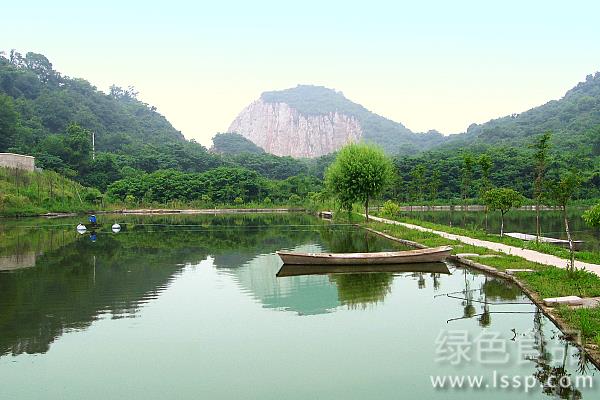
Fish pond
After a period of time, fish ponds gradually form a certain thickness of sludge at the bottom of the pond due to the regular deposition of leftover bait, fertilizer, dead organisms, fish feces and other organic matter, mixed with mud and sand. When the sludge thickness exceeds 20 cm, it will have a very adverse effect on the pond fish.
I. The Harm of Excessive Sludge in Fish Ponds
① Low yield of farmed fish. Because the sludge thickens and increases, and the pond bottom rises, the water capacity of the pond becomes smaller, and the pond water temperature changes increase, so the yield of bait organisms becomes unstable and then decreases, all of which are unfavorable for dense stocking and high yield.
② It easily causes fish to gasp for air at the surface and pond-wide fish kills. There is a large amount of organic matter in the sludge, and this organic matter continuously consumes the dissolved oxygen in the water during decomposition. The more sludge there is, the more this leads to insufficient dissolved oxygen in the lower layer of the pond and the entire water body. In particular, once there is strong wind and heavy fog, overcast rain, thunderstorms and other adverse weather with low air pressure, it will cause the fish in the fish pond to suffer from severe oxygen deficiency and pond-wide death.
③ It easily forms “old water”, making the fish of poor quality and reducing their resistance. Organic nitrogen is present in large amounts in the organic matter of sludge. When the ammonia content in the sludge is too high, it will also continuously diffuse into the water, providing a material basis for nitrification and deamination. When dissolved oxygen is insufficient, it will affect the smooth progress of nitrification, slow down the speed of nitrification, and further intensify ammonia accumulation, leading to aging of the water body, causing growth performance to decline, frequent diseases, decreased yield and quality, deformed and bent fish for rearing livestock, off-flavored fish meat, and even mass death of fish.
④ It easily causes explosive fish diseases. There are many parasites, bacteria and other disease agents in the sludge. When the fish pond environment deteriorates and acidity increases, various pathogens breed. At the same time, in an adverse environment, the stress resistance of the fish body weakens, making fish diseases more likely to occur.
II. Solutions
① Remove excess pond sludge. In each production cycle, generally after 3-4 years, use the dry winter and spring seasons with no rain to persist in removing it. In order to maintain the fertility of the fish pond and the relative stability of water quality, a pond sludge depth of 20 cm can be retained.
② Let the pond bottom be thoroughly sun-dried and frozen. In winter, for fish ponds that have been desilted, you can use the idle time to drain the pond completely, allowing the pond bottom to be exposed to wind, sun and freezing. After sunlight exposure and weathering, a small amount of sludge at the pond bottom becomes relatively dry and loose, and at the same time it can kill pathogens and parasite eggs, improve the pond ecological environment, increase pond fertility, and lay a good foundation for achieving a high-yield harvest in the following spring stocking.
③ Apply quicklime. Applying 100 kg of quicklime per mu in the pond can not only kill fish parasite eggs, pathogens and so on hidden and breeding in the sludge, but also raise the pH value and clarify the pond water. In addition, quicklime becomes calcium hydroxide after encountering water, and then absorbs carbon dioxide to form calcium carbonate. Calcium carbonate can make the sludge loose, improve the ventilation conditions at the pond bottom, and accelerate the decomposition of organic matter by bacteria.
④ Rotate fish farming with crop planting. This can make the sludge dry out more fully, and rely on the well-developed root system of terrestrial crops to make the soil loose, which is conducive to the mineralization and decomposition of organic matter and better improves the pond bottom. In addition, the green crops grown can also serve as high-quality green manure for the fish pond.