Key Technical Points for Safe Overwintering of Fish Fry to Help You Avoid Economic Losses
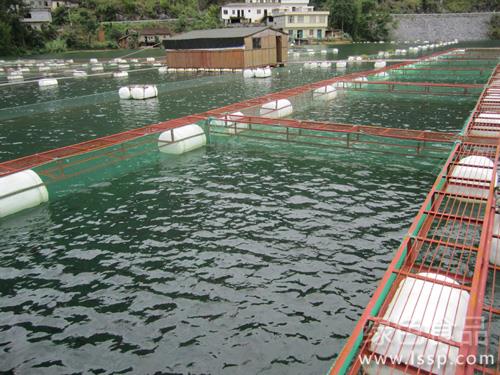
Fish Farm
Safe overwintering of fish fry is an important task in fish farming production in northern regions. During the overwintering period, severe weight loss and mass mortality of fish often occur, seriously restricting the development of pond aquaculture in northern regions. Therefore, mastering the techniques for safe overwintering of fish fry is crucial.
1. Strengthen pre-winter cultivation of fish fry: Although the metabolic level of fish fry is low during overwintering, they still consume a portion of energy, which comes mainly from fat and protein stored in the fish body. Weak and thin fish fry have very little body fat and cannot resist frost damage and fish disease attacks, leading to death. Before overwintering, feeding should continue until the time of pond transfer for overwintering, mainly feeding concentrated feed rich in fat and protein.
2. Choose a good overwintering pond: The average water depth of the overwintering pond should be 1.5 m to 3 m, with a flat pond bottom, silt not exceeding 20 cm, no aquatic plants or only a small amount of aquatic plants, no seepage or leakage, and no industrial wastewater inflow. The area depends on the number of fish fry, with 3-5 mu being suitable.
3. Stock at the right time: Density should be appropriate. The timing for holding overwintering fish fry should be appropriate. If too early, the water temperature is too high, the fish fry swim actively and have not yet stopped feeding, and the overwintering pond has a relatively high density of fish fry, so they cannot get enough food, reducing the survival rate. If too late, the water temperature is low, seine netting operations are inconvenient, and the fish body is prone to frostbite. The water temperature for overwintering pond transfer can be around 10°C, and should not be lower than 8°C. The density of held fish fry should be appropriate. If the density is too high, gasping at the surface will occur even at low temperatures, causing death. Generally speaking, the holding density should be determined according to conditions such as fish body size, fish species, and water surface area. Larger fish should be sparser, and smaller fish should be denser. Common carp and crucian carp should be denser, while blunt snout bream and silver carp should be sparser.
⟧
For grass carp, black carp, and bighead carp, control the density at a general level. For fish fry about 15 cm long, do not exceed 8,000 per mu of water surface; for fish fry about 11 cm long, do not exceed 25,000 per mu of water surface; for fish fry about 8 cm long, do not exceed 40,000 per mu of water surface.
4. Hold fish separately according to size classification: Do not mix fish fry of different body condition and different sizes together; otherwise, fish fry with poor body condition and small individuals will be driven to poor environments and die. When transferring ponds, fish fry should be separated by category and size for holding, and fish fry with weak body condition should be held in dedicated ponds.
5. Strengthen overwintering management: Pay attention to feeding and maintain water quality. Patrol the pond frequently, observe the activity of fish fry, and watch for dead fish and gasping at the surface. If conditions permit, use straw rope or white line and pull it back and forth several times across the pond surface to prevent birds from pecking and eating the fish fry. Pay attention to adding water and fertilizing. On sunny days at noon when the water temperature is above 10°C, feed a small amount of feed or apply an appropriate amount of manure to keep the water quality fertile and lively.