Fattening Technical Measures for Sheep Lambs of Different Weaning Weights
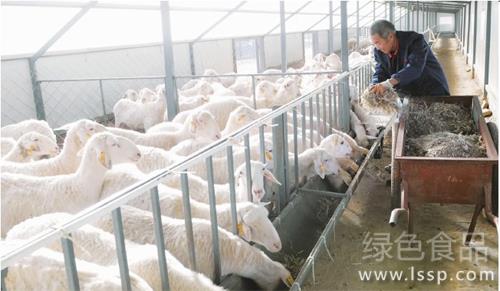
Lambs
Lambs are characterized by fast weight gain, high feed conversion efficiency, low product cost, a short production cycle and high economic returns. For this reason, lamb fattening production has developed rapidly in recent years. Lamb fattening is a highly technical undertaking, and in practice the implementation of each technical measure has strict requirements. Because lambs differ in weaning weight, the fattening technical measures adopted differ accordingly. The fattening technical measures for sheep lambs of different weaning weights are as follows.
I. Preparation Before Fattening
Lambs are kept in separate pens for supplementary feeding starting 15 days before weaning at 1.5 months of age; alternatively, the ewes and lambs are separated for a certain period in the morning and evening, allowing the lambs to move about in a pen equipped with a concentrate trough and a waterer, while for the rest of the time the ewes and lambs remain together. The feed used for supplementary feeding should be the same as the fattening feed used after weaning. At the very beginning of supplementary feeding, the grain may be slightly crushed; once the lambs have become accustomed to it, it is best to feed the grain whole rather than ground into meal. The ground within the lambs' activity area should be dry, rainproof and well ventilated, and a little bedding straw may be spread down. Common infectious diseases in fattening lambs include enterotoxemia and hemorrhagic septicemia. The enterotoxemia vaccine can be injected into the ewes before lambing, or into the lambs before weaning.
II. Formulating the Fattening Ration
Any kind of cereal feed can be used to fatten lambs, but high-energy feeds such as corn give the best results. Practice has shown that whole grain gives better fattening results than crushed grain feed, mainly in terms of a higher feed conversion rate and fewer digestive disorders. A recommended feed formula: whole corn 83%, soybean cake 15%, limestone powder 1.4%, salt 0.5%, compound vitamins and trace elements 0.1%. Among these, the amounts of vitamins and trace elements added, calculated per kilogram of feed, are: vitamin A, D and E at 500 IU, 1000 IU and 20 IU respectively, zinc sulfate 150 mg, manganese sulfate 80 mg, magnesium oxide 200 mg, cobalt sulfate 5 mg, and potassium iodate 1 mg. If soybean cake is unavailable, 10% fish meal can be used instead, while adjusting the corn proportion to 88%.
III. Feeding Techniques
Lambs are allowed to feed and drink freely. It is best to use simple self-made automatic feeders for supplying the feed, to prevent the lambs from stepping into the trough with all four hooves, which would contaminate the feed, reduce feed intake and spread coccidiosis and other pathogens. The height of the trough should be raised as the lambs grow older, so that the feed in the trough neither piles up nor overflows. If some lambs are found gnawing at the pen walls, a salt trough should be added in the exercise area, filled with salt or with salt plus an equal amount of limestone powder, so that the lambs can feed on it freely. It should also be noted that in the early stage of lambs eating whole corn, some corn kernels are spit out of the mouth; as the lambs grow older, this spitting out of corn kernels gradually disappears. The lambs' rumination is likewise less frequent in the early stage and more frequent later on; these are all normal phenomena and do not affect the fattening results. Under normal conditions, lamb droppings are yellow and clumped, with no corn kernels inside the clumps; however, when the weather changes or on cloudy and rainy days, the lambs may develop diarrhea. The feed formula is not changed throughout the whole fattening period.
IV. Timely Marketing
The fattening period for lambs is 50 days. However, the final fattening weight is related to breed; for lambs of large sheep breeds, the final fattening weight at 3 months of age can reach more than 35 kg. According to research, the final fattening weight of fine-wool lambs and lambs of non-meat breeds is related to the weaning weight at 1.5 months of age. Generally, when the weaning weight is 13-15 kg, the body weight after 50 days of fattening can reach more than 30 kg, whereas when the weaning weight is below 12 kg, the final fattening weight is around 25 kg.