Small-tailed Han sheep breeding technology helps escape poverty, achieve prosperity and strive for a better life
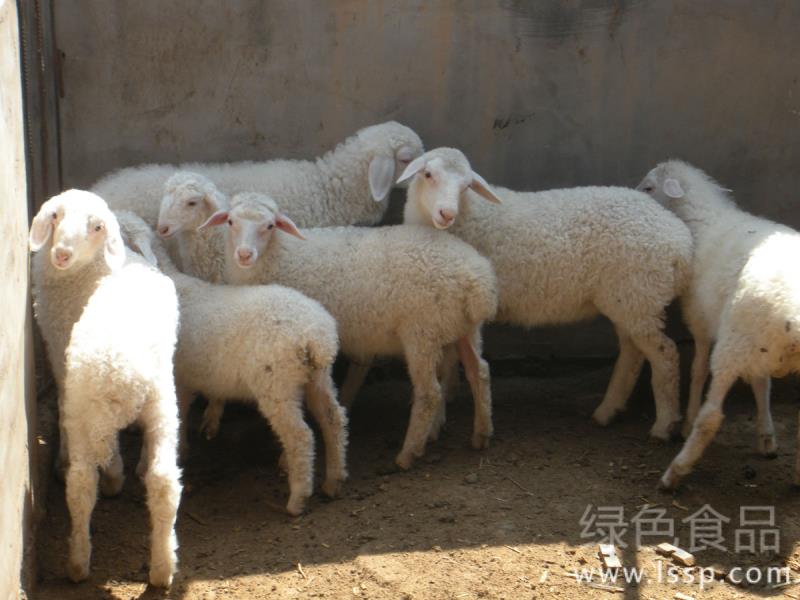
Small-tailed Han sheep
The Small-tailed Han sheep belongs to the animal group under the Bovidae family and the subfamily Caprinae. It is a dual-purpose (meat and pelt) sheep breed in China, characterized by fast growth and development, early maturity, strong reproductive capacity, stable genetic performance and strong adaptability. It has been designated by the state as a famous and superior livestock breed, and is praised by people as China's “national treasure”, the world's “super sheep” and the “long-legged sheep”. It has also been included in the National Catalogue of Livestock and Poultry Genetic Resources for Protection. It is not only one of the best projects for farmers to escape poverty, achieve prosperity and strive for a better life, but also the most reliable project in the government's poverty alleviation work, and an important measure for the state to close hillsides for reforestation, grow grass and raise sheep, and build ecological agriculture.
(1) Pen and housing standards for Small-tailed Han sheep
The site should be chosen in a place with high and dry terrain, low human population density, no environmental pollution and convenient supply of forage and feed. Factors such as whether the water source and water quality are good should also be considered. The average area required per sheep is about 1.6-2 cm2 for adult sheep, 1-1.2 cm2 for growing sheep, and the area for pregnant sheep, lactating sheep and rams should be appropriately larger. The height of the sheep house is generally 2.3-2.5 m. When building a sheep house, consideration must be given both to keeping warm in winter and to ventilation and heat prevention in summer. The door of the sheep house should be appropriately wide to prevent crowding when sheep enter and exit, which could cause abortion in ewes. The width of the door is generally 1.5-2 m. The floor of the sheep house should be more than 20 cm above the ground outside the house, so that the sheep pen stays dry and no water accumulates. Building materials can be sourced locally, with the principle of durability.
A rectangular house-pen is preferable. The roof has a ridge in the center with steep slopes on both sides. The walls are built with brick, stone or rammed earth. The door should preferably be set on the south or north side, and a door more than 1.2 m wide should be installed. The windows on the south wall should have a large area and be numerous, while the north wall only needs 1-2 small windows. Such a pen can be ventilated and let in light in summer, making it relatively cool; in winter it faces the sun and is sheltered from the wind, making it relatively warm, which helps maintain the health of the sheep.
Outside the house-pen, build another open-air pen. The house part provides shade and warmth for the sheep to rest. The open-air pen has ample sunlight, making it convenient for the sheep to move around and receive sunlight. This kind of pen is suitable for sheep kept in confinement year-round.
(2) Basic characteristics of Small-tailed Han sheep
Small-tailed Han sheep can reach sexual maturity at 5-6 months of age. If they are allowed to mate at estrus freely, premature pregnancy will inevitably affect the growth and development of the ewes. Therefore, males and females should be kept in separate groups, and the age for first mating of ewes should be limited to 8 years of age, or preferably when body weight reaches 40 kg.
The gestation period of Small-tailed Han sheep is 150 d. If feeding and management are improper during gestation, abortion and premature birth are easily caused. It is strictly forbidden to feed moldy, spoiled, frozen or other abnormal feed, and it is forbidden to let them drink ice-cold water on an empty stomach. In daily management, frightening, sudden running, jumping over ditches and other violent actions are forbidden, especially when entering or leaving the door or during supplementary feeding, to prevent mutual crushing. Ewes should not undergo epidemic prevention injections in late pregnancy. From 7-10 d before delivery, preparations for lambing and rearing should be made. From 5 d before delivery, attention should be paid to duty observation while assisting with lambing. Ewes about to give birth should be kept separately in a clean and hygienic delivery room spread with clean bedding grass. When the ewe shows signs of parturition, someone should stay nearby and let her give birth naturally. In case of dystocia, a professional veterinarian is needed to handle it on site.
(3) Feeding and management of Small-tailed Han sheep
The feeding and management of ewes greatly affect the development, growth and survival of lambs. The gestation period of Small-tailed Han sheep is 5 months, and the lactation period is 3 months. Within the lactation period, they can come into estrus and mate. After mating and conception, sufficient nutrients should serve as the foundation so that the embryo can fully develop and the ewe can have sufficient milk after giving birth. Small-tailed Han sheep have the reproductive characteristic of “two births a year and multiple lambs per birth”, so the continuity of production is quite tight. Feeding should also target this characteristic and be carried out according to the nutritional needs of sheep at each physiological stage.
The feeding of growing sheep shifts from being mainly milk and concentrate to being mainly roughage. At this time, sheep have extremely strong plasticity. If feeding and management are improper, growth and development will be hindered, affecting the overall production performance of the sheep. Sufficient high-quality green hay or green fodder should be supplied regularly, and a certain amount of concentrate should be supplemented, so that the sheep receive enough nutrition and the speed of growth and development is accelerated.
The quality of feeding for breeding rams plays a decisive role in sheep production. As the saying goes, “A good ewe benefits one litter; a good ram benefits a whole slope.” That is the principle. Small-tailed Han sheep are mostly raised in scattered households, so it is not necessary for every household to keep a ram. Generally, 1 ram per 30-40 ewes is more appropriate. Breeding rams must be raised separately and should maintain a balanced nutritional state throughout the year, neither fat nor thin, and full of energy. Generally, during the peak mating season, each ram should be supplemented daily with 1-1.5 kg of mixed concentrate, fresh and dry grass for free intake, 10 g of bone meal and 15-20 g of salt. If mating frequency is excessive, 2-3 boiled eggs (crushed with shells and evenly mixed into the concentrate) or 1 kg of skimmed milk can be added. The daily ration volume for breeding rams must not be too large; it should be nutrient-dense and small in volume to maintain a robust body condition.
(4) Disease prevention and control measures for Small-tailed Han sheep
1. Establish a quarantine system for introduced sheep. When introducing sheep, a comprehensive inspection must be carried out. First check the overall condition of the sheep. A healthy sheep should be in good spirits, have glossy hair, stand upright, walk steadily, respond sensitively and breathe normally. Introduced sheep should be raised and managed separately for 15-25 d, and only after being confirmed healthy and disease-free can they be put into the large flock for raising. If diseased sheep are found in the flock, they should be isolated and treated promptly. If it is an ordinary disease, they can be transferred into the large flock immediately after recovery; if it is an infectious disease, isolation measures should be taken immediately, the sheep house and exercise yard should be thoroughly disinfected, and when necessary, the entire flock should be given preventive vaccination or medication to cut off the source of infection. After sick sheep recover, they should be observed for about another 10 d after the incubation period, and only after being confirmed not to carry the pathogen can they be transferred into the flock. If it is another highly virulent infectious disease, measures such as culling, burning and deep burial should be taken immediately.
2. Do a good job of hygiene on the breeding farm. Small-tailed Han sheep like dryness and fear dampness. In damp and poorly sanitary environments, they often appear restless, have poor appetite and grow and develop slowly, and in damp environments sheep are prone to parasitic diseases, foot rot or other diseases.
(5) Measures to protect the fetus in Small-tailed Han sheep and other preparatory work
1. Raise in separate groups. Pregnant ewes should not be mixed with other sheep, but should be raised in separate groups. In this way, different feeding and management methods can be adopted according to the different developmental stages of the fetus, thereby ensuring normal fetal development.
2. Ensure nutrition. Good body condition can ensure the supply of nutrition for normal fetal development. In order to keep ewes in good body condition, better forage should be fed during pregnancy, and individually supplemented with some concentrate for ewes in poorer nutritional condition. In the concentrate supplemented to ewes in late pregnancy, bone meal needed by the fetus or minerals, vitamins and trace elements rich in calcium and phosphorus should be added.
3. Moderate exercise. In order to strengthen the physique of ewes, grazing and exercise should be increased. Ewes that do not exercise for a long time have poor physique and are prone to dystocia. Appropriately increasing exercise plays a certain role in strengthening the fetus's physique and improving the survival rate of lambs.
4. Early weaning. Small-tailed Han sheep give birth twice a year or three times in two years, and their frequent cycle is relatively short. On the premise of not affecting the growth and development of lambs, lambs should be weaned early to prompt the ewe to recover her physique as soon as possible and ensure the development of the fetus in her body.
5. Prevent disease. Sick pregnant ewes are very likely to miscarry, so throughout the entire production process of the ewe, prevention of ewe diseases should be strengthened, vaccination and deworming should be carried out on time, pen hygiene should be attended to, cold protection and warmth measures should be well implemented, and forage and feed should be prevented from spoiling or being toxic.
6. Gestation period. The period from the beginning of conception to delivery in ewes is called the gestation period, also called the pregnancy period. The average gestation period of Small-tailed Han sheep is 148 d, with slight differences depending on age or nutritional status, generally 146-152 d.
7. Preparations before lambing. Before the ewe gives birth, preparations for assisted delivery must be made. A special delivery room should be provided. The delivery room should have sufficient light, good ventilation and a dry floor. Before delivery, the delivery room must be thoroughly cleaned and disinfected. In winter, bedding grass should also be spread inside the house. The temperature of the delivery room should generally be above 2°C-3°C. Second, the tools for delivery (basin, towel, scissors) and their disinfection should be prepared, and disinfectants such as iodine tincture, alcohol and lysol should also be prepared.
8. Production process. Before the ewe is about to give birth, due to labor pains she appears restless, lying down and getting up, then lies down and cannot get up, with hind limbs stretched out, groaning continuously, and straining more and more intensely. When the amniotic membrane appears at the vulva, the lamb will soon be born. Under normal circumstances, multiparous ewes give birth relatively quickly, and the lamb can be delivered within a few minutes to about 30 min after the amniotic membrane breaks. In normal delivery, the lamb's front hooves appear first, followed by the head and mouth between the two front hooves. When the lamb's head passes through the vulva, the other parts are delivered in sequence accordingly. After the ewe gives birth to the first lamb, the subsequent lambs are generally delivered a few minutes apart, and sometimes the interval is longer. Therefore, after delivery, it should be checked whether all lambs have been delivered, and the lambing work should not be ended hastily. The placenta is expelled about 1 h after delivery and should be taken away promptly; do not let the ewe swallow it.
9. Care of newborn lambs. After the lamb is born, the lamb's mouth should be held immediately, and the amniotic fluid in the mouth, nose and eyes should be wiped clean to avoid suffocation or foreign body pneumonia caused by breathing in or swallowing amniotic fluid. Under normal circumstances, the lamb's umbilical cord breaks by itself. If it does not break, it can be cut with sterilized scissors at 8-10 cm from the lamb's body surface or pinched off by hand. To prevent infection in the lamb, 5% iodine tincture can be applied to or used to soak the broken end of the umbilical cord. The ewe generally licks the mucus off the lamb's body clean after lambing. If the ewe does not lick it or the weather is relatively cold, the lamb should be quickly wiped dry all over to prevent the lamb from catching a cold. In winter, attention should be paid to keeping the delivery room warm, which is good for both the ewe and the lamb.
After the ewe has licked the mucus off the lamb's body, the milk plug at the ewe's teat should first be squeezed out so that the lamb can suckle colostrum as early as possible. Colostrum refers to the milk produced within five days after delivery. Colostrum has a high dry matter content, is rich in immunoglobulins and has a certain temperature, which can help the lamb raise body temperature, adapt to the environment and strengthen its physique. In addition, colostrum also contains relatively more magnesium salts, which have a laxative effect and can promote the excretion of meconium. Colostrum has many functions, so it is very important to let the lamb suckle colostrum as early as possible.
10. Care of the ewe after delivery. During delivery, the ewe loses a large amount of water, and her metabolic function declines and resistance decreases. If care is improper, it will not only affect her health but also reduce her production performance. Therefore, care of the ewe after delivery should be strengthened. Postpartum ewes should be kept warm, protected from dampness and sheltered from wind, and prevented from catching cold, and the ewe should be allowed to rest quietly. About 1 h after delivery, the ewe should be given water to drink, preferably with salt and wheat bran added, and the water temperature should be slightly higher. Never give the ewe overly cold water to drink.