A detailed explanation of harmless treatment methods for poultry and livestock to reduce ecological and environmental pollution
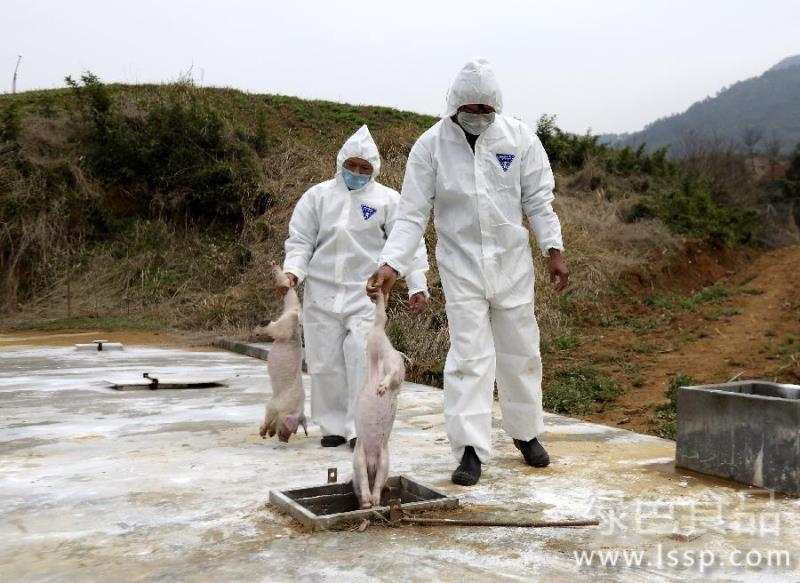
Harmless treatment of poultry and livestock
During the breeding process, any stage may produce poultry and livestock that have died of disease or of unknown causes, but as long as the harmless treatment of dead poultry and livestock is carried out strictly in accordance with relevant laws and regulations to reduce pollution of the ecological environment, the healthy and sustainable development of the breeding industry can be promoted. There are many methods for the harmless treatment of dead poultry and livestock, and the following are generally the most commonly used:
1. Deep burial treatment
First, a suitable deep burial site must be selected. The site must be chosen in a place far from residential areas, poultry and livestock breeding areas, water bodies and water sources, with stable geology, located downwind of residential areas and downstream of domestic water intake points, avoiding rainwater collection areas, and convenient for the transport and disinfection of dead poultry and livestock.
Second, a deep pit must be dug. For dead poultry and livestock treated in large batches, after the soil is backfilled, the dead poultry and livestock must be at least three meters below ground level; for individually treated dead poultry and livestock, after the soil is backfilled, the dead poultry and livestock must also be at least one meter below ground level, and it must be ensured that the dead poultry and livestock are not dug up by wild dogs or other animals.
Third, disinfection and sterilization must be done well. A large amount of disinfectants such as quicklime and caustic soda must be spread in the deep pit, then a layer of dead poultry and livestock is placed and a layer of quicklime is scattered over it, and finally the soil is backfilled. After backfilling the soil, disinfectant is then sprayed around the burial site.
2. Incineration treatment
Incineration treatment is generally adopted by livestock breeding operations (such as pigs, cattle, sheep, etc.). If there is a waste treatment plant using an incinerator near the breeding farm, the dead poultry and livestock can be transported in a centralized manner to the waste treatment plant and incinerated in a professional incinerator. This method is relatively suitable for large-scale breeding farms and other enterprises to harmlessly treat dead poultry and livestock.
For breeding farms or small-scale breeders with no waste incineration plant nearby, a small incinerator can be built on their own, and ecological fuels such as biogas and firewood can be used in combination to incinerate the dead poultry and livestock, but a furnace cover and an exhaust gas duct must be installed as supporting equipment, and a simple spray device must be installed at the exhaust gas outlet for purifying the exhaust gas. In addition, the incinerator must be built on open ground far from water sources and residential areas, and must be located downwind of residential areas.
3. Natural decomposition treatment
The natural decomposition method is to build a large-capacity cement tank well with a sealed cover. The bottom of the tank must be paved and hardened with cement. The dead poultry and livestock are put into the tank well, and then the well opening is tightly sealed with the cover, allowing the carcasses of the dead poultry and livestock to decompose naturally. If the dead poultry and livestock died from an epidemic disease, it is best to mix them with quicklime before putting them into the tank well.
The construction of the decomposition tank must also be far from water sources and residential areas. Although the initial investment cost is relatively high, using natural decomposition is the most environmentally friendly and energy-saving method for the harmless treatment of dead poultry and livestock, and its treatment capacity is also relatively good, making it suitable for the large-scale centralized treatment of dead poultry and livestock.