Detailed Explanation of Key Technical Points for Rice-Fish Symbiosis Ecological Farming
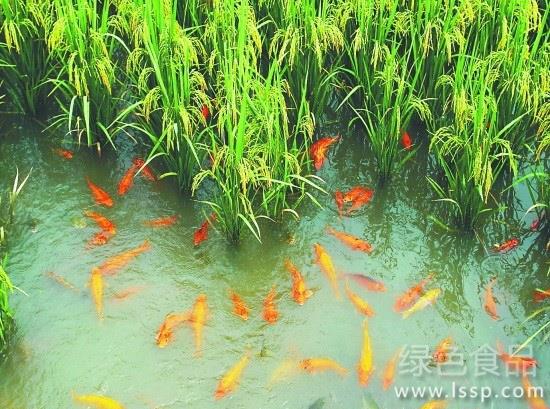
Rice-Fish Symbiosis
Rice-fish symbiosis uses the shallow-water environment of paddy fields to raise fish and aquatic products while growing rice. Rice-fish symbiosis has many benefits, mainly including: low investment and high income; weed control and insect elimination, which benefits rice growth; improved paddy field fertility and soil improvement; and less labor required for the farmland.
In recent years, on the basis of summarizing traditional rice-fish co-culture experience, our province has explored and summarized a trench-pit rice-fish symbiosis model that local people call "a thousand jin of rice and a hundred jin of fish," increasing income by more than a thousand yuan per mu, and providing a good path for farmers in our province, especially mountain-area farmers, to escape poverty and become prosperous.
First, the effect of stabilizing grain production and increasing yields is obvious. In trench-pit rice-fish symbiosis, the pits and trenches account for about 10% of the paddy field area. From common sense, this would reduce rice yield, but experimental results show that rice yield did not decrease but instead increased. The control field that grew rice without fish had an average rice yield of 410 kg per mu, while the paddy field using trench-pit rice-fish symbiosis reached an average rice yield of 450.9 kg per mu, an increase of 10%. The reasons are as follows: first, the rice seedlings displaced by the fish trenches and fish pits are densely transplanted around the trenches and pits; on the surface this occupies 10% of the paddy field area, but the number of transplanted seedlings decreases by only about 5%; second, the extensive activity of fish in the trench-pit paddy field can control weeds, eat insects, loosen soil, and provide fertilizer, promoting the growth of rice, especially the rice along the surrounding trenches, and improving grain plumpness.
Second, the effect of increasing farmers' income is significant. According to data provided by the Wenzhou Ocean and Fisheries Bureau: from the statistical results of input and output comparing fish-raising paddy fields with control fields without fish, fish-raising paddy fields produced an average of 450.9 kg of rice and 57.7 kg of fish per mu, with an output value of 2,813.16 yuan per mu; after deducting various expenses of 1,482 yuan per mu, the net profit was 1,331.16 yuan per mu. The control field produced an average of 410 kg of rice per mu, with an output value of 820 yuan per mu and various costs of 676.5 yuan, for a net profit of only 143.5 yuan per mu. Each mu of fish-raising paddy field can increase farmers' income by 1,187.66 yuan, and the income-increasing effect is very obvious.
Third, the environmental improvement effect is outstanding. From the experimental situation, compared with control fields without fish, fish-raising paddy fields reduced chemical fertilizer use by 44.4% and pesticide use by 60%. After the fish were harvested, testing showed that the soil organic matter content of fish-raising paddy fields reached 30.43 g/kg, 12.4% higher than that of the control field (27.06 g/kg). It can be seen that rice-fish symbiosis has a very good promoting effect on enhancing soil fertility and improving the farmland ecological environment; at the same time, the quality of rice and the level of quality and safety have also been improved.