How to manage soft-shelled turtles during the overwintering period to increase the survival rate
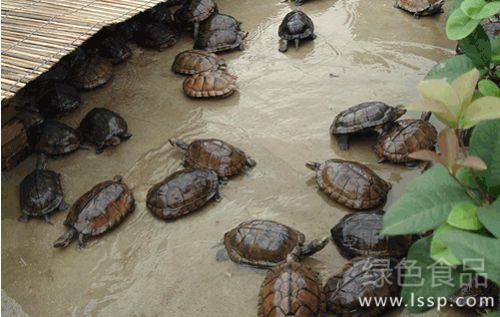
Soft-shelled turtle
The soft-shelled turtle is a poikilothermic animal, highly sensitive to changes in external environmental temperature, and temperature directly affects its activity capacity and feeding intensity. Under natural conditions, the temperature range suitable for soft-shelled turtle feeding and growth is 20—35°C, with the optimal range being 27—33°C. When the water temperature drops to 20°C, the soft-shelled turtle's appetite and activity gradually weaken; at around 15°C it stops feeding; and at around 12°C, the soft-shelled turtle burrows into the mud bottom to hibernate, thereby reducing energy consumption and sustaining itself. Based on this biological characteristic of the soft-shelled turtle, doing a good job of overwintering management is very important for increasing the survival rate, marketable rate and economic returns.
1. Overwintering management of juvenile and young soft-shelled turtles
For soft-shelled turtle hatchlings hatched in June—July of the current year, under the climatic conditions of Shunde City, most can grow to more than 40—50 g each by November before winter begins. These relatively large seedlings can overwinter naturally. Naturally overwintering soft-shelled turtle hatchlings can be stocked according to adult turtle culture requirements, on the basis of doing a good job of pond clearing and disinfection, at a density of 1000—1200 turtles/mu, with the pond water depth maintained at 1—1.3 m, and when the weather is clear and the temperature is relatively high, some feed should be given to supplement the turtles' energy consumption so that the seedlings do not lose weight. Feeding can be carried out underwater (5—10 cm below the water surface), while attention should be paid to regulating water quality, regular disinfection and pest control, minimizing disease and insect invasion, so that the seedlings overwinter safely.
For soft-shelled turtle hatchlings hatched in September—October, because the growth period before overwintering is relatively short, the overwintering individual weight is generally around 20—30 g, and the individuals are relatively small, with no time to accumulate sufficient overwintering nutrition in the body. If they overwinter naturally, due to massive energy consumption, not only will growth stop and body weight decrease, but once the air and water temperatures are too low, death may even occur. To solve this problem, in recent years Shunde City has adopted the practice of covering soft-shelled turtle overwintering ponds with plastic film, which has achieved good results. This method has the advantages of being simple and convenient, relatively low in cost, and relatively good in heat preservation, and generally the water temperature can be maintained above 16°C. If transparent plastic film is used for covering, during clear winter weather the water temperature can still reach around 20°C, at which time the soft-shelled turtles can still move and feed in the pond, which is beneficial for the continued growth of the seedlings, safe overwintering and increasing the survival rate.
For covered heat-preservation overwintering of juvenile and young soft-shelled turtles in ponds, the water depth is generally required to be around 0.8—1 m, and the stocking density is preferably around 15—20 turtles per sq m. In daily management, attention should be paid to doing the following: ① Ventilation and air exchange, always maintaining air circulation in the covered pond space; ② Regulating water quality. According to changes in pH, dissolved oxygen and ammonia nitrogen in the water body, splash water purification disinfectants and oxygen enhancers so that during the overwintering period there is a stable and good ecological environment; ③ Proper feeding. When the weather is clear and there is soft-shelled turtle activity in the pond, proper feeding can be carried out, and feeding is generally better in shallow water (i.e., about 10 cm underwater); the feed should be complete in nutrition and increased in binding degree, to reduce feed loss in the water and water pollution; ④ Disease prevention and treatment. During the overwintering period, because the water temperature is relatively low, juvenile and young soft-shelled turtles generally burrow into the pond bottom to hibernate, and their physique gradually declines. If the water temperature rises, water quality deteriorates, or the stocking density is too high, diseases such as edema, bleeding, sores and boils, and skin rot often occur, so the principle of “prevention first, combining prevention and treatment” must be adhered to, regularly splashing less irritating water disinfectants, while appropriately adding bactericidal and liver-protecting Chinese herbal medicines or their preparations to the feed. Sick turtles should be isolated promptly and treated according to symptoms, and dead turtles should be promptly retrieved and deeply buried for disinfection treatment; ⑤ Strengthen pond patrol and observation. The overwintering cultivation of juvenile and young soft-shelled turtles is the key to the success or failure of culture, therefore, one must frequently patrol the pond and observe carefully, especially when the weather changes, and even more must take corresponding measures to ensure the overwintering safety of the seedlings.
2. Overwintering management of adult turtles
For soft-shelled turtles of 150—200 g each or more, because prices have remained relatively low this year, the amount of adult turtles kept in ponds in Shunde City is relatively large. Ensuring the continued growth and safe overwintering of this batch of adult turtles is the key to generating returns from culture. According to the climatic conditions of Shunde City, winter temperatures are generally relatively high, and soft-shelled turtles are basically in a semi-dormant state, so intermittent feeding can be carried out according to the specific weather conditions, to supplement the nutritional needs of the turtle body and the energy consumed, so that they do not lose weight. Of course, it is also necessary to do a good job of regulating water quality and preventing and treating diseases. Special attention should be paid to avoiding overwintering by combining ponds as much as possible, otherwise losses will be caused by mutual biting, disturbance and injury.