How Large-Scale Healthy Farming Produces Green and Organic Products
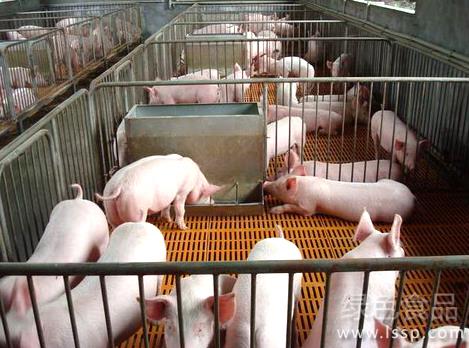
Healthy Pig Farming
In the work of technical instructors entering villages and households under the Agricultural Technology Extension System Reform and Construction Subsidy Project, upon going deep among large-scale farming households, it was found that the heads of large-scale farms were depressed and weighed down by heavy mental burdens. The impact of the market economy on the pig farming industry had left one-third of the pens empty, and the livestock owners were heavily in debt. Some farming households had pigs filling every pen with no spare pens to house them, and the high stocking density combined with poor market conditions preventing them from being sent to market created a burden of feed shortages. In addition, residual problems such as hormones and antibiotics in feed caused consumers to feel panic about consuming livestock products. The impact of malignant infectious diseases such as foot-and-mouth disease and swine high fever disease, as well as incidents involving dioxins and melamine in the production of meat, eggs and milk, led to "meat phobia" in some areas. The quality and safety of livestock products has become an issue that must be addressed as a priority globally now and for some time to come [1]. Farming production on farms is the source of livestock product quality and safety, and only healthy farming can make it possible to produce pollution-free, green and organic animal products. Therefore, promoting healthy farming on large-scale farms is imperative.
1. The Concept of Healthy Farming
Regarding the understanding of "healthy farming," the author believes it should cover the health of both humans and animals, and its meaning should include four levels: First, the health of animals during the rearing process, requiring that the rearing environment, pen facilities, equipment and rearing procedures (feed quality and medication) conform to the biological characteristics of the animals and are conducive to healthy animal growth and reproduction; Second, the health of keepers and workers during the rearing process, requiring the provision of a comfortable living and working environment, and that the management of farming facilities does not harm employees' physical and mental health; Third, the environmental health during the rearing process, requiring that the farm does not pollute the external environment, and that the external environment does not pollute the farm; Fourth, the health of consumers with respect to the end products produced by farming, requiring that the farming process does not contaminate products, that animals sent to market are free of disease and drug residues, and that there is no harm to consumer health.
2. Several Misconceptions in Developing Healthy Farming
2.1 Coveting Government Subsidies and Underestimating the Threshold of the Pig Farming Industry
Many investors believe that raising pigs is a simple matter, requiring not only low investment but also enjoying government subsidies, making profit a sure thing. They overlook the fact that large-scale farming and traditional backyard pig raising are entirely different concepts. Investors rush in hastily without adequate mental preparation, resulting in unreasonable pig farm site selection, inadequate pig house facilities, and a lack of technical support for rearing management. The pigs may be raised, but with shortfalls in funding sources and a broken capital chain, they cannot continue raising them, and costs are never recovered. The most direct cause of farming failure is the lack of the concept of healthy farming in mindset, and even more so the absence of the notion of developing healthy farming.
2.2 Focusing Only on How to Save Money, Not on How to Make Money.
Many pig farm owners think only of saving money, believing that saving money is making money. They cut corners repeatedly on facility investment. Quite a number of investors choose to buy equipment samples and equip their pig farms with imitation equipment, skimping on ventilation, temperature control, sewage treatment systems and everything else wherever possible. The result is that many pig farms begin renovating facilities and equipment as soon as the pigs arrive, which instead increases construction investment, and even after renovation the pig farm cannot guarantee that the pigs have a safe and comfortable environment. During the rearing process on pig farms, many people believe that raising pigs is work for low-quality people, and therefore do not value the building and management of the workforce. Owners do not care about employees' lives, and employees do not value pig welfare and the production environment. In terms of pig diets, in order to reduce costs, they use low-quality, low-priced feed as much as possible, resulting in decreased pig survival rates, slower growth rates and lower feed conversion rates. As a result, the pigs are unhealthy and the people are unhealthy too, ultimately causing losses to the pig farm.
2.3 Emphasizing Prevention Over Rearing, Over-Reliance on Vaccines and Medication for Health Care
Many pig farm owners do not value the daily management of the pig herd. For example: they do not pay attention to the pigs' drinking water, believing that once automatic drinkers are installed everything is fine, and not noticing the effects of drinker height and angle, water flow rate and water quality on the pigs' drinking effectiveness, leaving the pigs in a long-term state of "discomfort," which leads to insufficient drinking water and reduced feed intake, thereby affecting the growth of fattening pigs and affecting the milk production of lactating sows; they do not value the nutritional balance of the pig herd's diet, and feed is seriously moldy and spoiled beyond standards, causing frequent pig diseases; they do not take vaccine instructions seriously, and under the persuasion of salespeople from vaccine and veterinary drug manufacturers, they place all their bets on vaccination and antibiotic health care. Vaccines and antibiotics have some effect in the short term, but as time goes on, the more vaccines are administered the more diseases occur, and the longer health care continues the harder diseases are to control. Once disease breaks out, losses are extremely heavy; they do not value understanding the half-life of drugs, and long-term use of antibiotics will form drug residues in the pig's body, posing a threat to human food safety.
2.4 Pigs Growing Fast Means They Are Healthy, Ignoring the Social Responsibility of the Farming Industry
Many pig farms only seek fast pig growth and profitability, disregarding the impact of the farming industry on society. This is manifested in: First, in pursuit of pig growth, they heavily use growth promoters such as hormones and antibiotics that are explicitly prohibited by the state in pig feed, creating drug residues that harm consumer health; Second, many pig farms consider only the health of the pigs and ignore the impact of the farming industry on the environment. The farming industry has now become the number one polluter in China's agricultural sector, discharging 2.7 billion t of manure and 10 billion t of wastewater each year. Nationwide, very few farming enterprises have fully implemented automatic environmental control. In concentrated farming areas, the stench is overwhelming and mosquitoes and flies breed, water bodies and soil are seriously polluted, harming the living environment of surrounding people and also increasing the difficulty of sanitation and epidemic prevention on the farm itself.
3. Countermeasures for Developing Healthy Farming
Departments at all levels must strictly control the approval procedures: when large-scale pig farms apply for construction, the animal husbandry, land and environmental protection departments must check and approve according to corresponding functional standards. Duplicate construction must be avoided.
3.1 Correctly Analyze the Market Situation and Treat Government Support Policies Calmly
It is a good thing for the government to introduce preferential policies to support the development of the live pig industry. Investors should treat government support policies calmly and recognize that the pig farming industry is a high-input, low-output, thin-margin industry. Profitability depends on the market and good production management, not on government subsidies. If one chooses the pig farming industry, one must adjust one's mindset and start from the basics of capital construction and daily rearing management bit by bit, and must absolutely not be impatient for quick results.
3.2 Strive to Improve Farm Conditions and Create a Comfortable Environment for Pigs
3.2.1 Rationally Lay Out the Farm According to Biosafety Requirements to Create Favorable Conditions for Disinfection and Isolation
Modern pig farms must consider biosafety issues starting from site selection and layout, meeting disinfection and isolation requirements. The site should be far from villages and factories; the living area, production area and production support area should be built separately; within the production area, the layout should follow the sequence of "breeding - farrowing - nursery - growing and fattening," and should be built in zones of breeding - farrowing zone, nursery zone, and growing and fattening zone, with green belts of more than 50 m set between zones; clean roads, dirty roads and pig paths should be separated to avoid cross-contamination; pig house construction must meet all-in-all-out requirements, disinfection rooms and pools must function effectively, empty pens should be reserved, and sick pig isolation pens should be standardized. For pig farms with unreasonable layouts, it is recommended to make adjustments immediately. It is not too late to mend the fold after the sheep are lost.
3.2.2 Put the Construction of Farm Conditions First to Create a Comfortable Living Environment for the Pig Herd
Whether pig farm facility conditions can be up to standard directly relates to the health of the pig herd and production efficiency. Investors must be willing to invest. In the selection of materials for roofs, floors, walls and pig pens, and in the selection of equipment for temperature control, ventilation, feeding and drinking water, they should consider configurations according to the biological habits of pigs, rather than simply considering the level of construction cost. The truly best investment should be to control the scale of the pig farm according to one's own economic strength.
3.3 Make Disinfection and Isolation a Major Priority
Disinfection and isolation on most pig farms are mere formalities, with many loopholes and misconceptions. Isolation and disinfection work should be treated as a major priority on pig farms. First, establish strict disinfection and isolation systems, ensuring disinfection leaves no dead corners and isolation shows no favoritism, and carry them out persistently. Second, correctly handle the relationships between disinfection of the living area and office area and disinfection of the production area, between personnel disinfection and material disinfection, between entrance and exit disinfection, between isolation and disinfection among production zones, and between disinfection with pigs present and disinfection of empty pens, adopting different disinfection methods for different targets. Frequent reception of visitors for tours causes adverse stress reactions in pigs.
3.4 Provide Pigs with High-Quality, Nutritionally Balanced Diets.
High-quality feed with balanced nutrition is not only necessary for pig growth and development but also plays an important role in the immune system. Moldy feed can cause livestock and poultry death, decreased productivity, reproductive dysfunction, decreased immunity and other enormous harms. In daily rearing work, pig farm owners cannot simply consider feed cost while ignoring feed quality, buying and using low-priced, inferior raw materials and nutritionally unbalanced complete feeds. First, a strict quality control system should be established to ensure feed is high-quality, safe and balanced, meeting the nutritional needs of the pig herd; Second, according to different growth and reproduction stages of pigs, different types of complete balanced diets should be formulated, purchased and used, and absolutely not one feed used for multiple stages.
3.5 Supply Pigs with Sufficient, Sanitary Drinking Water
Water is an important component of living organisms and one of the eight major nutrients for pigs. Insufficient drinking water affects pigs' nutritional metabolism and feed intake. When building a farm, water source security must be considered, and when designing and installing the water supply system, water pressure, drinker height and angle must be considered to ensure pigs drink comfortably and sufficiently.
3.6 Do a Good Job in Disease Surveillance and Formulate Reasonable Immunization Programs
Pig farms should conduct timely disease testing, formulate immunization programs suited to the farm in light of local disease prevalence, and continuously explore and improve them. For a pig farm, it is not the case that the more types of vaccines injected the better, and one must absolutely not copy the immunization programs of other pig farms. Vaccines are not omnipotent; they can only produce antibodies and provide protection when used on healthy pigs. Therefore, vaccines must be used under the condition of ensuring the health of the pig herd.
3.7 Establish Production Measurement and Statistics Systems and Timely Cull Low-Productivity Pigs on Hand
Production measurement and statistics are an important basis for good production management on farms. Farms should incorporate production measurement and statistics into important institutional development, establish long-term measurement and statistics systems, constantly analyze and evaluate the pig herd being raised, and timely cull old, weak, sick, disabled and low-productivity pigs. This reduces treatment costs and rearing costs on the farm, optimizes herd structure, timely purifies diseases, and establishes a healthy herd with excellent production performance. One should develop the habit of looking for sick pigs on the farm and isolate them promptly upon finding them.
3.8 Establish Standardized Medication Systems
Through investigation, state-banned drugs and most antibiotics have immunosuppressive effects. Heavy use will cause low immunity and immunization failure in pigs, and will also cause drug residue levels to exceed standards, affecting human health through the food chain. In daily production, the frequency of antibiotic health care for the pig herd should be minimized as much as possible, and green and environmentally friendly drugs such as microecological preparations and Chinese herbal medicines should be used to replace antibiotics. When necessary for treatment, a medication registration system should be established to ensure that commercial pigs sent to market are sold only after exceeding the withdrawal period.
3.9 Do a Good Job in Environmental Pollution Control and Prevent Secondary Pollution from Farming Pollutants
Large-scale pig farms must be equipped with manure and sewage treatment systems and dead pig disposal facilities, properly handle farm pollutants, and maintain long-term cleanliness and sanitation on the farm to prevent secondary pollution.
4. Summary
Striving to improve pig farm environmental conditions and create a comfortable home for pigs while minimizing stress as much as possible is the prerequisite for healthy farming; providing pigs with suitable high-quality diets and sufficient drinking water so that they have a healthy physique is the foundation of healthy farming; timely culling old, weak, sick, disabled and low-productivity pigs and establishing a healthy herd and optimizing herd structure are effective measures for developing healthy farming; strengthening disinfection and isolation, properly handling manure and sewage, not causing internal or external environmental pollution, and cutting off disease transmission routes are the fundamental guarantees of healthy farming.
The above can only be guaranteed if pig farm owners do not develop blindly and do not follow trends, entering when pig farming values are high, only to find that when pigs are ready for market the market economy has turned down again, resulting in unrecoverable costs. This mindset must be eliminated. The awareness of rearing personnel must be healthy, and ultimately by relying on science and technology and moderate scale, the pig farming industry will achieve good economic and social benefits in a thin-profit environment.