Mixing Your Own Pig Feed to Lower Feeding Costs: These Points Need Attention from Farmers
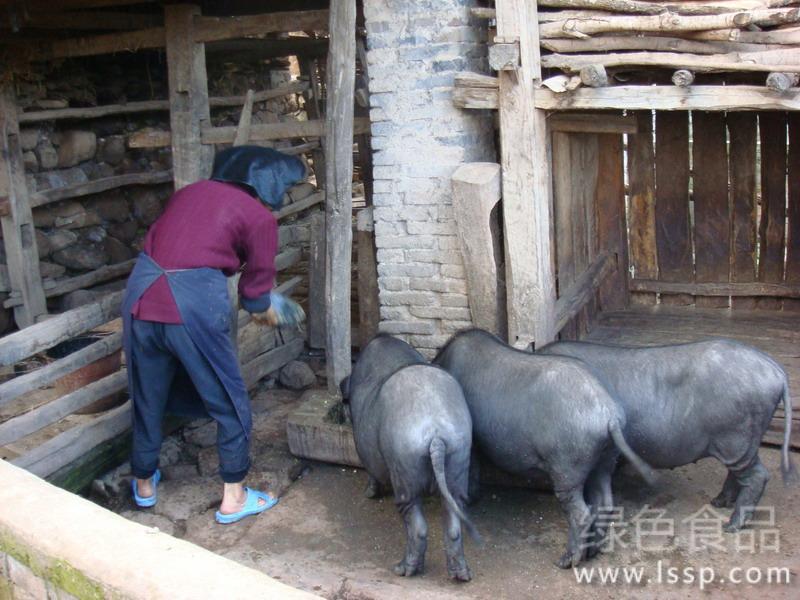
Family Pig Farming
For family or intensive pig farming, using self-mixed pig feed for feeding can greatly reduce feeding costs and improve the economic benefits of pig farming. However, the following key points must be grasped when mixing pig feed yourself.
1. Master the pig feeding standards. Pigs with different production purposes and pigs at different growth stages have different requirements for nutrients, so different feeding standards should be selected to formulate the diet according to the pig's production purpose, age, body weight, etc.
2. Choose raw materials reasonably. When selecting feed raw materials, the following points must be noted: First, pay attention to the types and amounts of raw materials. The variety of raw materials should be diversified to help give play to the nutritional complementary effect among various raw materials. The proportions of commonly used pig feed are grains such as corn, rice, barley, wheat, sorghum, etc., accounting for 50%-70%, brans such as wheat bran, rice bran, etc. accounting for 10%-20%, soybean cake and soybean meal accounting for 15%-20%, toxic cakes and meals such as cottonseed cake and meal and rapeseed cake should accordingly be less than 10%, and breeding pigs should not use cottonseed cake or meal. Animal protein feed such as fish meal, silkworm pupa powder, etc. accounts for 3%-7%, grass powder and leaf powder less than 5%, shell powder or stone powder accounts for 3%-35%, bone meal accounts for 2%-25%, and salt should be less than 05%. Second, pay attention to the characteristics of the feed raw materials. It is necessary to master the relevant characteristics of the raw materials, such as palatability, the content of toxic and harmful components in the feed, as well as feed contamination and whether there is mildew, etc. The amount of raw materials with poor palatability and containing toxins should be limited, and seriously contaminated or moldy raw materials should not be selected. Third, attach importance to the economic principle, and should, in line with the principle of adapting to local conditions and using local materials, make full use of local raw material resources. Fourth, pay attention to the volume of raw materials. In order to ensure that pigs can eat the nutrients needed every day, the volume of the selected raw materials must be compatible with the volume of the pig's digestive tract. If the volume is too large, the pig cannot finish the amount of feed needed for one day, thus causing nutrients to fail to meet the needs and also increasing the burden on the digestive tract; if the volume is too small, although the nutrients are satisfied, the pig does not feel full and appears restless, thereby affecting growth and development.
3. Processing and preparation must be reasonable. In addition to powdery raw materials such as wheat bran, rice bran, fish meal, and bone meal, seed-type raw materials such as corn, beans, and rice should be properly crushed. Raw soybeans cannot be fed directly to pigs and must be fried or cooked before use.
4. Raw materials must be mixed evenly. Various raw materials must be mixed evenly to ensure that pigs eat the various nutrients they need. Especially when premixed feed is added, if the mixed feed is not mixed evenly, it is easy to cause drug or trace element poisoning in pigs.