Key Measures for Improving the Profitability of Dairy Buffalo Farming
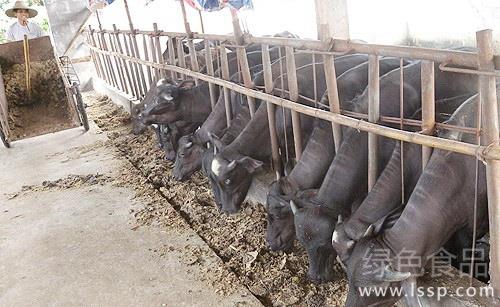
Dairy Buffalo
The dairy buffalo industry with Dehong local characteristics, after more than twenty years of development, has now begun to take shape and has become a sunrise industry for farmers to prosper and get rich, playing a positive role in promoting agricultural efficiency and increasing farmers' income. However, the dairy buffalo industry is an emerging industry, and in production there are still problems such as a small number of animals on hand, low reproductive rate, low milk yield, unstable milk quality, low economic benefits, and low enthusiasm among farmers. How to effectively improve the profitability of dairy buffalo farming is a difficult problem facing us scientific and technical personnel. After years of practice, research and summarization, several key measures for improving the profitability of dairy buffalo farming are now proposed.
1. Scientifically Select Dairy Buffalo Breeds
1.1 For raising dairy buffalo, the first choice should be three-way cross dairy buffalo (the offspring of Murrah crossed with Dehong cows, then crossed with Nili bulls, with milk yield generally around 1,700-2,000 kg per lactation period).
1.2 The second choice is two-way cross buffalo (the offspring of Murrah or Nili bulls crossed with Dehong female buffalo, with milk yield generally around 1,500 kg). When purchasing dairy buffalo, attention should be paid to selecting healthy dairy buffalo with clear pedigrees, excellent performance, no history of disease, and good epidemic prevention.
2. Choose an Appropriate Farming Scale
According to the 2013 survey of dairy buffalo farming in the whole prefecture and Mangshi, the best economic benefits were achieved by scaled farms and households raising about 20-30 dairy buffalo per year, with annual income reaching more than 200,000 yuan; next were farming communities or cooperatives, with an average of about 10-20 dairy buffalo per household; for ordinary farming households, raising 5 dairy buffalo for milking gave the best economic benefits.
3. The Proportion of Milking Dairy Buffalo Should Be Appropriate
Taking the annual raising of 30 dairy buffalo as an example, the number of breedable cows should reach more than 21 (accounting for more than 70%), and the number of dairy buffalo milked annually should reach more than 15 (accounting for more than 70%); the annual reproductive rate should reach more than 70%.
4. Control Fixed Asset Investment as Much as Possible
In the design and construction of cattle sheds and silage pits, everything should proceed from reality, following the principles of being economical and practical, reducing costs, and gradually improving, avoiding flashy investments as much as possible, and investing limited funds in purchasing high-quality dairy buffalo and in feeding management. The one-time fixed asset investment for building a dairy buffalo farm raising about 20 head (cattle shed, silage pit, chaff cutter, land) should not exceed 100,000 yuan.
5. Strengthen Feeding Management to Improve the Reproductive Rate and Milk Yield of Dairy Buffalo
5.1 Scientific feeding, increasing milk production, and ensuring healthy body condition of dairy cows
The amount of concentrate fed is calculated as 1 kg of supplemental concentrate for every 3 kg of fresh milk produced per cow per day, ranging from 1-4 kg, with a maximum not exceeding 5 kg; afterwards, as milk yield decreases, the amount of supplemental concentrate should be gradually reduced; let the cattle drink water freely; let the dairy buffalo eat as much green feed as possible (such as: sugarcane tops, corn stalks, king grass, ryegrass, elephant grass, etc.), as well as silage and hay; feed varieties should be diversified to ensure balanced nutrition.
5.2 Improve the reproductive rate of the herd
Correct estrus identification is the key to successful artificial insemination of buffalo. Estrus identification includes, first, the external observation method (changes in cow behavior, acceptance of mounting, etc.), and second, the rectal palpation method. For the external observation method, no fewer than 3 times per day (morning, noon, and evening), mainly observing changes in cow behavior, libido, amount of mucus, changes in mucus, etc.
5.2 Improve the reproductive rate of the herd
For scaled farming households (raising about 20 milking cows), it is best to learn buffalo artificial insemination techniques themselves, because you are very familiar with the condition of each cow you raise, which helps you promptly detect changes in the signs of estrus in female buffalo and inseminate at the right time, improving the conception rate.
5.3 Adjust the herd in a timely manner and promptly cull unqualified dairy buffalo
Establish and improve comprehensive production records for dairy buffalo, and based on the production records, adjust the herd of dairy buffalo at any time, promptly cull and dispose of cows with low milk yield (average daily milk yield below 5 kg), short lactation time (below 200 days), old, weak, sick or disabled, with reproductive tract diseases, or that do not conceive after multiple matings, ensuring that the overall conception rate of breedable dairy buffalo on the farm is not less than 70%.
5.4 Strengthen exercise, enhance physical condition, and improve the production performance of dairy buffalo
Through years of investigation and research, it has been found that wherever farmers are good at learning, good at summarizing, have a strong sense of responsibility, manage meticulously, love cattle, and take dairy buffalo farming as their profession, where the farmer is both the feeder and the artificial insemination technician, and at the same time, the cattle farm is spacious, the exercise yard is large, the cows get sufficient exercise, or outdoor grazing of more than 3 hours per day can be carried out, the conception rate has been relatively high for many years, above 70%, with some good farms reaching as high as 80-90%, with high milk yield, long milking years, and very good farming benefits.
5.5 Strengthen early rearing of dairy buffalo calves and replacement heifers
By promoting early rearing techniques for dairy buffalo calves and replacement heifers, it is possible to achieve earlier mating and earlier calving of dairy cows, shorten the rearing time of replacement heifers, reduce farming costs, and extend the production years of dairy buffalo. Compared with traditional rearing methods, dairy buffalo that have undergone early rearing have advantages such as good body condition, ease of mating, and high milk yield; at the same time, the age at first mating of dairy buffalo that have undergone rearing can be advanced from the traditional 36 months to around 24 months; the calving time can also be advanced from the traditional 48 months to around 34 months.
5.6 Strengthen disease prevention and control
Pay attention to the hygiene of the cattle body and environmental sanitation. The cattle body should be brushed and rinsed once a day, and the cattle shed should be cleaned once a day. In the dry season, disinfect the environment once every 10 days; in the rainy season, disinfect the environment once every 5 days. Vaccines should be injected and deworming should be carried out promptly every year as required. For cattle that have already developed diseases, they should be isolated promptly and a veterinarian should be called for diagnosis and treatment.
5.7 Keep various records carefully
Correct and timely records are an effective means of raising dairy buffalo well and developing production. Their benefits are mainly reflected in the overall and long-term interests of cattle farming, and they provide systematic and scientific statistics, analysis, evaluation and summarization of the feeding and management, input and output of dairy buffalo.