Large-size river crab farming techniques: delicious meat and high profits
River crab
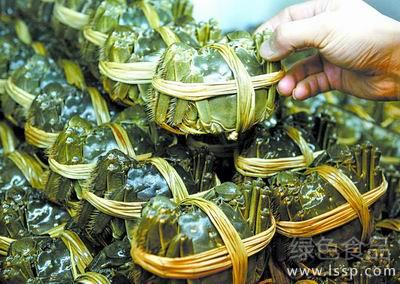
River crab is deeply favored by consumers at home and abroad for its rich nutrition and delicious meat. At present, river crab has become a major aquaculture species in various regions, and the river crab farming industry has shifted from "farming large quantities of crabs" in pursuit of output to farming large crabs and "ecological crabs" centered on quality and profit. With the development of the river crab farming industry, small-sized and poor-quality river crabs are increasingly unwelcome to consumers. Large-size river crabs not only sell well, but also have an absolute advantage in price. The market price of large-size river crabs is 3—4 times higher than that of small-size river crabs. Those with a size above 150g sell for 120—160 yuan/kg, while those around 75g sell for only 30—40 yuan/kg. But how to cultivate and produce pollution-free large-size river crabs is the issue of greatest concern to farmers and producers. So-called large-size river crabs refer to adult crabs with an individual weight above 150g that are "blue-backed, white-bellied, yellow-haired, and golden-clawed." Through many years of production practice, the ecological farming techniques for cultivating large-size river crabs are mainly:
I. Select good breeds and strictly control the quality of stocked crab seed
Large-size river crabs must be based on high-quality crab seed. Select self-bred or locally bred juvenile Chinese mitten crabs (Eriocheir sinensis) from the Changjiang river system that are robust, disease-free and injury-free, uniform in size, with intact appendages, glossy, and strong in activity as crab seed. Avoid using juvenile crabs of unknown origin. This is the most important factor in farming large crabs and increasing the survival rate. Usually, high-quality crab seed can be selected from 3 aspects: identify crab seed from the Changjiang river system by several physiological features such as appearance, body shape, walking legs, and frontal teeth; remove sexually precocious "small dull crabs" with no feeding value. So-called "small dull crabs" refer to one-year-old juvenile crabs of the current year that reach sexual maturity at a body weight of 10-35g, stop growing, and die one after another; select healthy and high-quality crab seed based on the degree of missing walking legs, the activity of the seedlings, and whether there are parasites on the body surface.
II. Plant aquatic plants and create a good ecological environment
As the saying goes, "the size of crabs depends on aquatic plants." Planting aquatic plants in the water area for farming adult crabs serves the following purposes: first, as natural high-quality plant feed for crabs; second, to provide concealed places for river crabs to inhabit and molt, making it less easy for them to be discovered by enemies and reducing mutual killing; third, the photosynthesis of aquatic plants can increase the dissolved oxygen content in the water, absorb organic matter in the water body, prevent water eutrophication, purify water quality, keep water quality fresh, and improve the water body farming environment; fourth, in high-temperature seasons, aquatic plants can provide shade and cooling, which is beneficial to river crab growth. The varieties of aquatic plants planted should not be single but diversified. It is best to combine submerged plants, emergent plants, and floating plants with reasonable distribution to suit the many needs of river crabs. For submerged plants, one may choose Vallisneria, Hydrilla verticillata, Elodea, etc.; for emergent plants, such as reed, wild rice stem, etc.; for floating plants, such as duckweed, etc. The area planted with aquatic plants in crab-farming waters should account for 50%-60% of the water surface area. Summer July—August is the peak period for river crabs to eat aquatic plants, and close attention should be paid to ensure both the crabs' feeding use and a relatively high reserve. If insufficient, measures should be taken to supplement aquatic plants, but aquatic plants must not be excessively collected, as decaying aquatic plants easily cause water quality deterioration and induce river crab diseases. Too many aquatic plants, especially too many of a single variety such as Elodea, can easily cause the bottom water body to stop flowing and thus deteriorate. Water body channels should be dredged in time to facilitate inflow and drainage and improve crab pond water quality; otherwise, diseases such as black gills and edema easily occur.
III. Control stocking density and pay attention to reasonable polyculture
Crab seed stocking density is related to crab seed size, rearing conditions, required market size, management level, etc. A two-year farming model can be adopted: purchase crab seedlings at the end of May and early June, and carry out extensive grow-out in the pond; by the end of the year, button crabs can be cultivated; in the second spring, these button crabs are then stocked into the pond site. Usually, the crab seed stocking size is 100—200 individuals/kg. Stock 300—500 individuals per mu of water surface. Appropriate release can improve the output size and quality of river crabs. In adult crab ponds mainly for river crabs, herbivorous fish (grass carp, blunt snout bream, etc.), omnivorous fish (common carp, crucian carp, tilapia, etc.), and carnivorous fish (snakehead, catfish, bass, etc.) cannot be polycultured; only some filter-feeding fish (silver carp, bighead carp, etc.) can be polycultured. The purpose is to remove plankton in the water and prevent water quality deterioration. However, because crab ponds have many aquatic plants and the pond water is relatively clear and lean, the polyculture quantity should not be large. Generally, 40—50 individuals of 50—100g/individual silver carp and bighead carp fingerlings are polycultured per mu of water surface (silver carp to bighead carp ratio of 5:1). In addition, soft-shelled turtles also cannot be polycultured in crab ponds. If conditions permit, a model of polyculturing an appropriate amount of freshwater shrimp in crab ponds can be adopted, using ecological farming management measures to obtain high yield, high quality, and high profit.
IV. Release snails to meet the river crab's need for biologically active substances
Snails are the fresh live animal bait most preferred by river crabs. Snails are benthic, move slowly, and have strong water-purifying ability. In adult crab farming ponds, release 150-250kg of live snails per mu of water surface and let them reproduce naturally. In this way, a continuous supply of palatable, active protein bait can be provided throughout the entire growth process of river crabs. Among various snail species, one may choose the excellent variety with the largest farmed individual among freshwater snails——the apple snail. The apple snail is also called the golden apple snail. Its shell is thin, its individual size is large, and its meat content is high (edible components account for 38% of body weight). It has omnivorous feeding habits, grows quickly, has a long reproductive period, and a high multiplication rate. Transplanting apple snails into crab ponds can not only maintain clear pond water quality but also provide river crabs with natural bait rich in various biologically active substances, promote rapid growth of river crabs, and improve the market size of adult crabs.
V. Regulate water quality to promote healthy growth of river crabs
River crabs have relatively high requirements for water quality. The dissolved oxygen content in the water should be maintained at 5mg/L, pH 7—8.5, and transparency around 30—40cm. The water level throughout the four seasons should be shallow in spring and deep in summer, autumn, and winter, maintaining a good, living, tender, and refreshing water environment in the crab pond to promote healthy growth of river crabs. During the farming process, regular water addition must be maintained. In the early stage, change the water once every 10—15 days, each time changing 1/3 of the water. In high-temperature seasons, to ensure fresh water quality, add some new water every day, and change the water 2 times every 1 week. In addition, every 15—20d, splash the whole pond with 8—10g/m3 of quicklime dissolved in water. If conditions permit, it is best to regularly use microbial preparations such as photosynthetic bacteria or EM bacteria dissolved in water and splash the whole pond to improve water quality.
VI. Do a good job in crab disease prevention and control
In recent years, with the continuous expansion of river crab farming scale, crab diseases have also continued to spread and escalate. Crab diseases that never existed before now also occur in large numbers, mainly ciliate disease of juvenile crabs and trembling disease of adult crabs, bringing huge economic losses to the crab farming industry. Therefore, crab disease prevention and control should adhere to prevention first, achieve early discovery and early treatment, prevent disease before it occurs, and treat disease early when it occurs, adopting different methods for prevention at different growth stages. Use microbial preparations such as photosynthetic bacteria and EM bacteria to regulate water quality. In high-temperature seasons, regularly use quicklime, dibromohydantoin, etc. for prevention. During the high-incidence period of ciliates, use crustacean cleanser or ciliate cleanser and other insecticides once every 15—20 days. To avoid drug resistance, drugs should be used alternately. Trembling disease is a microorganism between bacteria and viruses. Using decamethrin to clear the pond is an effective method for preventing and controlling trembling disease.