Management techniques for strengthening broodstock rearing in winter aquaculture
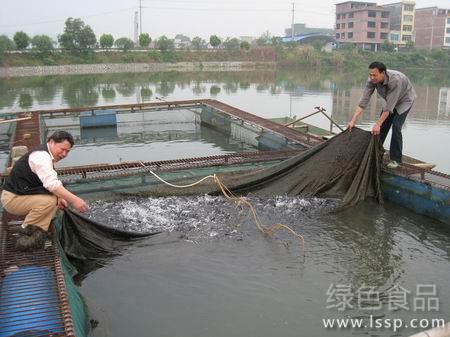
Broodstock
Autumn and winter are in the early stage of gonadal development in broodstock. The quality of broodstock rearing at this stage directly affects how many eggs the broodstock will carry the following year, and also determines the success or failure of artificial breeding of broodstock in the following spring. Therefore, strengthening broodstock rearing in autumn and winter is very important. The key techniques are:
1. Fertilize according to water condition
Silver carp and bighead carp feed on plankton. Fertilization promotes massive reproduction of plankton to meet the needs of gonadal development in broodstock. When food is sufficient, gonadal development is good, so fertilizing according to water condition is the key to raising silver carp and bighead carp broodstock well. Especially before the beginning of winter, fertilization should be strengthened (generally about 500 KG per 667M2 per week) to make the water color darker. If the water quality is not fertile before winter, once winter begins, cold frost and cold currents will make the water color suddenly become lighter, and thus the goal of fertilizing the water to raise silver carp and bighead carp cannot be achieved. At the same time, after the beginning of winter, a small amount of fertilizer should also be applied as a supplement. When fertilizing, the principle of “small amounts and many times, continuously supplementing” should be followed. Fertilizer must be applied as decomposed fertilizer, not raw fertilizer, and it is best to compost it in water. It is worth noting that during autumn thunderstorms and when the weather is muggy and under low air pressure, the amount of fertilizer applied must be strictly controlled, and it is best not to fertilize at all, so as to avoid causing broodstock to gasp for air at the surface. In short, in autumn and winter, broodstock should accumulate sufficient nutrients as much as possible to ensure normal development of the ovaries when spring begins. For silver carp and bighead carp broodstock rearing, the main task is to carry out normal fertilization in autumn and winter, and to apply sufficient organic fertilizer in winter. In broodstock ponds mainly for silver carp, human feces should account for about 70%, and livestock manure about 30%; for loach ponds, cattle manure should be the main fertilizer, accounting for about 70%, and human feces 30%.
2. Rational feeding
Because grass carp and black carp have different feeding habits from silver carp and bighead carp, their rearing methods also differ. Rational feeding is the key to rearing grass carp broodstock well. In autumn and winter, because water temperature decreases, the feeding intensity of grass carp gradually declines, and the supply of green feed is also relatively insufficient. During this period, the main focus should be on feeding concentrated feed such as soybean cake, wheat bran and corn to strengthen rearing. To promote feeding and good digestion in broodstock, concentrated feed and green feed should be fed at separate times. Generally, green feed is fed in the morning, accounting for 30%-50% of the broodstock body weight, and concentrated feed is fed in the afternoon, accounting for 2%-3% of the broodstock body weight. After entering winter, the amount of concentrated feed should be reduced. Generally, when the water temperature is relatively high, feed every other day; when the water temperature is relatively low, feed once every 3 days. Black carp are mainly fed snails, mussels and meat, supplemented with a small amount of concentrated feed such as soybean cake, but the amount eaten should be used as the measure.
3. Add water at the proper time
Adding fresh water and keeping the pond water fresh is one of the technical measures to promote gonadal development in broodstock. At the same time, deepening the water level in autumn and winter helps maintain water temperature. Generally, adding fresh water should be flexibly controlled according to the season, air temperature, fertility of the water quality and the feeding condition of the broodstock. In autumn and winter, generally flush water once every 15-20 days, for 3-5 hours each time, so that the water level rises by about 20cm. However, it should be noted that silver carp and bighead carp broodstock ponds should be flushed somewhat less.
4. Prevent disease in time
Fish disease prevention and control should follow the policy of “prevent before disease occurs, treat early when disease occurs”. Generally, disinfect the feeding area once about every 15 days. If bleaching powder is used for disinfection, the amount used is 0.5-0.75KG. At the same time, residual bait and debris in the feeding area should be removed regularly. Strengthen pond patrols and promptly diagnose and treat any fish disease found.