Winter holding of freshwater fish is highly profitable, helping to increase production and income
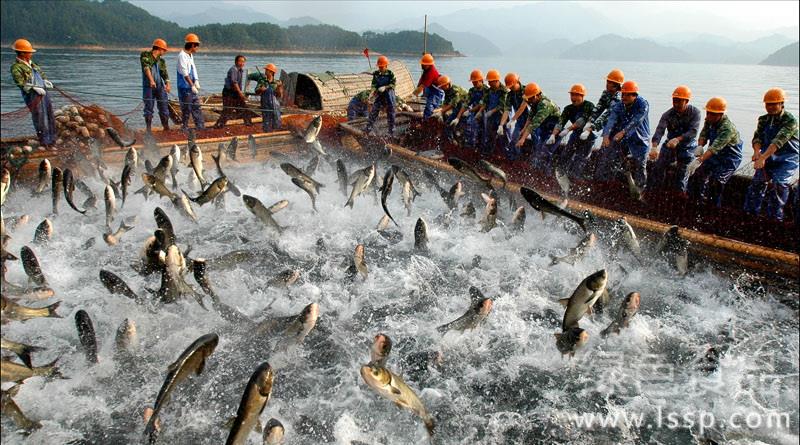
Fishing
Since most freshwater fish farming involves stocking in spring and harvesting in winter, and since fish farmers whose contracts have expired or whose ponds are low-yielding need to drain and desilt their ponds, the adult fish are caught and brought to market; tropical fish that cannot survive the winter must also be caught and brought to market. Therefore, in winter the fish market is often seasonally saturated, leading to competitive price cutting, cheap fish hurting farmers, and poor economic returns; while in spring and summer, fewer freshwater fish are brought to market, causing an imbalance between peak and slack supply. Practice has proved that winter holding can both regulate the supply of freshwater fish on the market and raise the economic returns of farming, achieving increased production and income - truly multiple benefits in one move. The relevant techniques for holding freshwater fish are introduced below:
I. Selection of fish for holding
The fish to be held are best those that sell poorly in winter but sell well in spring and summer, and can also overwinter, such as silver carp, bighead carp, bream and grass carp, all of which tolerate low temperatures and will even grow and gain weight during the holding period. The usual sizes are: silver crucian carp 100-150 g each, silver carp and bighead carp 400-500 g each, bream 150-250 g each, grass carp 300-500 g each.
II. Stocking the fish for holding into the pond
Winter-idle fingerling ponds can be used, and fish that have not reached market size can be combined and stocked into the pond by species and by size. Before stocking, if conditions permit, the pond can be cleared and disinfected: soak 150 jin of tea seed cake per mu in water and splash it over the whole pond, or dissolve 250 jin of quicklime per mu into a slurry and splash it over the whole pond; this both kills wild and trash fish and improves and fertilizes the water quality. After test fish have been used to check that the toxicity has dissipated, the fish can be stocked into the pond for holding. If the water is clear and lean, apply 500-700 kg of fermented organic fertilizer per mu to cultivate abundant plankton for the fish to feed on and for photosynthesis to produce oxygen. Before the held fish are stocked, first give them a medicinal bath in 3%-5% salt water for 5-20 minutes to prevent saprolegniasis and kill parasites. The holding density should be controlled at 300-600 fish per mu of water surface (150-200 kg).
III. Management during the holding period
During the holding period, management must be strengthened. In the early stage, when water temperature is relatively high, feed somewhat more of the feeds high in protein and fat, such as peanut bran, soybean cake and wheat bran, to increase the nutrient reserves in the fish. When the water temperature is below 5°C, the focus of management is preserving the water, increasing dissolved oxygen in the pond water, and preventing the water level from dropping too much, which would cause low water and oxygen deficiency and leave the fish frozen or killed. In fine weather, when the temperature is high, feed once every 3-5 days. After the beginning of spring, as the weather gradually warms, normal feeding and fertilizing resumes to promote growth and weight gain. Throughout the holding period, attention must be paid to preventing diseases such as saprolegniasis and parasitic diseases. After Qingming, fish can be caught and brought to market one after another. For example, fish farmer Liu Yongguang of Licheng Town held 20,000 jin of fish through the winter for 100 days, producing 24,000 jin (a weight gain of 4,000 jin) and increasing income by 16,800 yuan.