Catfish Pond Aquaculture Techniques: Teaching You to Raise Large, Fast-Growing Catfish
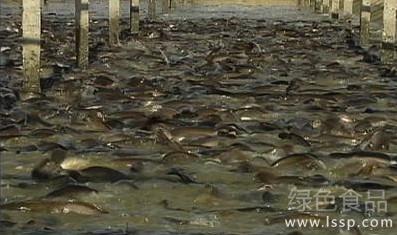
Catfish Farming
Catfish (Silurus asotus) belongs to the order Siluriformes, family Siluridae, genus Silurus. The Heilongjiang catfish is not only large in size and fast-growing, but also tolerant of low temperatures and low oxygen, with delicious meat, and is deeply favored by producers and consumers in the cold northern regions. Based on years of practice, the author summarizes the pond aquaculture techniques for catfish as follows.
1 Artificial Breeding of Pond-Raised Catfish
1.1 Selection of broodstock: Select individuals weighing over 0.5 kg each. Females should have a distended abdomen and red, swollen genital pores, and eggs can be squeezed out by gently pressing the abdomen. Males should have a narrow abdomen, and white milt can be squeezed out by gently pressing the abdomen. The female-to-male ratio is 1:1 to 1.5, with appropriate individual sizes.
1.2 Induced spawning: Catfish breeding practice has proven that when catfish broodstock have been cultivated before spawning and their gonads have reached the end of stage IV, the best spawning-inducing drug is a mixture of domperidone maleate (DOM) and luteinizing hormone-releasing hormone A2 (LHRH-A2). The dosage is 2 mg to 5 mg DOM + 2 μg to 4 μg LHRH-A2 per kg of catfish, injected once intramuscularly in the back with the mixed solution of the two drugs, and the spawning induction rate can reach over 80%.
1.3 Artificial nest placement: Place spawning substrates for catfish in the spawning pond. The method is similar to that for carp, but catfish eggs are less adhesive than carp eggs, and some eggs easily fall off the spawning nest and die when they land on the pond bottom. To improve the utilization rate of catfish eggs, bottom nests should be placed at the bottom of the spawning nest. The method is to weld iron rods with a diameter of 0.8 to 1 cm into a rectangular frame of 3 m × 1 m, connect them in the middle with bolting silk, and sew palm bark for egg attachment onto the bolting silk. The egg attachment rate of bottom nests accounts for 20 to 40% of the total number of eggs spawned.
1.4 Artificial incubation: After catfish spawn, the spawning nests should be removed promptly and placed into incubation ponds to prevent broodstock from cannibalizing their eggs. The incubation pond should preferably be a cement pond. For earthen ponds, the bottom must be flat and free of mud, with a water depth within 0.5 to 1 m, and the area should not be too large. The egg density is 30,000 eggs/m2 of water surface. The water quality must be strictly filtered to prevent aquatic animals from harming the eggs. Other incubation processes are similar to those for carp. At a water temperature of about 20°C, the eggs hatch in 3 to 4 days. Newly hatched catfish fry attach to the spawning nest and develop under static or slightly flowing water conditions, shaped like tadpoles. After 3 days of hatching, the spawning nest should be removed promptly and the fry stocked into ponds at the appropriate time.
2 Pond Aquaculture Techniques
2.1 Nursery pond rearing of catfish fry: Catfish fry can actively feed on large rotifers and small cladocerans 3 to 4 days after hatching, and should be stocked into ponds at this time. After the fry are stocked, the abundance of cladocerans is the key to the survival rate of catfish fry. Organic fertilizer is applied to massively cultivate cladocerans. When natural food is insufficient in the later stage, cladocerans are collected from other ponds with a 50-mesh sieve net, or fresh animal food is chopped and fed. When animal food in the pond is sufficient, catfish fry grow rapidly. Generally, about 90,000 fry are stocked per 667 m2, and after 10 to 15 days they are raised into summer fry, with a survival rate of up to 50%. The nursery pond surface should preferably be within 667 m2.
2.2 Fingerling rearing
2.2.1 Ecological aquaculture for rearing catfish fingerlings: Large amounts of organic fertilizer are applied to cultivate zooplankton, benthos, aquatic insects and small miscellaneous fish, providing nutritionally rich live animal food for catfish. This method has a high survival rate and large size. In 1997, 2,500 catfish summer fry were stocked in a 4,000 m2 pond, accounting for 54.3% of the total stocking; 700 silver carp summer fry, accounting for 15.3% of the total stocking; and 1,400 bighead carp summer fry, accounting for 30.4% of the total stocking. Seventeen days before stocking catfish fry, 200 crucian carp broodstock were stocked to allow them to reproduce naturally. Each 667 m2 was applied with 500 kg of base fertilizer and 500 kg of topdressing, and 150 kg of powdered feed was fed to the crucian carp fry. After 90 days of rearing, the average catfish yield per 667 m2 was 50.5 kg, with a survival rate of 94.8% and a size of 128 g per fish. The survival rate of silver carp was 78%, and that of bighead carp was 85%. This rearing method is technically simple and easy to master, and crucian carp fry are easily obtained as forage fish. The stocking density of catfish fry should be determined by the amount of forage fish, and the stocking time must be 10 days after silver carp and bighead carp are stocked before catfish summer fry can be stocked.
2.2.2 Adding catfish summer fry to fingerling ponds: Adding less than 10% catfish summer fry to fingerling ponds can not only eliminate wild miscellaneous fish, aquatic insects, tadpoles, etc. in the pond, but also increase the yield of the main cultured fish species and improve pond efficiency. In 1995, 12.2% (500 fish/667 m2) were stocked in a pond mainly culturing domesticated carp fingerlings. In 1996, 6.67% (300 fish/667 m2) catfish summer fry were stocked. Without affecting the survival rate and yield of the main fish, catfish yield increased by 43.75 kg per 667 m2 (with partial feeding of chicken intestines) and 16.2 kg per 667 m2, respectively.
2.2.3 Polyculture of catfish fingerlings in adult fish ponds: This method requires low investment and yields high benefits, without the need for additional management measures. Especially in adult fish ponds with abundant small miscellaneous fish, stocking 100 to 200 catfish summer fry per 667 m2 can produce 10 to 20 kg of catfish fingerlings of 100 to 150 g each, increasing benefits by 200 to 200 yuan per 667 m2.
2.2.4 Rearing catfish fingerlings through pellet feed domestication: Catfish grow faster and have a higher survival rate when eating natural animal food or terrestrial animal food. Under starvation conditions, they also eat artificial pellet feed, and pellet feed can be used for domesticated aquaculture in ponds. However, the nutritional requirements for the feed are relatively high. In domesticated aquaculture, the protein content of pellet feed should be higher than that for carp. The protein content of catfish fingerling feed should be about 40%, and animal protein (imported fishmeal) should account for more than 30% of the feed protein. The processing and domestication methods of pellet feed are basically similar to those for carp. Catfish reared by this method can reach 50 to 100 g per fish. In 1997, 6,000 catfish summer fry were stocked in a 667 m2 pond and domesticated with pellet feed, yielding 93.5 kg per 667 m2, with a feed conversion ratio of 3, an average weight of 84.5 g per fish, and a survival rate of 18.44%. The author believes that the main reasons for the low survival rate of catfish fingerlings are inappropriate feed palatability and incomplete nutrition, leading to uneven sizes, with larger individuals swallowing smaller ones. When catfish reach about 10 g in body weight, mutual cannibalism becomes severe, which is the main factor affecting large-scale catfish production. To improve the survival rate of catfish fingerlings, supplementary feeding of some palatable animal food should be started from the summer fry stage.
2.3 Adult fish aquaculture
2.3.1 Raising summer fry into market-sized fish in the same year: Catfish summer fry are stocked in adult fish ponds with abundant small miscellaneous fish, with about 30 fish polycultured per 667 m2. They can reach over 0.35 kg in the same year, with the largest individual reaching 0.75 kg. This increases catfish yield by 5 to 10 kg per 667 m2. When polyculturing, the density should be flexibly controlled based on water source conditions and the amount of miscellaneous fish in the pond.
2.3.2 Adding catfish spring fingerlings to adult fish ponds: Catfish swim slowly and generally cannot prey on cultured fish of the same size that swim fast. Stocking catfish of a certain size in ponds can only eliminate small wild miscellaneous fish and diseased cultured fish. In market fish ponds, 50 to 100 g per fish are stocked per 667 m2.