Carp Stocking and Management Techniques: How to Choose Local Fish Species
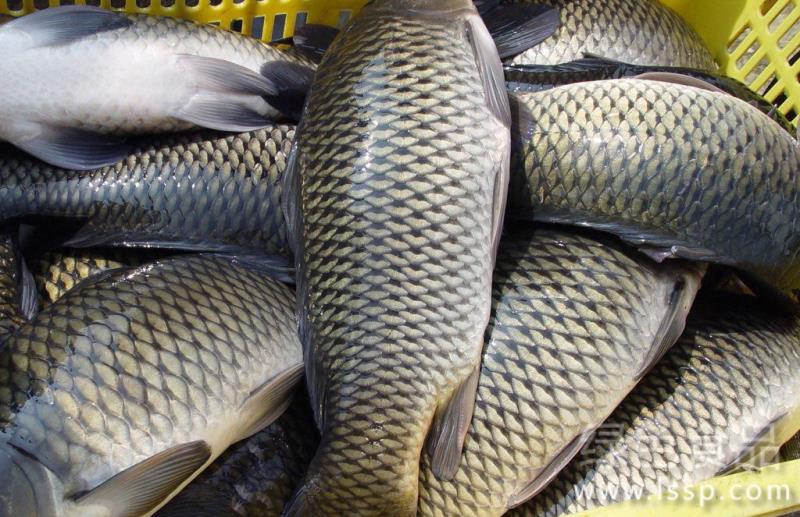
Carp
Before stocking, the pond should be cleaned, disinfected, and fertilized to cultivate water. Disinfect the pond 10~15 days before the carp fingerlings are put in. For dry disinfection, use 60~75 kg of quicklime per mu; for wet disinfection, use 120~150 kg of quicklime per mu at a water depth of 1 m. For lean-water ponds or newly built ponds, apply organic fertilizer before filling the pond with water, applying several hundred kg of fertilizer per mu to the bottom mud. For fertile-water ponds and ponds that have been used for fish farming for many years, the bottom sludge is abundant, so no or little base fertilizer is applied. During the farming process, as the pond fish grow and the water color becomes lighter, inorganic fertilizers are generally used for topdressing.
Select fingerlings of the current year with a size of more than 10 cm (preferably 14~20 cm, 60 g~100 g), uniform in size, uninjured and disease-free. Strictly disinfect before putting them into the pond, generally soaking them in 3~5% salt water for 10~15 minutes. For the source of fingerlings, it is best to choose locally produced fingerlings. Appropriately stock large-size silver carp and bighead carp as a supplementary species.
For stocking time and stocking density, March and April are generally preferable, as the water temperature at this time allows carp to feed, ensuring their physique and improving the survival rate. At a water depth of 1.2~1.5 m, stock 8000~9000 fish per mu for fingerlings of about 50~60 g, and 5000~6000 fish per mu for fingerlings of 80~100 g. If farming conditions such as water source and water depth are not ideal, the stocking density should be appropriately reduced.
Feeding: Feed artificial compound bait. The formula for artificial compound feed is roughly 70% fish meal, 20% soybean meal, 5% yeast powder, and the remainder is vitamins, mineral salts, growth promoters, antibiotics, etc. However, at the beginning of feeding compound bait, domestication work should be carried out, and the domestication process generally involves gradually increasing the amount of compound feed. Feeding should be done at fixed times, at fixed locations, with fixed quality, and in fixed quantities. During the peak feeding season, the amount of bait is about 4% of the fish weight, and can reach more than 6% at most. Note that at different stages, the amount and size of fish feeding should be adjusted according to fish body size, season, and water environment. The feeding amount of carp varies greatly depending on the weather, air pressure, and water quality. In actual farming, the standard is that no feed remains or very little remains.