Rational utilization of rural forest land and hilly grazing chicken management techniques
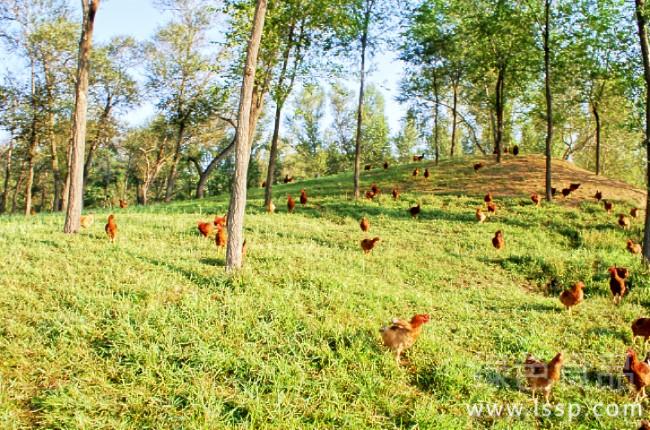
Grazing
Grazing chickens means using orchards, barren slopes, and hilly grasslands, with dual-purpose meat-and-egg chickens or local farmyard chickens as the breeding stock, combining housing and free-range rearing, allowing the chickens to freely feed on insects and tender green grass in the undergrowth, with appropriate supplementary feeding and access to clean, unpolluted drinking water.
1. Selection of grazing sites
Generally choose orchards or unpolluted barren slopes and hilly grasslands, ideally with secondary shrubland, where the terrain slope should not be too steep, sheltered from the wind and facing the sun, with a clean and adequate water source (protect the water source during grazing to prevent pollution), with abundant insects, tender green grass and rich nutrition, and far from roads and residential areas.
2. Selection of free-range chickens and arrangement of brooding time
For grazing chickens, it is better to choose dual-purpose meat-and-egg chickens or local farmyard chickens, and male chicks are superior to female chicks, as they grow faster, can shorten the grazing time, and improve economic returns.
Chickens to be grazed should be raised through brooding until they reach a certain size before grazing. Generally, the brooding time is best chosen from March to May, when temperatures begin to rise and sunlight is abundant, which is very favorable for chick survival rate and growth and development; at this time insects have also begun to breed and green grass is sprouting and growing, creating a suitable grazing environment.
3. Preparation of facilities for free-range chickens and supplementary feeding
When chicks have grown to more than 250 grams indoors, switch to a combination of short-term grazing training and housing. Because spring weather is highly changeable, the temporary chicken houses at the grazing sites must be well insulated and leak-proof. At this time, the grazing range for the chickens should not be too large, and supplementary feeding should use compound feed; do not feed chickens with raw grain. Feed once in the morning and once in the evening, with less in the morning and more in the evening.
4. Do a good job of safety precautions
Strengthen protection of the surrounding environment of grazing chickens to avoid sudden fright and noise disturbing the flock. Protective netting should be set up around the chicken grazing area to prevent the flock from being lost or harmed by hawks, dogs, weasels, and the like, reducing stress and losses.
5. Do a good job of chicken disease prevention and control
Because grazing chickens come into contact with a wider environment, they are more likely to be threatened by disease. In addition, grazing chickens have a relatively longer growth period, so vaccination must be carried out thoroughly, preventing disease early when there is none and treating it early when present. The growth environment of grazing chickens should be inspected frequently, and dead or diseased chickens should be buried deeply in a timely manner and must not be discarded at random. Weak and sickly chickens should be picked out and fed separately.