Methods of Ecological Pig Farming to Reduce Pig Farming Costs
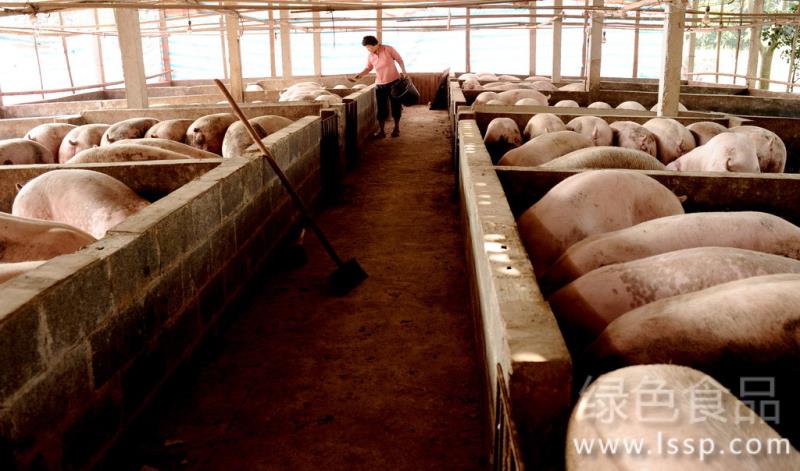
Pig Farming
In recent years, the high prices of feed ingredients such as corn and soybean meal have made profits for pig farmers increasingly low, and the negative impact of "losing money on pig farming" has created strong psychological pressure on pig farmers. Reducing costs and cutting losses has become the preferred strategy for most pig farmers.
1. Persist in raising first-generation crossbred pigs. Piglets produced by mating improved-breed boars such as Landrace, Duroc and Hampshire with local breed sows are first-generation crossbred pigs, which have strong vitality, grow quickly and give good rearing results. Therefore, the new "three-ization" technique should be widely promoted: improved breeding of boars, localization of sows and first-generation crossbreeding of piglets.
2. Make full use of rural feed resources and formulate feed scientifically. Various rural feed resources should be fully utilized, such as rice grain, sweet potato, barley, Chinese milk vetch, vegetables and wild forage grass, and combined in a reasonable way, so as to both ensure nutritional needs and reduce pig farming costs. According to estimates, when pigs are fed a mixed feed, the feed-to-meat ratio is 2.8:1 or 3:1, whereas when pigs are fed only corn or rice grain, each 1 kg of weight gain requires the consumption of 6-7 kg of corn or rice grain.
3. Implement ecological pig farming. In traditional pig farming with local methods, the temperature, humidity and other conditions inside the pigsty are all left to nature, resulting in high temperature and high humidity in summer and autumn and cold in winter, so the pigs' growth potential cannot be brought into full play. In addition, without attention to environmental hygiene and without isolation and disinfection measures, pigs are prone to illness. Most farming households ignore the principle of "prevention is more important than treatment" and focus on treating pig diseases; they would rather spend "big" money on treatment than spend "small" money on disease prevention, and the result is heavy losses for the farming households. Therefore, in summer and autumn the pigsty should be ventilated for air exchange, and ventilation facilities can be installed inside the pigsty to reduce humidity and prevent heatstroke. Vine-type plants should be planted outside the pigsty for shade and cooling, keeping the air inside the pigsty fresh and the temperature suitable. In winter, the new technique of raising pigs in plastic-film warm sheds should be promoted to continuously improve the microclimate of the pigsty and create a good ecological environment for pig growth and development. At the same time, a strict disinfection system must be maintained, and environmental hygiene should be cleaned frequently. Where conditions permit, gauze netting should be installed in the pigsty to prevent mosquito and fly bites and reduce the occurrence and spread of epidemic diseases. Deworming and epidemic disease vaccination injections should be carried out regularly, applying the principle of "prevention is more important than treatment." The four major infectious diseases - swine fever, swine erysipelas, swine pasteurellosis and paratyphoid - should be strictly controlled to reduce the mortality rate and raise the survival rate and marketing rate.
4. Change from the "hanging-frame" fattening method to linear fattening. Traditional "hanging-frame" fattening divides the pig's fattening period into several stages and uses a combination of concentrated and rough feed for fattening according to each different stage. This method uses a single feed with incomplete nutrition, cannot meet the pig's growth needs, and results in slow growth, a long cycle and a low marketing rate. If instead, from weaned piglets all the way to fattening pigs before sale, a full-price compound feed and planted forage grass are used consistently for pig farming, and the linear fattening method is adopted in which the nutritional level is gradually raised according to increasing days of age, the fattening period can be effectively shortened and the marketing rate increased.
5. Supply sufficient drinking water. Water is an important component of the animal body, and the metabolism of substances and various biochemical reactions in the body can only proceed with the participation of water. Water shortage affects the pig's appetite, digestion and normal growth and reduces the utilization rate of feed. Therefore, supplying sufficient drinking water is very important. Generally, the "free drinking water" method is used to supply pigs with clean and hygienic drinking water. Especially in hot summer, the trough must not run out of water, and cool water from a mechanized well should be used to help lower body temperature.
6. Use feed additives reasonably. Feed additives contain various essential amino acids, minerals, trace elements, vitamins, growth hormones and so on. Although the amount used is small, they play a great role in pig growth, so it is very necessary to use feed additives correctly and reasonably.
7. Self-breeding and self-raising. Adopt the practice of raising one's own breeding pigs, breeding one's own crossbred piglets and raising one's own commercial pigs, without purchasing piglets from outside, which is conducive to epidemic prevention and disease elimination, raising the survival rate of piglets and reducing pig farming costs.
8. Promote high-density pig farming. In winter, raise one fattening pig per 0.8 sq m of pigsty; in summer, raise one fattening pig per 1 sq m of pigsty. Because of the density, less pigsty space is needed and fixed-asset investment is lower. High-density pig farming not only requires fewer pens and lower costs, but also the fattening pigs compete for food, have no activity area, sleep once full, are fond of putting on meat, gain weight quickly, shorten the rearing period and reduce feeding costs.
9. Market and slaughter at the right time. After a fattening pig exceeds 90 kg, the daily weight gain speed clearly slows down and fat deposition becomes predominant, so the more it is fed, the less worthwhile it is, and the increased fat makes it hard to sell; slaughtering at less than 90 kg, although feed utilization is high, gives a low meat yield because of the small body weight, and is also not worthwhile economically. Therefore, generally the most suitable slaughter weight for fattening pigs is 90-120 kg.