What mistaken practices in farmhouse pig raising should be corrected
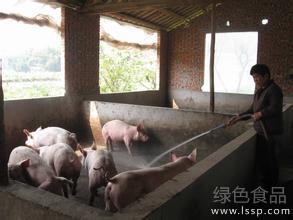
Farmer pig raising
In farmhouse pig raising, certain practices are often cited as experience. Undeniably, many traditional pig-raising practices in rural areas are worth learning from, but many others are unreliable.
1. "Feeding cooked feed makes pigs put on fat easily." The traditional pig-raising method is to cook the feed before feeding, believing that pigs grow fat easily on cooked feed. In fact, feeding cooked feed to pigs is time-consuming, labor-intensive and uses more feed, results in slow growth and a low feed conversion rate; during the cooking process 20% of the nutrients are lost, and the loss of green feed is even greater. Cooked feeding makes pigs fatten slowly, while raw feeding can greatly reduce energy consumption and labor costs; with scientific and reasonable feeding, the raising period can be shortened by 3~5 months.
2. "Slaughter pigs at the winter solstice to make cured meat." Rural areas generally believe that cured meat made at the winter solstice tastes best, so even fattened pigs that could be sent to market before the winter solstice are held back until the winter solstice for slaughter. The optimum temperature for pig growth and development is 18°C~23°C; below 18°C pigs grow slowly. Once winter arrives and the temperature drops, considering feed costs, fattened pigs should be slaughtered as early as possible.
3. Feed is "the thinner the better." Thin feed contains a lot of water, which lowers the temperature in the pig's stomach and intestines, increases the pig's consumption of heat energy, and makes the pig excrete quickly; this is not conducive to digestion and absorption and reduces the feed conversion rate.
4. Pigs should be fed "the fuller the better." Eating too full affects a pig's appetite for the next meal and wastes feed. The appetite pattern of pigs: they eat the most in the evening, less in the morning, and the least at noon. Feeding each meal to nine-tenths full is best.
5. Pigs "the bigger they get, the faster they grow." Pigs have their own growth pattern, and pigs above 100 kg grow slowly. Therefore, depending on the breed, pigs should be sent to market in good time once they reach a certain stage, generally at a body weight of 90~100 kg. If fattened pigs are too heavy, feed consumption is greater, raising costs are higher, and returns are lower.