How can calcium be supplemented scientifically in confined laying ducks to increase the egg production rate?
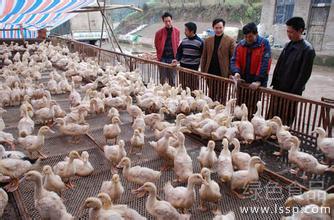
Laying duck rearing
To increase the egg production rate of confined laying ducks and the marketability rate of their eggs, in addition to meeting their needs for protein, energy and other nutrients, scientific calcium supplementation must be carried out in particular. This includes the following aspects:
1. Choose a good calcium source. Generally, limestone, shells and the like are used as the main sources of calcium, but the proportions must be appropriate; the ratio of stone powder to shell powder is best at 2:3. Adding 1% bone meal gives the best eggshell strength and smoothness.
2. The timing of calcium supplementation should be appropriate. Confined laying ducks begin laying at around 100 days of age, and 15 weeks of age is the best time to start calcium supplementation. Calcium supplementation should be between that for young ducks and that for laying ducks, best at 2.5%, and then gradually increased.
3. The optimal calcium supplementation amount for each laying stage. The calcium utilization rate of laying ducks is about 65%, and producing one egg requires 4.8 g to 5.12 g of calcium. Practice has shown that when the egg production rate is below 65%, calcium is 2.5%; when the egg production rate is 65% to 80%, calcium is 3%; when the egg production rate reaches above 80%, calcium is 3.2% to 3.5%.
⟧ 4. Granular calcium is best. Granular calcium stays in the digestive tract for a long time and can supply calcium evenly during the eggshell formation stage; at the same time, granular calcium has a grinding effect in the stomach similar to that of sand, which can promote the digestion and utilization of feed. Practice has shown that using 50% granular shells together with 50% limestone can give laying ducks good calcium absorption.
5. The supply of vitamin D in the daily ration should be guaranteed. Controlling the calcium-to-phosphorus ratio at 5:1 to 6.5:1 is beneficial for the absorption and utilization of calcium.
6. According to the level of the egg production rate, ensure 14 to 17 hours of light. This is because sunlight exposure can convert ergosterol in the feathers and skin blood into vitamin D, which is beneficial for the absorption and utilization of calcium.