Detailed Explanation of the Best Fattening Periods for the Three Meat Livestock: Pigs, Cattle and Sheep
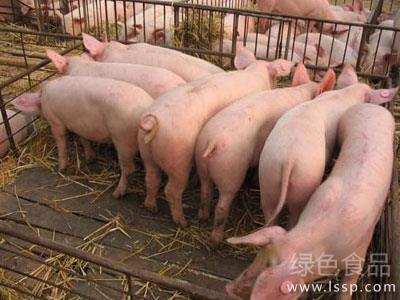
Fattening Pigs
The growth and development pattern of meat pigs is slower growth in the early stage, faster weight gain in the middle stage, and faster fat deposition in the later stage.
Fattening Pigs
Under normal circumstances, growing-finishing pigs have a peak bone growth period at 20-30 kg, a peak muscle growth period at 60-70 kg, and an intense fat accumulation period at 90-100 kg. Their weight gain is greatly related to breed and changes in nutritional level. For breed pigs, the peak muscle growth period is around 50 kg (3-4 months of age). As age in days increases, after 70-80 kg (4-5 months of age), the intensity of fat growth increases markedly and gradually exceeds the intensity of muscle growth, and the body begins to deposit large amounts of fat. Slaughter efficiency is best when body weight reaches 90 kg. Local early-maturing breeds are most suitable for marketing at around 75 kg body weight. At this time the meat quality is good and the dressing percentage is also high; for two-way or three-way crossbred pigs using local pigs as the maternal parent and introduced lean-type pigs as the paternal parent, the dressing percentage at marketing and slaughter is best at 7-8 months of age (90-100 kg).
Beef Cattle
The daily weight gain of beef cattle is fast first and then slow as age increases. Generally speaking, bulls grow faster than their steers, and steers grow faster than cows of the same breed. Different feeding methods also produce differences in weight gain: under barn feeding, young bulls gain weight faster than steers and heifers, and the meat quality is good with less feed consumption. Under free-range raising, the weight gain and feed conversion efficiency of young bulls are relatively reduced, while young heifers and steers gain weight faster and have more fat and tender meat, but consume more feed. Comparing barn feeding with free-range raising, barn feeding increases daily weight gain by 19.6%, reduces feed consumption by 26.3%, and lowers the cost of weight gain by 19.6%. For beef cattle fattening, during the vigorous growth period at 10-18 months of age, carrying out 80-150 days of intensive fattening through a matching feeding technique, the marketing benefit is best when body weight reaches 450-500 kg. For fattening old cattle, it can only allow them to recover body condition in a short period, and a relatively large weight gain is impossible, so the benefit is relatively poor. Experiments show that calves grow muscle fastest in the first 6-8 months after birth, and afterward, as body weight increases and age grows, muscle growth slows and feed utilization gradually declines. In the latter half of growth, for every 100 kg increase in cattle body weight, 18% more feed is consumed; at 2 years of age, for every 100 kg increase, 42% more feed is consumed; at 3 years of age, for every 100 kg increase, 60% more feed is consumed. Therefore, crossbred cattle have the best economic benefit when marketed at 1.5-2 years of age.
Meat Sheep
Meat sheep production is mainly based on grazing, and barn feeding is also possible. From birth to 12 weeks, sheep are in a rapid growth period. According to measurements, during the rapid growth period, sheep can reach a daily weight gain of 170 grams; from 12-30 weeks is the continuous growth period, with a daily weight gain of 135 grams, and cumulative growth still shows an upward trend. Most sheep gain weight fastest at 7-9 months of age. Sheep reach about 40 kg of weight gain at 9 months, and meat goats reach about 35 kg. Therefore, early growth of meat sheep should be well managed.