Five Major Taboos in Dairy Cattle Farming, Farmers Need to Pay Attention
Many farmers in the process of raising dairy cattle find that they care for their cows far more than others do, yet their own cows' milk production just cannot match that of others. This is because you may have violated the taboos of dairy cattle. So what taboos exist for dairy cattle? How should we avoid these taboos? The editor of Green Food Network is here to help you solve these problems.
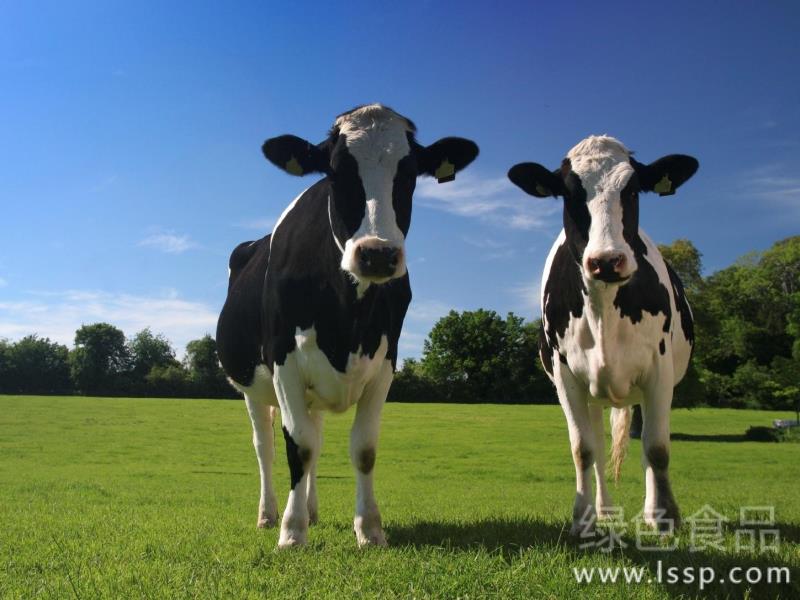
Dairy cattle
One: Extensive feeding management. Farmers raise dairy cattle like yellow cattle, feeding them roughage mainly consisting of wheat straw, dried corn stalks, leaves, rice straw, etc., and concentrate mainly the "three-flour mix" of soybean meal, wheat bran and cornmeal. This leads to severe nutritional deficiencies in dairy cattle, resulting in conditions such as postpartum paralysis, failure to come into estrus, difficult calving and retained placenta.
Two: Adding excessive salt to the concentrate. In order to make dairy cattle drink more water and thus produce more milk, farmers actually add 3-4% salt to the dairy cattle's concentrate. Doing so easily increases the burden on the dairy cattle's kidneys, and the cattle show signs of salt poisoning. The most reasonable approach is to control the salt proportion in dairy cattle concentrate at 0.7-0.8%. To solve the problem of insufficient salt in dairy cattle concentrate, a trough holding salt or salt lick blocks can be placed in the dairy cattle's exercise yard for the cattle to lick freely.
Three: Dairy cattle are too small at first mating. First mating of dairy cattle requires both sexual maturity and physical maturity, with an age of 18-20 months and a body weight of about 380 kg. Many farmers do not pay attention to the feeding management of dairy cattle during the rearing period. At 18 months of age, the dairy cattle's body weight is only between 250-300 kg. If mating is carried out at this time, it often causes difficult calving in dairy cattle.
Four: Carrying out exploitative milking. The dry period of dairy cattle is generally about 60 days. Influenced by factors such as milk production, feeding level, parity, body condition and age, the dry period of dairy cattle should be appropriately extended or shortened, but the shortest dry period must not be less than 45 days. Some farmers carry out exploitative milking, milking until the dairy cattle no longer produce milk, just for immediate benefits, unaware that the negative effects this brings are serious: first, the nutrients in the dairy cattle's body are excessively consumed, affecting the development of the fetus in the body and the milk production of the dairy cattle in the next lactation cycle; second, it causes disorders of the dairy cattle's estrous cycle, with estrus being after calving or estrus being late.
Five: The fatter the dairy cattle, the better. Many farmers believe that the fatter the dairy cattle, the more milk they produce. They increase the feeding amount of concentrate during the dairy cattle's dry period, causing the dairy cattle to become overweight. Some farmers also blindly add more concentrate just to make the dairy cattle produce more milk. In fact, this very easily causes weakened rumination, rumen atony and acidosis in dairy cattle. Dairy cattle are not better the fatter they are; the optimal condition is a body condition score of seven to eight tenths.