Master the three methods of feeding bees water to make the colony produce more honey
To maintain their own lives and regulate the temperature and humidity of the hive, a normal bee colony needs to collect 200-300 grams of water every day. When the comb area is large and during hot seasons, the water demand of the colony also increases accordingly. Artificially feeding bees water can reduce the physical energy loss of bees collecting water from a distance, and in particular can solve the water collection problem for bees in those apiaries that lack water. The methods of artificially feeding water to the bees of a colony include:
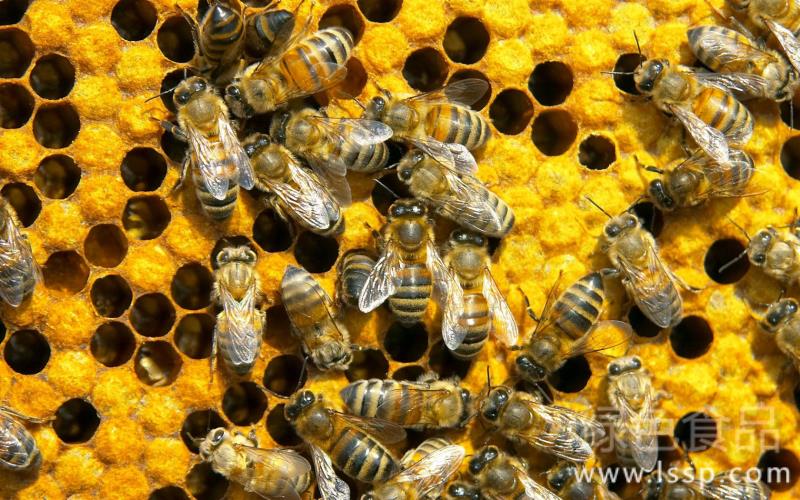
Bees
1. Feeding water inside the hive. In spring, when the comb area is large, the colony needs relatively more water. At this time, feeding bees water should be combined with reward feeding. In the bee feeder, sugar can be placed at night and water during the day. During hot and dry seasons, a wet towel can be covered over the inner cover, and water should often be sprinkled on the wet towel. During colony transport, a water comb can be appropriately added inside the hive, or a feeder containing absorbent cotton or sponge fully soaked with water can be placed outside the hive.
2. Feeding water at the entrance. That is, place a bottle or plastic bag full of water on the entrance board at the front side of the hive, then take a piece of gauze and soak one end of the gauze in the water in the bottle or plastic bag, so that the bees can suck water from the wet gauze.
3. Open-air water feeding at the apiary. Place a large basin lined with plastic sheeting at the bee site, or dig a soil pit lined with plastic sheeting, put cinders or wooden boards into the pit or basin, then pour in clean water for the bees to use. An automatic drinker can also be made, that is, carve many small grooves on a wooden board, place a water bottle with a small opening upside down at the upper end of the board, and the water slowly flows out and fills the grooves for the bees to use.