Symptoms and prevention and treatment methods of goose drepanidotaeniasis
Drepanidotaenia is a common parasite that lives in the small intestine of geese and often causes geese to become infected with drepanidotaeniasis. This disease is especially harmful to young geese and can cause mass deaths. Drepanidotaeniasis has an obvious seasonal pattern and generally occurs mostly from late spring to the summer and autumn seasons, from April to October.
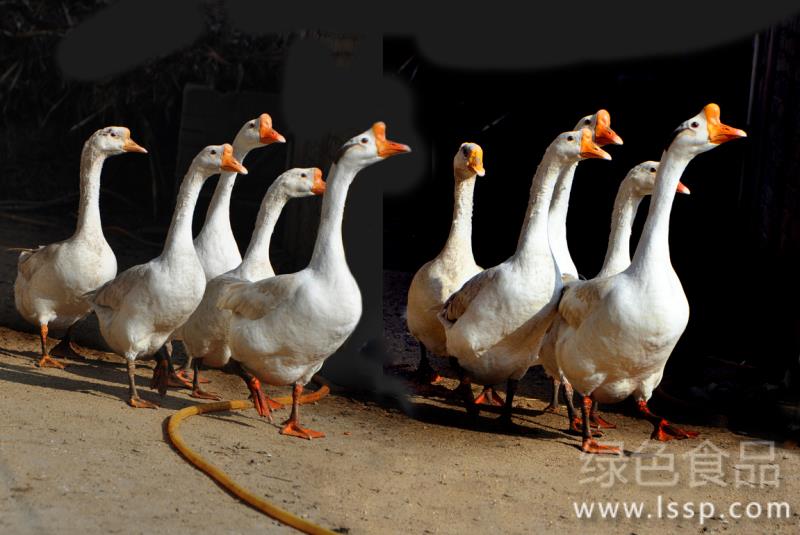
Goose
1. Pathogen and epidemic characteristics of drepanidotaeniasis
Drepanidotaeniais the pathogen, belonging to the family Hymenolepididae. It is a large worm body and is milky white. The worm body is about 13 cm long and spear-shaped. The scolex is small and has 4 suckers. The rostellum of the worm has 8 small hooks, and the neck is short. The strobila is composed of 20-40 proglottids, narrow at the front end and gradually widening toward the rear, with the last proglottids about 5-18 mm wide. After the proglottids mature, three testes appear. The testes are oval and arranged transversely on one side of the genital pore inside the spear-shaped Drepanidotaenia. Outside the testes are the ovary and ovarian glands. Located on the lateral margin of the upper corner of the proglottid is the genital pore. The eggs are oval and are not wrapped in an egg capsule.
This disease is widely distributed and mostly occurs in endemic form. Young geese over 20 days of age are the main target of the disease. Clinically, it is mostly seen in free-range goose flocks aged 1-3 months, but the earliest age of onset is 11 days, possibly due to infection through drinking water after the geese hatch. Mild infection usually has no obvious clinical symptoms. After adult geese are infected, they mostly have an inapparent course and become tapeworm-carrying geese.
2. Clinical symptoms
Adult geese infected with Drepanidotaenia generally have mild symptoms, but after infection, young geese show obvious systemic symptoms. The first symptom is diarrhea caused by digestive dysfunction, with loose feces mixed with white tapeworm proglottids. In the later stage of the disease, appetite is completely lost, the feathers are ruffled and dull, and the geese often stay apart from the flock alone and are unwilling to move. Severely infected young geese also often show neurological symptoms, including staggering when walking, incoordination, loss of balance, and falling to the ground unable to stand up. After onset, it often causes death, and the course of disease is 1-5 days.
3. Prevention and treatment measures
① Prevention. Raise geese of different ages separately, and regular deworming should be carried out for young geese and adult goose flocks at least twice a year in spring and autumn to reduce environmental contamination and the spread of the pathogen.
② Treatment. Commonly used drugs include praziquantel administered orally at 10-15 mg per kg of body weight, or albendazole at 50-100 mg per kg of body weight, or bithionol at 150-200 mg per kg of body weight. To ensure efficacy, the above drugs cannot be fed together and should be administered individually to each goose.