How to manage dry period dairy cows? Dairy farmers need to master these key points
To manage dry period dairy cows well, the dry period is generally divided into early dry period and late dry period, with different feeding management in the two stages. The early dry period refers to the period from the start of drying off to 15 days before calving, and the period from 2 weeks before calving to parturition is called the late dry period (also known as the close-up dry period).
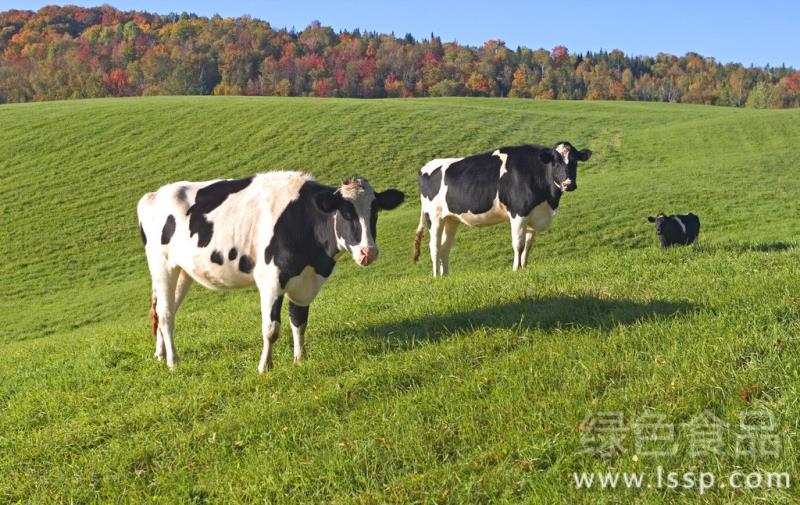
Dairy cow
In the early dry period, dairy cows are generally kept in moderate nutritional condition, using 4-5 kg of high-quality hay, together with about 10 kg of concentrate. The body condition score is 3.8-4.2 points, with a full body shape and glossy coat. For thin dairy cows, nutrition should be appropriately increased; on the basis of the nutritional requirements for pregnancy, add the nutritional requirement for 5-10 kg of milk production, so that the body condition of the dairy cow recovers to between 3.5-4.0 points within 20 days. The diet of dairy cows in the early dry period should be mainly roughage, appropriately matched with concentrate; the amount of concentrate generally accounts for 0.6%-0.9% of the dairy cow's body weight, that is, 3.5-5 kg, and the dry matter ratio of roughage to concentrate is between 70:30-80:20. The crude fiber content in the dairy cow's diet should not be less than 18%. For first-time calving heifers, the feed ration should be increased by 10%-18% to prevent the cow from being too thin after calving and developing a negative metabolic balance.
In the late dry period, dairy cows should be kept in upper-middle nutritional condition, so that at calving the body condition is close to 4.5 points. Therefore, the amount of concentrate to be increased should be determined according to the cow's physical condition at the time, appetite, expected milk production and manure type. Generally, dairy farmers increase the concentrate to 1-1.5 kg per 100 kg of body weight, but the ratio of roughage to concentrate in the diet must be controlled between 70:30-60:40, and the crude fiber content must not be less than 17%. The concentrate level should be increased in a time-gradient manner, generally increasing the amount of concentrate by 0.3 kg per day. When the dairy cow shows anorexia, the concentrate no longer needs to be increased, and only after the anorexia disappears can a slight further increase in concentrate be considered. If the dairy cow shows excessive udder swelling or severe edema a few days before calving, the concentrate should be appropriately reduced, succulent feed should be stopped, and the amount of salt should be reduced. If the dairy cow is fed wet concentrate, the concentrate in this period must not be mixed too wet. 20-30 days before calving, a low-calcium diet should be fed, reducing the calcium content in the diet to 0.2%, and reducing the amount of salt. In the 2-3 days before calving, milk fever in dairy cows can be prevented by feeding salt feed containing anions. At the same time, to prevent constipation, the amount of laxative feed such as bran in the concentrate should be appropriately increased, and can account for 15%-23% of the concentrate. In the late dry period, the condition of the dairy cow's udder must be carefully checked, and if there is udder inflammation, treat it immediately.
In addition, throughout the entire dry period, dairy cows should be allowed free exercise to reduce dystocia, and overcrowding should also be prevented. Strengthen pregnancy protection, do not feed spoiled feed, do not let them drink ice water, do not wash the cow with cold water, and do not let the cow fall or slip.