Guide to Buying Compound Fertilizer: How to Choose High-Quality Compound Fertilizer
How do you choose high-quality compound fertilizer? Please explain the methods. When choosing high-quality compound fertilizer, you can refer to the following methods: 1. Scientifically choose compound fertilizer according to fertilizer properties. At present, a considerable portion of the compound fertilizers sold on the market do not conform to the national DB15063-94 standard. The national standard stipulates that for compound fertilizer (mixed fertilizer)...
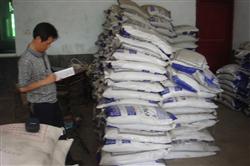
How do you choose high-quality compound fertilizer? Please explain the methods.
When choosing high-quality compound fertilizer, you can refer to the following methods:
1. Scientifically choose compound fertilizer according to fertilizer properties.
At present, a considerable portion of the compound fertilizers sold on the market do not conform to the national DB15063-94 standard. The national standard stipulates that for compound fertilizer (mixed fertilizer), the effective nutrient content, total nitrogen, phosphorus and potassium for high concentration, must be >=40%, and for low concentration, the nitrogen, phosphorus and potassium content must be >=25%, excluding trace elements and secondary elements; water-soluble phosphorus content >=40%, water content below 5%; particle size 1-4.75 mm, etc. Therefore, when choosing compound fertilizer, in addition to looking at the trademark and nutrient content, you also need to pay attention to the manufacturer and place of origin. In addition, potassium in compound fertilizer comes in two types: one is potassium chloride, and the other is potassium sulfate. Potassium chloride contains chlorine and is not suitable for chlorine-sensitive crops. If a compound fertilizer bag does not have the "S" symbol, its potassium is all potassium chloride, and chlorine-sensitive crops such as grapes, potatoes, tobacco, sugar beets, etc. must never be given it. Be sure to choose compound fertilizer marked with the "S" symbol on the fertilizer bag, that is, compound fertilizer composed of potassium sulfate.
2. Scientifically choose compound fertilizer according to crop varieties.
Generally, for field crops, choose nitrogen-phosphorus-potassium compound fertilizer; for high-yield wheat fields, choose nitrogen-phosphorus-potassium three-element compound fertilizer; for densely planted crops such as wheat, rice, and millet, powdered compound fertilizer is suitable; for sparsely planted intertilled crops such as corn, granular compound fertilizer should be chosen; vegetables, especially fruit vegetables, root vegetables, and fruit trees and other cash crops, have higher requirements and should be given nitrogen-phosphorus-potassium compound fertilizer with relatively high potassium and low nitrogen.
3. Scientifically choose compound fertilizer according to soil properties.
For slightly alkaline soil with low organic matter content (soil pH generally around 8.0) and deficient in available nitrogen and phosphorus, acidic compound fertilizer should generally be chosen, such as monoammonium phosphate or humic acid nitrogen-phosphorus-potassium compound fertilizer, or nitrogen-phosphorus compound fertilizer. However, for a small number of red clay soils or acidic brown earth soils, alkaline compound fertilizer should be chosen, such as diammonium phosphate.
4. Scientifically choose compound fertilizer according to fertilization methods.
To improve the fertilizer efficiency of compound fertilizer, different application methods should use different dosage forms of compound fertilizer. When used as base fertilizer, granular compound fertilizer must be chosen, and the higher the hardness of the granules, the better, and the fertilizer effect lasts the longest. Choosing compound fertilizer in which the nitrogen is formulated from ammonium nitrogen helps improve nitrogen use efficiency. If used as topdressing, powdered compound fertilizer should be chosen, and note that the water-soluble phosphorus content in the phosphorus of the compound fertilizer should be greater than 40%, and it is best if the nitrogen is compound fertilizer composed of both ammonium nitrogen and nitrate nitrogen. Generally, the effect of applying humic acid compound fertilizer as base fertilizer is better than applying it as topdressing.
Click to get more compound fertilizer application techniques
Click to get more fertilizer application techniques