What are the techniques for applying foliar fertilizer? Master these spraying methods
What are the techniques for applying foliar fertilizer? Please guide the method. When spraying foliar fertilizer, you can refer to the following methods: 1. Match the remedy to the problem. To promote early development or increase the thousand-grain weight later, you can spray nitrogen fertilizer and phosphorus fertilizer; to enlarge leaf area and promote vegetative growth, you can choose to spray nitrogen fertilizer and potassium fertilizer; to prevent and treat...
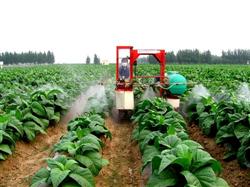
What are the techniques for applying foliar fertilizer? Please guide the method
When spraying foliar fertilizer, you can refer to the following methods:
1. Match the remedy to the problem. To promote early development or increase the thousand-grain weight later, you can spray nitrogen fertilizer and phosphorus fertilizer; to enlarge leaf area and promote vegetative growth, you can choose to spray nitrogen fertilizer and potassium fertilizer; to prevent and treat physiological diseases caused by a lack of trace elements, you can spray micronutrient fertilizer.
2. Choose the right type of fertilizer. Fertilizers that work well for foliar spraying include urea, monopotassium phosphate, potassium nitrate, potassium sulfate, ammonium sulfate, as well as the leachate of superphosphate and plant ash, ammonium metaphosphate, and most trace element fertilizers, etc.
3. The concentration must be appropriate. Too high a concentration easily causes fertilizer burn and unnecessary losses; too low a concentration fails to produce the desired effect. The suitable concentrations for foliar spraying of commonly used foliar fertilizers are: urea 0.5%-2%, superphosphate leachate 2%-3%, monopotassium phosphate 0.3%-0.5%, potassium sulfate 1%-1.5%, plant ash leachate 5%-9%, ferrous sulfate 0.2%-10%, boric acid 0.02%-0.1%, borax 0.05%-0.2%, manganese sulfate 0.0%-1.0%, zinc sulfate 0.01%-0.05%, ammonium molybdate 0.02%-0.05%. It should be noted that different crops have different concentration requirements for different fertilizers. Taking urea as an example, the suitable spraying concentration on gramineous crops such as rice is 1.5%-2%, while the suitable concentration on sweet potato, potato, and peanut is 0.4%-0.8%.
4. Extend the time the leaves remain moist. During foliar fertilization, the amount of nutrients absorbed by the leaves is related to how long the solution keeps the leaves moist. The longer the moist time, the more nutrients the leaves absorb and the better the effect. Generally, keeping the leaves moist for 30-60 minutes is necessary to obtain a better fertilizer effect. Therefore, the most favorable time for foliar fertilization is on a windless evening. Rainy days, before rain, or mornings with dew are all unsuitable for foliar fertilization; if it rains within 3 hours after foliar fertilization, apply again after the weather clears, but the concentration should be appropriately reduced.
5. The number of sprayings should be reasonable. The concentration of foliar fertilization for crops is generally relatively low, and the amount absorbed each time is also very small. Therefore, the number of foliar fertilization applications should generally not be fewer than two. Nitrogen and potassium fertilizers have very strong mobility within the crop, so during the key period of crop growth, spraying once is enough; the mobility of phosphorus fertilizer is lower than that of nitrogen and potassium fertilizers, so it must be sprayed 1-2 times consecutively according to the growth condition of the crop; for zinc, molybdenum, manganese, and copper fertilizers, which move only partially within the crop, and immobile trace fertilizers such as boron and calcium, spraying should generally be done 2-3 times consecutively.
6. Choose the best spraying site. The green stems and leaves of crops are the reasonable site for spraying fertilizer, especially the young, tender, vigorous green functional leaves, which give the best fertilizer response. It is worth noting that when spraying fertilizer on dicotyledonous crops, it should be sprayed evenly on both the front and back of the leaves, while for monocotyledonous crops it is enough to spray the fertilizer solution from top to bottom on the front of the leaves.
7. Mixing must be done properly. Reasonably mixing two or more foliar fertilizers can save spraying time and labor, and the yield-increasing effect will also be more significant. However, after mixing foliar fertilizers, there must be no adverse reaction or reduction in fertilizer efficacy; otherwise, not only will the purpose of mixing not be achieved, but fertilizer burn is also likely to occur.
Click to get more foliar fertilizer application methods
Click to get more fertilizer application methods