How to use urea for the best results? A detailed guide to correct application methods and techniques
How do you make good use of urea? Please give an introduction. However, a large number of actual field fertilizer-efficacy surveys show that the seasonal nitrogen utilization rate of urea used as a topdressing is not high, and is even worse than that of ammonium sulfate, ammonium chloride and ammonium bicarbonate with an equal amount of nitrogen, so please keep reading to find out how to make good use of urea: first you need to understand the purpose of applying topdressing to crops, and the...
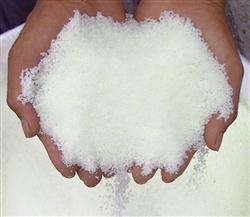
How do you make good use of urea? Please give an introduction
However, a large number of actual field fertilizer-efficacy surveys show that the seasonal nitrogen utilization rate of urea used as a topdressing is not high, and is even worse than that of ammonium sulfate, ammonium chloride and ammonium bicarbonate with an equal amount of nitrogen, so please keep reading to find out how to make good use of urea:
First you need to understand the purpose of applying topdressing to crops, and the requirements for the fertilizer. Topdressing is applied during the rapid growth stage of crops, which is generally a period of massive growth and development in which the vegetative body and the reproductive body advance simultaneously, and is precisely the stage when crops need the most nutrients. To meet the stage-by-stage needs of high-yield crops, a certain amount of quick-acting nitrogen fertilizer or nitrogen-potassium compound fertilizer must be supplemented as topdressing at this time. Because root absorption efficiency is high at this time, as long as the topdressing rate and method are correct, the nitrogen fertilizer utilization rate will be very high, reaching more than 50%-70%. In view of the purpose and requirements of topdressing, the fertilizer variety must have the characteristics of being easily dissolved, easily absorbed and quick-acting. Urea is often chosen by farmers as the first-choice nitrogen fertilizer variety for topdressing, and it is generally believed to have the characteristics of a high nitrogen content and quick action.
The actual nutrient-supply characteristics of urea: at present, most people directly engaged in agricultural production do not have a comprehensive enough understanding of the "quick-acting" nature of urea. In fact, urea is an organic small-molecule nitrogen fertilizer. After being applied to the soil, although on the surface it dissolves quickly, crop roots cannot yet directly absorb and utilize a large amount of it in molecular form. It must first undergo decomposition involving urease, converting the urea into ammonium nitrogen, before it can be rapidly and abundantly absorbed and utilized by crop roots. This shows that the fertilizer efficacy of ammonium sulfate, ammonium chloride and ammonium bicarbonate used as topdressing is definitely faster than that of urea; they can be directly absorbed and utilized without conversion, and they better match the purpose and action of topdressing.
How long does urea need to complete conversion? What factors affect the conversion rate? And how many days earlier than other ammonium nitrogen fertilizers must urea be applied as topdressing as a result? Scientific experiments prove that the urea conversion process is affected by many factors such as soil temperature, moisture, organic matter content and pH. In ordinary farmland, when soil moisture and pH are basically suitable for normal crop growth, soil temperature is the main factor affecting the urea conversion rate. For example, when topdressing winter wheat during the early-spring green-up season in the north, when the ground temperature is about 10℃, urea nitrogen needs about 7-10 days to convert into ammonium nitrogen; when the ground temperature rises to 20℃, for topdressing spring corn at the bell-mouth stage, topdressing cotton at full bud stage, and topdressing wheat at booting stage, urea takes about 5 days to convert into ammonium nitrogen; and after the ground temperature rises to 25℃, it takes only 3 days. Therefore, applying urea as topdressing a few days earlier than other ammonium nitrogen fertilizers gives better results. As for exactly how many days earlier, this depends on the time and local conditions. Also at the turn of spring and summer, in Northeast China the soil temperature rises very slowly, so more days are needed, while in South China the soil temperature is high, so applying urea 1-2 days earlier is enough. For the same region, because paddy field temperatures are slightly lower than dryland, this must also be treated differently.
When using urea as topdressing in summer, you must also pay attention to timely soil covering or irrigation. Because the air temperature is very high and urea converts quickly, the product after urea conversion is ammonium carbonate, whose properties are even more unstable than ammonium bicarbonate, commonly known as "gas fertilizer", and it will produce a large amount of ammonia. If the urea is not buried in the soil, or is broadcast on the surface without immediate watering, the consequence of ammonia volatilization will burn the leaves. In severe cases, the plant leaves will look as if they have been boiled in water. Even if ammonia volatilization does not burn the seedlings or leaves, the nitrogen loss it causes will also pollute the environment and reduce the utilization rate.
In short, the application techniques for urea as topdressing: first, apply it earlier; second, cover it with soil.
Click to get more nitrogen, phosphorus and potassium application techniques
Click to get more chemical fertilizer application techniques