Detailed Guide to Loach Farming in Rice Paddies and Disease Prevention Measures
In recent years, some ecological agriculture practices have appeared in people's view, such as raising carp in rice paddies, raising loach, raising chickens in orchards, etc. Today, the editor will mainly explain to everyone how to raise loach in rice paddies as well as some measures for loach breeding and disease prevention.
Farming loach in rice paddies can be divided into two types: one is purely farming loach in rice paddies without planting rice; the other is farming loach in fields where rice is planted.
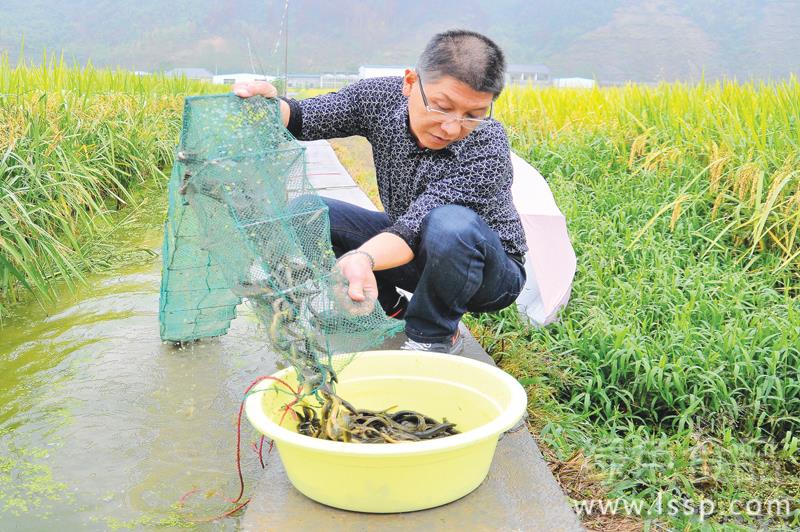
Farming Loach in Rice Paddies
Planting rice and farming loach together:In the rice paddy, leave 1 row empty for every 5 rows of rice planted. At the water inlet and outlet, enclose them with barrier nets to prevent the loach from escaping. After planting the rice, release the loach immediately. After about 4 months of raising, the loach can be caught and sold on the market. Fermented and decomposed livestock and poultry manure, as well as weeds, pests, and plankton growing in the rice paddy, are all feed for the loach. Rice is the best hidden place for the loach to move and rest. In southern regions, loach can be stocked twice a year.
Not planting rice and only farming loach:The suitable density is about one jin of loach per square meter of rice paddy area. April to October is the breeding period. The feed is rice bran, maggots, vegetables, weeds, etc., fed once a day. When the weather is hot, a shade shed should be built for the loach or the water level should be deepened to 60 cm. It can be stocked three times a year.
Breeding:Put the breeder loach into the rice paddy at a male-to-female ratio of 1:8. Place willow branches and leaves, aquatic plants, etc. in the rice paddy to make nests for the loach to spawn and hatch. About 100 kg of breeder loach can be placed in each mu of rice paddy. After the breeder loach spawns, the loach nests should be taken out in time and placed in a hatching pond or a large container for artificial temperature-controlled hatching of the loach. When the water temperature is about 25°C, the fertilized eggs hatch into loach fry in about 2 days. Generally, 15 square meters of water surface can hatch 500,000 loach fry.
Disease prevention:Mainly include rotten gill disease, red skin disease, enteritis, etc. Place tobacco stem roots at the four corners of the rice paddy, press them down with stones so that the tobacco stem roots are soaked in the rice paddy water. The dosage per mu of rice paddy is 0.5 kg. Or use 1-2 ant nests from tea trees, burn them into ash, mix well with concentrated feed and feed to the loach, and they will recover.