Issues to Note and Preventive Measures for Introducing Breeding Pigs to Pig Farms in Spring
Spring is the season for introducing breeding pigs at major pig farms. Generally, pig farmers may do a very thorough job of disinfection and other work before introduction, but they completely overlook the precautions during and after introduction. However, introducing breeding pigs to a pig farm requires extra attention, because problems such as infectious diseases can easily arise. So today, the editor will introduce the precautions needed at the three stages of introducing breeding pigs to a pig farm.
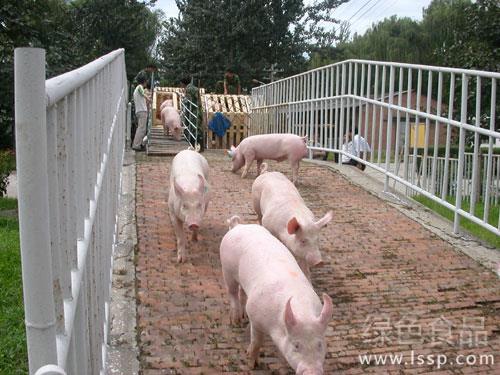
Introducing Breeding Pigs to a Pig Farm
I. Before Introduction
1. Pig farmers should formulate a scientific and reasonable introduction plan based on the actual conditions of the farm, including the number of pigs to be introduced, the breeds, the arrangement of pens, and so on.
2. The pig pens must be cleaned and disinfected. At noon on a sunny day, use “Dingfu Aldehyde” diluted with water at 1:1000-2000 for the treatment.
3. The selected breeding pig farm should be of moderate scale, have a good reputation, and possess high-level technical services. Try to choose a breeding pig supply farm whose regional macro-environment and pig farm micro-environment are highly consistent with those of your own farm. It should be noted that the more sources of breeding stock there are, the higher the hit rate for introducing diseases, so avoid introducing breeding pigs from multiple pig farms.
II. During Introduction
1. When selecting sows, in addition to meeting basic production performance, focus on observing the sow's body sturdiness; when selecting boars, the focus is on their production performance and body structure.
2. Randomly collect blood samples from the pig herd to be introduced and check the health status of the herd. Make sure to introduce pigs that are healthy and free of genetic diseases.
3. Strengthen the pigs' ability to resist stress. In addition, the introduced replacement pigs are not better the larger they are; generally, 50-60 kg is appropriate.
III. After Introduction
1. Isolate first: the newly introduced breeding pigs should first be raised in an isolation barn; the newly introduced breeding pigs cannot be directly transferred into the production area.
2. Disinfection and grouping: after the breeding pigs arrive at the pig farm, immediately disinfect the pigs' bodies, the unloading platform, the vehicles, and the ground around the unloading area, then unload the breeding pigs and raise them in groups according to sex and size.
3. Strengthen management: first provide water to the breeding pigs; only after they rest for about 6-12 hours can a small amount of feed be provided, and from the second day begin gradually increasing the feed amount, then after 5 days restore the normal feeding amount for breeding pigs.
4. Immunization monitoring: the breeding pigs must be raised in isolation in the isolation barn for 30-45 days after arriving, with strict quarantine and immunization.
5. Exercise training: after breeding pigs exceed 90 kg in weight, ensure 2 hours of free exercise time every day to improve their physique and promote estrus.