For high yields of rice-field crayfish, these four major requirements must be met
Delicious crayfish make people's mouths water, but at the thought of where it is born and grows, many people hold back their saliva, as it is said that crayfish grow better in dirtier places. Actually, this is not the case; many crayfish are now raised in rice fields. Yes, you heard that right - rice fields can not only raise fish and loaches, but now crayfish too, and raising crayfish in rice fields requires meeting four major requirements:
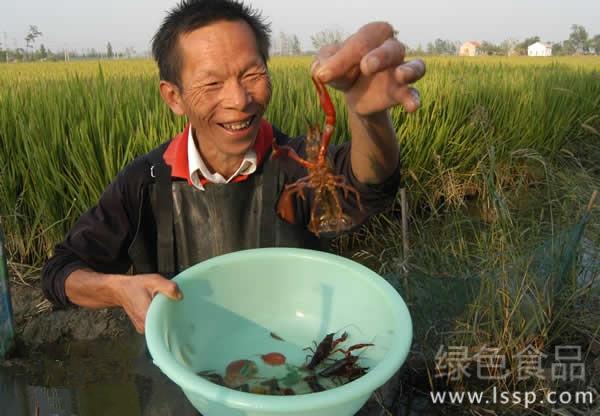
Raising crayfish in rice fields
1. Drying the field.Field drying should be a light bake, and the time should be short; there is no need to drain the water completely - just lower the water level until the field surface is exposed. It is best to dry the field once before the crayfish are stocked. If crayfish show abnormal reactions during field drying, water should be added immediately.
2. Fertilizing.Base fertilizer should be applied fully in one go, mainly decomposed organic fertilizer. Top dressing should be applied in small amounts several times; it is best to apply to half the field surface first, then the other half.
Chemical fertilizers harmful to crayfish are prohibited. Generally, fertilizer is applied once a month, with 5 kg of urea or 10 kg of compound fertilizer per mu each time. When applying chemical fertilizer, first drain the shallow field water and concentrate the crayfish into the field ditches, ring ditches and holding ponds. In addition, top dressing is prohibited during the mass molting period of crayfish. Reduce the number of fertilizer applications as much as possible during the rice growing period.
3. Using pesticides.Choose highly effective and low-toxicity pesticides and biological agents; pyrethroid insecticides are prohibited, and the number of pesticide applications should be minimized. When applying pesticides, strictly control the safe use concentration of the pesticide to ensure the safety of the crayfish. The pesticide should be sprayed on the rice leaves and as little as possible into the water, so as to avoid harming the crayfish. Before applying the pesticide, raise the field water to 20 cm, and change the water promptly after spraying. Avoid using pesticides in the rice field during the mass molting period of crayfish.
4. Temporary holding of seedlings and seed stock.Newly introduced crayfish will crawl everywhere and destroy the newly established rice seedlings. Therefore, when building the field works, dig a holding pond at the water inlet of the rice field with a depth of 1.2 m, a slope ratio of about 1:2.5, and an area of 3-5% of the rice field area, and hold the crayfish there until the rice seedlings are established before releasing them into the main field.