Key Technical Points for Daily Management and Disease Prevention on Goose Farms
At present, more and more farmers are raising geese, and many of them are puzzled when their geese suddenly fall ill at 3-5 kg and then die in large numbers. This is all because the farmers have not done a good enough job in the daily management and disease prevention of their goose farms. Now, the editor will introduce the key points for how to do a good job in daily management and disease prevention on goose farms:
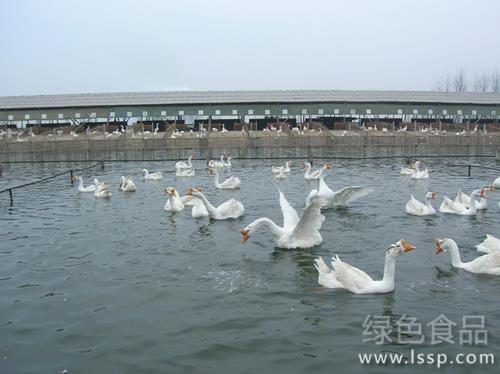
Goose
1. Goose farms must establish a strict disinfection system. Carry out regular disinfection, including of the environment, poultry houses, brooding rooms, feeding tools, warehouses, etc. Before disinfection, clean and rinse, and after drying, use drugs for disinfection. Goose farms with the means to do so should disinfect once every 3 days, and generally should disinfect once every 7 days, to control the growth of microbial pathogens.
2. Ensure that feed and drinking water are not contaminated. Goose farms should pay attention to the hygiene of feed and drinking water. When feeding geese, feed little and frequently, so that the droppings remain well-formed but not scattered, moist but not runny, in soft pellet form. Drinkers or water troughs and feed troughs will all be contaminated by droppings, so the water and feed that have accumulated in the water troughs and feed troughs should be removed in time to avoid causing E. coli and resulting in diarrhea. At the same time, do not feed moldy or spoiled concentrated feed. Those with the conditions for free-range rearing can let the geese graze so they eat enough green feed; those without the conditions for grazing should supplement enough green feed.
3. Do a good job in the prevention and treatment of goose diseases. The common diseases of geese are mainly gosling plague, goose viral hepatitis, and goose paramyxovirus disease. 1. Gosling plague has no specific drug treatment, so only prevention can be done well. Gosling chicks free of the disease should be introduced from non-epidemic areas, and 1-day-old chicks should be given intramuscular injection of hyperimmune serum against gosling plague for prevention, or astragalus polysaccharide injection can also be used for prevention. 2. Goose viral hepatitis often occurs in goslings at 4-5 days of age; the acute form causes sudden death without symptoms. Goslings can be vaccinated against viral hepatitis within 4-16 hours after hatching, and disinfectants should be given regularly to eliminate the spread of intestinal viruses in goslings. Within 1 week of introducing the goslings, give 1 course of intestinal anti-inflammatory drugs, such as florfenicol preparations, and add vitamin C to improve resistance; give one course of antiviral drugs, such as Banqing granules and ribavirin, to prevent early infection. 3. Goose paramyxovirus disease, also known as goose Newcastle disease, is an infectious disease shared by poultry and birds caused by avian paramyxovirus type I, and mostly occurs in goslings. Goslings can be given intramuscular injection of inactivated goose paramyxovirus oil-adjuvant vaccine at 0.3 ml/bird, and adult geese at 0.5 ml/bird; goslings can also be given intramuscular injection of 5 times the dose of Newcastle disease N strain vaccine, and adult geese intramuscular injection of 5 times the dose of Newcastle disease I strain vaccine. 4. At 8-15 days of age, give intramuscular injection of inactivated avian influenza (H5 subtype) vaccine at 0.3-0.5 ml/bird.
In short, strengthen the feeding and management of goose farms, and reduce cold and heat stimulation. Do a good job in disinfecting the rearing environment, carry out immunization against goose-related diseases according to the procedures, and strengthen drug-based health care and prevention.