Prevention and Control Methods and Countermeasures for Potato Poisoning in Dairy Cows
Many cattle farmers, in order to save on feed costs and to avoid wasting potatoes at home, feed dairy cows potatoes that have already sprouted, turned green, or become moldy and rotten. The result is more loss than gain, causing accidents in which dairy cows die of poisoning. So how should potato poisoning in dairy cows be prevented and controlled?
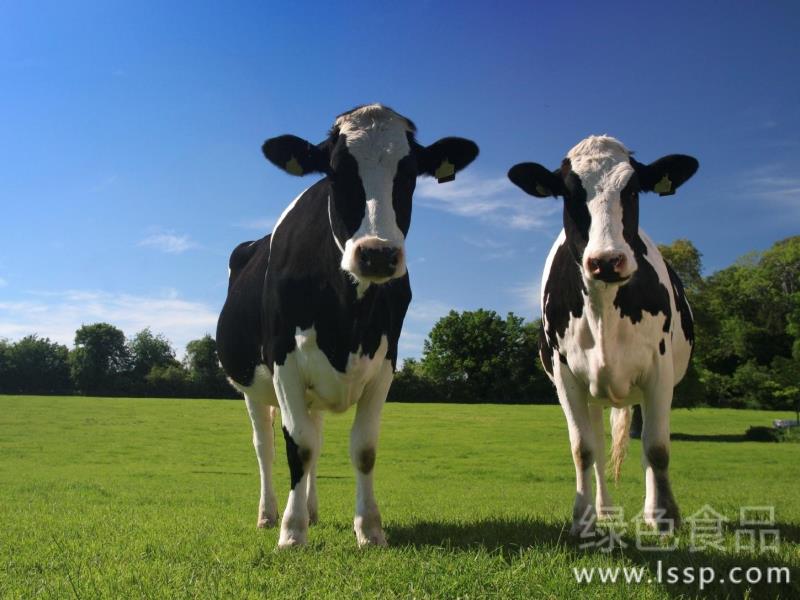
Dairy cow
1 Clinical symptoms
The main symptoms of potato poisoning are disturbances in the nervous system and digestive system function of dairy cows. The clinical symptoms vary with the severity of poisoning. Severe poisoning: poisoned dairy cows show obvious neurological symptoms. At the beginning of the illness they are restless and excited, displaying frenzy and charging violently forward, then turn depressed, with weakness and lack of strength in the hindquarters, movement disorders, swaying gait, cyanosis of the visible mucous membranes, weak breathing, cardiac weakness, dilated pupils, and generalized convulsions, dying within 1 to 2 days. Mild poisoning: mostly a chronic course. Poisoned dairy cows show obvious symptoms of gastroenteritis. At the beginning of the illness, appetite decreases, rumen movements are weak, rumination stops completely, the oral mucosa swells, there is drooling, vomiting, and constipation; when the gastroenteritis becomes acute, severe diarrhea appears, with blood mixed in the feces. The affected cow is depressed, with muscle flaccidity and extreme weakness, and body temperature sometimes rises. Rashes occur on the anus, tail base, inner sides of the limbs, udder, and other areas. Vesicular dermatitis occurs around the corners of the mouth.
2 Treatment
① Stop the absorption and spread of toxic substances in the gastrointestinal tract of dairy cows and remove the toxic substances. Use 1000 milliliters of 25% potassium permanganate solution or 5% tannic acid solution for gastric lavage or enema.
② Improve blood circulation and strengthen detoxification function. Each time, mix 2000 milliliters of 10% glucose, 20 milliliters of 10% sodium benzoate caffeine, 20 milliliters of vitamin C, and 100 milliliters of magnesium sulfate, then give the dairy cow an intravenous injection, twice daily.
③ Use traditional Chinese medicine to expel toxins and detoxify. Administer Sanhuang Jiedu decoction by drenching: Coptis chinensis, Phellodendron chinense, and Scutellaria baicalensis 30 grams each; Anemarrhena asphodeloides, Forsythia suspensa, Gardenia jasminoides, dandelion, Gentiana scabra, Isatis indigotica root, Rehmannia glutinosa, Artemisia capillaris, Pharbitis nil seed, Akebia quinata, Alisma orientale, and Poria cocos 25 grams each; talc and hemp seed 100 grams each; Glycyrrhiza uralensis 15 grams. Decoct in water, take the juice, and when it has cooled to warm, administer once by drenching, once in the morning and once in the evening. It can also be treated by mixing 250 milliliters of rapeseed oil and 250 milliliters of honey and administering once by drenching. Alternatively, mix 300 grams of mung beans and 30 grams of Glycyrrhiza uralensis, decoct in water, and administer once by drenching.
④ For the skin rash areas caused by potato poisoning, first clip the hair from the affected area of the dairy cow, wash with 20% tannic acid solution or 30% boric acid solution, then apply 30% gentian violet or 30% silver nitrate solution, etc., to prevent putrefaction, astringe, and stop exudation.