Mucosal-type pigeon pox in meat pigeons is highly harmful; how should it be prevented and treated?
Pigeon pox in meat pigeons is caused by pigeon pox virus. Pigeon pox virus is generally transmitted through contaminated drinking water, feed, etc., infecting meat pigeons through wounds and mucous membranes, and occurs most frequently in summer and autumn.
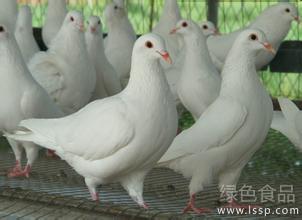
Meat pigeons
Symptoms
The skin form of pigeon pox mainly manifests as small white nodules forming on the eyelids, beak, and toes of meat pigeons, which later form scabs. If not diagnosed and treated in time, secondary suppuration can occur, producing purulent discharge. The scabs will fall off on their own after 4 days, but they leave scars on the meat pigeons. The mucosal form of pigeon pox mainly occurs in the throat of meat pigeons, with symptoms of difficulty feeding, open-mouth breathing, visible white pseudomembranes formed on the mucous membranes, and a foul odor. In severe cases, the throat swells, causing difficulty breathing, and after several days the meat pigeons die from suffocation or starvation.
Preventive measures
In spring, meat pigeons should be vaccinated with attenuated pigeon pox vaccine for immunization.
Treatment methods
1. Isolate the sick pigeons, thoroughly clean the contaminated bedding straw, pigeon cages, pigeon houses, etc., and spray them with a 1%-2% caustic soda solution for disinfection.
2. Carry out emergency vaccination of infected meat pigeons and at-risk meat pigeons so that the pigeon pox outbreak is brought under control within a short period.
3. Treat the sick pigeons by removing the scabs or pseudomembranes and applying 2% iodinated glycerol, twice a day.
4. Administer oxytetracycline to the whole flock of meat pigeons, mixing it into the feed at 0.02%-0.04% and feeding it for 5-7 consecutive days.
5. Mix chlortetracycline or tetracycline into the feed at 0.04% and feed it to the meat pigeons.
6. Add an appropriate amount of vitamin A and vitamin B2 to the health sand.