A Detailed Guide to the Prevention and Treatment of Five Common Diseases in Crayfish
For crayfish diseases, the approach of "prevention first, combining prevention and treatment" should be adopted. Below, the editor introduces several common crayfish diseases and their prevention and treatment methods.
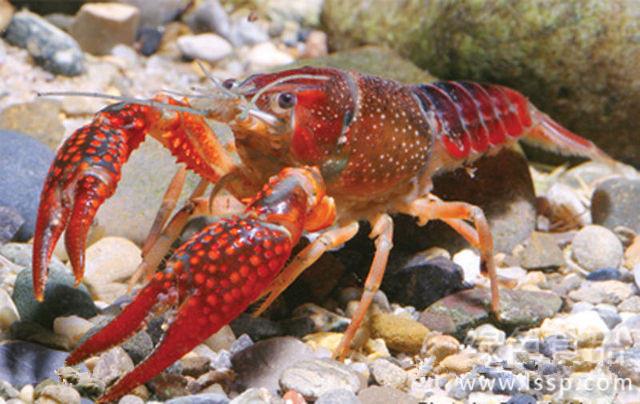
Crayfish
I. Gill Rot Disease
Gill rot disease is caused by bacteria, with symptoms of blackened gill filaments and localized rotting in crayfish.
Prevention and treatment methods: Residual bait and debris in the shrimp pond should be removed regularly, new water should be added, and the dissolved oxygen content in the water should be kept above 4 mg/L to avoid water pollution. The prevention and treatment method is to splash the entire pond with a bleaching powder solution at a ratio of 2 g per cubic meter.
II. Black Gill Disease
Black gill disease is mainly caused by water pollution, in which the gill filaments of crayfish become infected with fungi. The symptoms are that the gills of crayfish change from red to brown or light brown, until they become completely black, the gills shrink, and the shrimp lie at the edge of the pond and die from difficulty breathing.
Prevention and treatment methods: Keep the water body clean, with sufficient dissolved oxygen, and regularly use quicklime to adjust water quality. Soak diseased shrimp in 3%-5% salt water for 2-3 sessions, each lasting 3-5 minutes, or splash the entire pond with 10 g of methylene blue dissolved in water per cubic meter.
III. Tail Rot Disease
Tail rot disease is caused by injury, cannibalism among crayfish, or infection by chitin-decomposing bacteria. In the early stage of infection, the tail of the crayfish has blisters, and the edges are ulcerated, necrotic, or incomplete. As the condition worsens, the ulceration spreads to the entire shrimp tail, and eventually the entire tail falls off due to ulceration.
Prevention and treatment methods: When transporting and releasing crayfish seedlings, do not stack them under pressure or damage the crayfish. During the rearing period, to prevent crayfish from competing for food, feed should be given in sufficient quantity and evenly. When this disease occurs, splash the entire pond with a tea seed cake infusion at a ratio of 15-20 g per cubic meter; or splash the entire pond with 5-6 kg of quicklime per mu dissolved in water.
IV. Carchesium Disease
The pathogen is Carchesium, and the symptom is that crayfish have difficulty molting smoothly, resulting in death during the molting process. It can occur in both larvae and adult shrimp, and is more seriously harmful to young crayfish.
Prevention and treatment methods: Thoroughly clear the pond to kill Carchesium in the pond. In ponds where this disease occurs, large amounts of water can be exchanged frequently to reduce the number of Carchesium in the pond.
V. Ciliate Disease
Epistylis and Vorticella are common pathogens of ciliate disease. Ciliates attach to the body surface, appendages, and gills of crayfish. When the attachment amount is too large, it hinders the crayfish's breathing, movement, feeding, and molting, affecting growth. Especially when large numbers attach to the gills, it affects gas exchange in the gill filaments of crayfish, ultimately leading to suffocation and death of the shrimp due to hypoxia.
Prevention and treatment methods: Maintain a reasonable stocking density of crayfish, pay attention to the environmental hygiene of the shrimp pond, frequently exchange with new water, and keep the water quality fresh. Soak infected crayfish in 3%-5% salt water, with 3-5 days as one treatment course, or soak them in a 25-30 mg/L formalin solution for 4-6 hours, for 2-3 consecutive sessions.