What Is Urea? The Correct Way to Use Urea
What is urea? When is it good to use urea? Please give an introduction. Urea belongs to the amide-form nitrogen fertilizers, accounting for 35%-40% of China's nitrogen fertilizer production, second only to ammonium bicarbonate. 1. Properties: The molecular formula of urea is CO(NH2)2, containing 46% nitrogen (N), and it appears as white or light yellow crystals. It is easily soluble in water, and its aqueous solution reacts neutrally,...
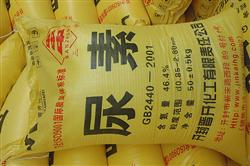
What is urea? When is it good to use urea? Please give an introduction
Urea belongs to the amide-form nitrogen fertilizers, accounting for 35%-40% of China's nitrogen fertilizer production, second only to ammonium bicarbonate.
1. Properties: The molecular formula of urea is CO(NH2)2, containing 46% nitrogen (N), and it appears as white or light yellow crystals. It is easily soluble in water, and its aqueous solution reacts neutrally. It is fairly hygroscopic, but because hydrophobic substances such as paraffin are added during urea production, its hygroscopicity is greatly reduced. The following points about urea's properties deserve special attention: 1. Urea contains a small amount of biuret, also called double urea; when it exceeds 1%, it has a clear inhibitory effect on crop growth, so it should not be used as a seed fertilizer, seedling fertilizer, or foliar fertilizer, nor should it be applied in excessive amounts or too concentrated.
2. Urea is an organic-form nitrogen fertilizer. It must be transformed by urease in the soil into ammonium carbonate or ammonium bicarbonate before it can be easily absorbed by crops, so it should generally be applied 4-8 days in advance.
3. Before transformation, urea is in molecular form and is not adsorbed by the soil, so it should be protected from loss with water; after transformation, the ammonia is also easily volatilized, so it should be applied deeply and covered with soil.
2. Application techniques: Urea can be used as a base fertilizer and a topdressing fertilizer, but it is generally not used directly as a seed fertilizer or seedling-root fertilizer, because if not handled well, high concentrations of urea can affect seed germination and young root growth. If it must be applied as a seed fertilizer, it should be separated from the seeds, and the amount of urea should not be too much. For grain crops, apply about 5 kg of urea per mu; it must first be mixed evenly with dry fine soil and applied about 2 cm below the seeds, or about 10 cm to the side.
(1) Base fertilizer. Taking grain crops as an example, generally use 10-15 kg of urea per mu. First, for dryland base fertilizer, urea can be broadcast on the field surface and then plowed and harrowed immediately. For spring-sown crops, the soil temperature is low; if urea is banded in a concentrated way, the amount should not be too large, otherwise it may easily cause local alkalization of the soil or an increase in biuret, resulting in seed burn. Second, for paddy field base fertilizer, urea can be broadcast after the field water is drained, then plowed; after 5-7 days, when the urea has transformed into ammonium carbonate, irrigate and harrow the field. It can also be applied in shallow water after plowing and before harrowing, then rotary-tilled with a tractor so that the urea and mud are evenly mixed. In addition, when urea is used as a surface fertilizer, use 7-8 kg per mu, apply it evenly before transplanting rice, and do not drain water arbitrarily during the harrowing process.
(2) Topdressing. For grain crops, use 8-13 kg of urea per mu, applied at the tillering stage or jointing stage. First, for dryland crops, furrow application or hole application can be used, with a fertilization depth of 6-10 cm; after fertilization, cover firmly with soil to prevent ammonia volatilization after hydrolysis. Second, for paddy field crops, drain the water first when topdressing, maintain a thin water layer, weed and cultivate the field after application, and do not irrigate for two or three days; after most of the urea has transformed into ammonium carbonate, irrigate again. When urea is used for topdressing, it should be applied a few days earlier than other nitrogen fertilizer varieties. On sandy soil, water and fertilizer leakage is relatively serious, so it can be applied in split doses, and the amount each time should not be too much. Urea moves easily with water, so on dryland it can also be broadcast on the soil surface and then watered immediately. Within the first week, the fertilizer moves downward; afterward, due to evaporation, the fertilizer moves upward again, mostly concentrating in the 10-20 cm soil layer, without causing nitrogen volatilization loss. The irrigation amount per mu should not be too large or too small; for loam soil, 20-30 cubic meters is suitable, and for sandy loam or sandy soil, 15-20 cubic meters is suitable. When urea is applied to other crops, the application rate and application period differ, but the points to note during application are the same.
Click to get more nitrogen, phosphorus, and potassium application techniques
Click to get more chemical fertilizer application techniques