How effective is long-acting urea? Detailed usage instructions
How effective is long-acting urea? How is it used? Please allow me to introduce long-acting urea. It is made by adding a certain amount of a urease inhibitor (hydroquinone) to ordinary urea during processing. A single deep application of long-acting urea, compared with the usual method for ordinary urea (seed fertilizer + topdressing), increases yield by an average of 14.6%, with an increase range of 8.6%-25...
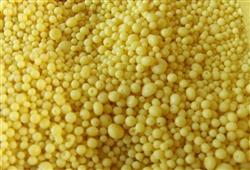
How effective is long-acting urea? How is it used? Please allow me to introduce it
Long-acting urea is made by adding a certain amount of a urease inhibitor (hydroquinone) to ordinary urea during processing. A single deep application of long-acting urea, compared with the usual method for ordinary urea (seed fertilizer + topdressing), increases yield by an average of 14.6%, with an increase range of 8.6%-25.1%; deep basal application of long-acting urea in corn, compared with a single deep basal application of ordinary urea, increases yield by an average of 16.6%, with an increase range of 11.4%-21.7%.
Why does long-acting urea increase yield so significantly compared with ordinary urea? Because long-acting urea contains hydroquinone, which inhibits the decomposition of nitrogen in urea. The inhibitory effect is strong in the early growth stage of corn, and as the hydroquinone is gradually consumed, the inhibitory effect gradually weakens. Generally, after 70 days of application, urea decomposition returns to normal. At this time, corn is just past the jointing stage and entering the period of increased fertilizer demand, which satisfies the demand for nitrogen and basically achieves synchronization between crop fertilizer demand and nitrogen release from long-acting urea decomposition. This can reduce the loss caused by the low nitrogen fertilizer demand of corn from emergence to before jointing, when the nitrogen normally decomposed from ordinary urea cannot be utilized, while in the later stage the fertilizer effect is exerted normally, extending the fertilizer effect period, meeting the needs of corn, and thereby improving nitrogen use efficiency. From the growth trend of corn with long-acting urea applied in production, the plants are slightly shorter in the early stage than those with ordinary urea applied. In the later stage, however, there is a clear difference. According to multi-point surveys at maturity, plant height is 24.9 cm lower than with ordinary urea, and stem diameter increases by 0.29 cm; the most obvious difference is that at maturity there is more green leaf area, with an average of 1.9 more leaves and an area of 362.7 square cm. This performance is especially prominent on sandy soil. The reason is that sandy soil has poor fertilizer retention capacity and serious leaching losses, while long-acting urea releases nitrogen slowly, reducing losses and improving use efficiency. Plants with long-acting urea applied have larger leaf area and increased photosynthetic area, which favors nutrient production and accumulation, laying the foundation for increased yield. Ear length is 1.3 cm greater than with ordinary urea, and 100-grain weight increases by 1.5 g, with a significant yield-increasing effect.
Practice has proved that long-acting urea, because of its single deep basal application, has the characteristics of saving labor, increasing yield, and delivering high benefits. It is quite popular among farmers and should be promoted and applied in corn production. In promotion and application, three points should be noted:
① Long-acting urea can be applied to corn fields on various soil types such as brown earth, meadow soil, and wind-sandy soil, but attention should be paid to selecting the hydroquinone content. For plots with somewhat heavy texture and better fertility, products with high content should be selected; otherwise, products with low content should be selected.
② When applying long-acting urea, be sure to pay attention to a separation layer between seed and fertilizer, implement deep basal application, and maintain a distance of more than 5 cm from the seeds to prevent seed burning from affecting full stand establishment.
③ The amount of long-acting urea must be applied according to measurement, and the fertilizer amount must be sufficient, generally 30 kg per mu, to prevent fertilizer deficiency from failing to achieve high yield and high efficiency.
Click to get more nitrogen, phosphorus, and potassium application techniques
Click to get more chemical fertilizer application techniques