What fertilizer should be used to effectively prevent and control cotton premature senescence?
What fertilizer can prevent and control cotton premature senescence? Please allow me to explain the causes of cotton premature senescence: 1. Genetically modified hybrid insect-resistant cotton has a greater demand for potassium fertilizer than conventional hybrid cotton, and its absorption and conversion rate of potassium fertilizer is slower. If the amount of potassium applied is insufficient, potassium deficiency symptoms are very likely to appear; 2. There are now many old cotton fields and few new cotton fields...
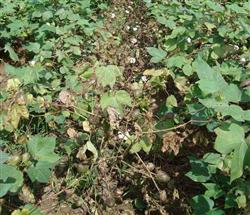
What fertilizer can prevent and control cotton premature senescence? Please allow me to explain
Causes of cotton premature senescence: 1. Genetically modified hybrid insect-resistant cotton has a greater demand for potassium fertilizer than conventional hybrid cotton, and its absorption and conversion rate of potassium fertilizer is slower. If the amount of potassium applied is insufficient, potassium deficiency symptoms are very likely to appear;
2. There are now many old cotton fields and few new cotton fields. The soil organic matter content of cotton fields is declining year by year, and the potassium content is not high;
3. Many farmers are accustomed to applying too much nitrogen fertilizer and neglecting potassium fertilizer. However, excessive nitrogen fertilizer can cause excessive vegetative growth of cotton and make premature senescence more likely;
4. Mistakenly believing that compound fertilizer contains potassium fertilizer, so there is no need to apply potassium fertilizer again;
5. Insufficient understanding of the relationship between potassium fertilizer and cotton growth and development.
2. Prevention and control measures. In the middle and late stages of cotton management, it must be emphasized that potassium fertilizer should be applied well and in sufficient amounts.
1. Ensure that the amount of potassium applied per mu is not less than 60 jin. For example, if potassium chloride with a potassium oxide content of 60% is used, it should be no less than 60 jin per mu. If compound fertilizer has already been applied, the amount of potassium applied may be appropriately reduced because compound fertilizer contains potassium;
2. As for the fertilization period, it is best to apply half as base fertilizer and half as topdressing. If no potassium fertilizer was applied in the base fertilizer, apply 40 jin of potassium per mu at the bud stage, and then apply another 20 jin at the flowering and boll stage;
3. In terms of application method, it should be mixed and applied together with nitrogen and phosphorus fertilizers. At the bud stage, apply it in furrows combined with intertillage and earthing up; at the flowering and boll stage, apply it deeply in holes. Avoid broadcast application to prevent loss after rain.
Click to get more nitrogen, phosphorus and potassium application techniques
Click to get more chemical fertilizer application techniques
Click to get more cotton planting techniques