Take Control of Profits from Bass: Key Technical Points for Farming Freshwater Bass
Bass are deeply loved by consumers for their delicious flesh. And because bass grow fast, adapt widely, and have strong disease resistance, they are also deeply loved by fish farmers. Every year in March and April, bass farmers are at their busiest, because each mu of pond can raise at most 2500 bass, otherwise the growth rate of the bass is affected and they cannot catch the good prices on the bass market in June or August. Today the editor will introduce bass farming techniques:
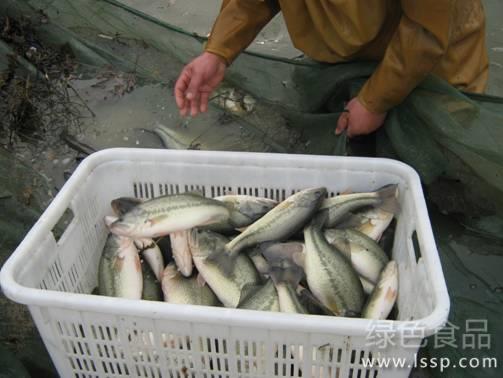
Bass
I. Pond Construction
Choose a place with abundant water sources and unpolluted water quality to build the pond. Each pond is about 5—8 mu, rectangular, and a north-south orientation is better. The pond bottom is required to be flat, with a sandy-mud substrate, firm banks, and a depth of 2 m. Water inlet and drainage pipes must be buried underneath. At the same time, equip 1 to 2 aerators of 1.5KW and a generator set. Before stocking the bass, the pond must be cleared and disinfected; one week before releasing the fry, spread 50 kg of quicklime per mu or 5 to 10 kg of bleaching powder over the dry pond for disinfection. Before releasing the fry, fertilize the pond water to cultivate basic feed; once the pond water turns oily green or tea brown, it is ready.
II. Fry Rearing
For bass fry caught from sea areas with a body length of 1.5 to 2 cm, the salinity must be reduced to 4—7‰ before they are put into the holding pond (salinity 1‰). Natural bass fry from northern sea areas are the best, because the fry grow fast and are large in size, which can shorten the farming cycle and increase economic returns. The stocking density in the holding pond is controlled at 1 to 2 million per mu, and the holding pond must be frequently flushed with water and aerated. From the 2nd day after the bass fry are put into the pond, they can be fed live feed such as zooplankton and bloodworms, then fish paste and floating pellet feed are slowly mixed with live feed for feeding, gradually domesticating them until the bass can be fed minced fish paste and floating pellet feed. The daily feeding amount is 15% of the bass body weight, fed in 3 portions. During the holding period, splash 15ppm formalin or 0.3ppm strong chlorin once a week for disinfection. Three days before starting to feed the bass, give each 50 kg of bass 0.5 g of furazolidone, 3 g of oxytetracycline, and 1 g of vitamin C orally, mixed into the fish feed once a day, for 3 consecutive days. After more than 20 days of rearing, the bass grow to 4 to 6 cm and can be transferred to large ponds for separate stocking.
III. Feeding Management
After sieving, bass fry are stocked separately in ponds by size. The stocking density is generally 2500 to 3500 per mu. The water depth is more than 1.5 m, and the pond water must maintain suitable fertility, with an oily green water color and a transparency of 30 cm as appropriate. Feed twice a day with minced fish paste and floating pellet feed supplemented with vitamins B and C; the daily feeding amount is 6% of the bass body weight. Each month, erythromycin, oxytetracycline, and vitamin drugs must also be mixed into the feed and fed 2 times, each time for 3 consecutive days. At the same time, regularly splash 20ppm formalin or 0.4ppm strong chlorin over the whole pond for disinfection. Control drugs such as trichlorfon and mercurous nitrate should be used with caution. Daily pond patrol management must be done well. On muggy days or at night, turn on the aerator; if the pond water deteriorates, replace the water in time to keep the pond water fresh.