Gosling health determines goose-raising profitability: master the key points of gosling feeding and management
Geese are herbivorous waterfowl, and geese can be raised anywhere there is water and grass. The living habits and physiological characteristics of geese are inseparable from water, and adult geese eat more than 0.5 kg of fresh grass every day. Geese can only produce fertilized eggs by mating in water. During the rearing process, whether goslings are healthy or not directly affects goose-raising profitability. Today, the editor will introduce the key points of gosling feeding and management:
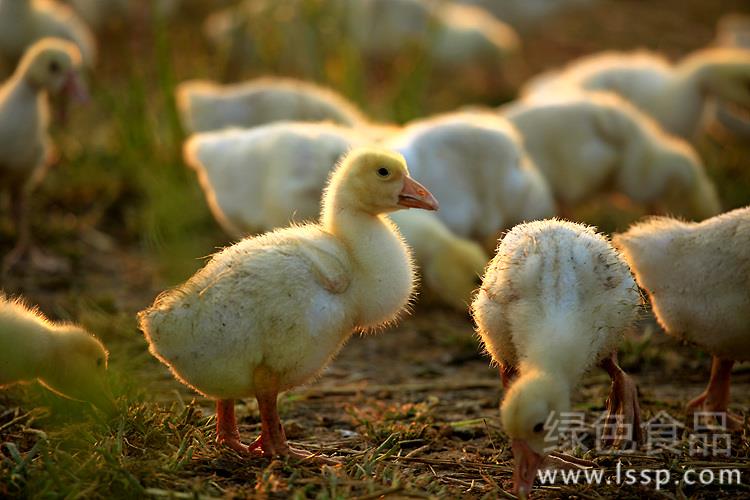
Goslings
1. Select good gosling chicks
Goslings are geese from hatching to one month of age. Gosling chicks should be selected from the offspring of mother geese that have been injected with goose plague vaccine. Choose chicks with a strong physique, a relatively large body size, a well-closed abdomen, no bloody navel, no hard navel, clean mouth and nose, and a lively, active temperament. Weak and inferior gosling chicks should be culled or isolated and raised as early as possible. Transport should be stable and fast, and attention should be paid to keeping goslings warm during transport. It is relatively suitable to transport goslings after hatching, because goslings do not need to drink water or eat within 24 hours after hatching. It is best for goslings to enter the brooding room 10 hours after hatching.
2. Preparation of the brooding room
The brooding room should be rinsed, cleaned and disinfected. For disinfection of the floor and walls, use 10% fresh limewater; wash and scrub utensils with 2% caustic soda water. Repair doors and windows, and do a good job of insulation.
3. Cold prevention and warmth retention
Goslings have relatively high temperature requirements, and too high or too low a temperature will cause gosling death. Therefore, an appropriate temperature should be provided according to the growth stage of the goslings: 28-30°C for 1-5 days of age, 26-28°C for 6-10 days of age, 22-24°C for 11-15 days of age, and 20-22°C for 16-20 days of age. After that, the room temperature should be kept above 18°C. When the temperature is too low, goslings huddle together, curl up, and chirp, which can easily cause death. Above 35°C, goslings open their mouths and pant, scream and sweat, and when suddenly exposed to cool wind, geese are prone to catching cold. Frequently change the litter in the gosling house to keep the goose house clean and dry. At the same time, keep the air in the goose house circulating and the air fresh.
4. Drinking water and first feeding
Goslings should drink water first and then start eating. Put 0.02% potassium permanganate water into small basins and utensils, and press the heads of goslings within 24 hours after hatching down to train them a few times, and they will drink water freely. At the same time, feed green feed. Chop the green feed into shreds and scatter it on the backs of the geese to guide the goslings to eat. Feed rice soaked in water with green feed added or broken rice soaked in boiled water, scatter it in washed utensils and let the geese eat freely, adding more as they eat, feeding once every 2-3 hours, 6-8 times a day. After 10 days of age, feed the goslings compound feed; after 15 days of age, on sunny days after the dew has dried, the goslings can be let outside and allowed to eat freely, so as to improve palatability and save feed.
5. Group feeding
Feed goslings in groups according to their physical strength. Goslings should be carefully fed and managed to improve the survival rate of goslings.
6. Defense against enemies
In the early stage of brooding, goslings have no ability to defend against or escape from enemies. Rat damage is the most dangerous enemy of goslings. Therefore, carefully inspect the corners, doors and windows of the brooding room, and block rat holes. Strengthen night duty, remain vigilant and take effective defensive measures.