Cherry Valley Duck: Low Investment, High Returns, Detailed Guide to Feeding and Management Methods
The Cherry Valley Duck is characterized by low investment, fast growth and good returns, making it especially suitable for promotion in areas with well-developed water systems. The techniques for raising Cherry Valley Ducks are as follows:
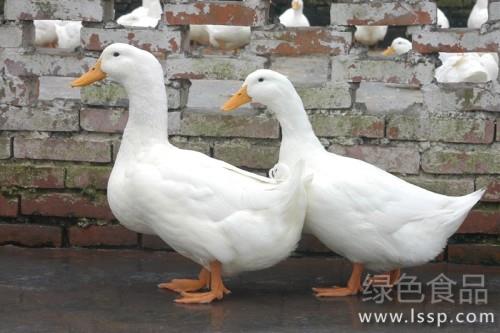
Cherry Valley Duck
(1) Site Selection and Construction
Choose a location by a river, pond dam or reservoir with unpolluted water, on open, flat terrain with good drainage, where isolation and disease prevention for Cherry Valley Ducks are easy, to build the shed. Leave an activity area between the shed and the water surface, and use wooden poles as the support and roof frame of the shed. Lay sorghum stalks or corn stalks on top of the shed, cover with wheat straw or rice straw; the two sloped sides of the shed should be about 80-100 cm above the ground, enclosed with nylon netting and sealed with corn stalks, and plastic sheeting used for warmth in winter. The duck shed is generally 20-30 m long, 8-10 m wide and 3-4 m high at the top; the orientation should be determined according to the local terrain. Each shed can house 1000-2000 Cherry Valley Ducks, with a suitable stocking density of 8-12 birds per square meter.
(2) Feeding and Management
1. Brooding:For ducklings within 24 hours of hatching, give water first and then start feeding; when starting feed, scatter the feed on plastic sheeting and let the ducks eat freely, feeding 4-6 times a day, gradually reducing the number of feedings as the Cherry Valley Ducks grow older. The key to brooding is temperature. For ducklings 1-2 days old, the brooding room temperature is 32-34°C, then gradually lower the temperature; the extent of cooling should be such that the ducklings can move about freely and do not huddle together. In winter and early spring, pay attention to cold protection and warmth for Cherry Valley Ducks, and in summer cool them down and prevent heatstroke.
2. Feed Formulation:The feed is formulated from ingredients such as corn, soybean cake, wheat bran, fish meal, bone meal and rapeseed cake, plus an appropriate amount of salt, trace elements and a small amount of green fodder.
3. Bathing:In clear, warm weather, ducks over 7 days old can be let into the water to bathe; the number of times should be decided according to the season, temperature and weather conditions. In summer, put them in the water 3-4 times a day, in spring and autumn 1-3 times, in winter 1-2 times, and not at all in cold weather. Each bathing session starts at 10 minutes and gradually increases to about 1 hour. It can be longer in hot weather and shorter in cold weather, to be adjusted flexibly. Each time, drive the ducks after bathing to a sheltered spot in the exercise area to rest and preen their feathers, and wait until their feathers are dry before driving them back into the shed.
4. Disease Prevention:Disinfect the duck shed regularly with quicklime, keep the shed clean and dry, rinse the feed troughs and water troughs with clean water twice a day, and disinfect with potassium permanganate solution 2-3 times within 1 week. Ducklings within 1 day of age should be vaccinated against duck viral hepatitis with attenuated vaccine via drinking water immunization. At 15 days of age, use attenuated duck plague vaccine mixed into the feed with water according to the preventive dose and feed once. After 20 days of age, add an appropriate amount of fowl cholera vaccine or other antibiotics to the feed to prevent duck cholera.