How are bay scallops farmed? Seawater and management work are very important
In recent years, large numbers of scallops have died. Seawater pollution is certainly one reason, but in fact improper management by farmers can also cause mass scallop deaths. Today, the editor will introduce the farming techniques for bay scallops:
The sea area for farming scallops is generally a nearshore area, with clear seawater, high transparency, a seawater depth of between 10 m and 20 m, relatively high nutrient salts, abundant planktonic algae, light pollution, index standards met, small wind waves, weak underwater undercurrents, and few harmful organisms.
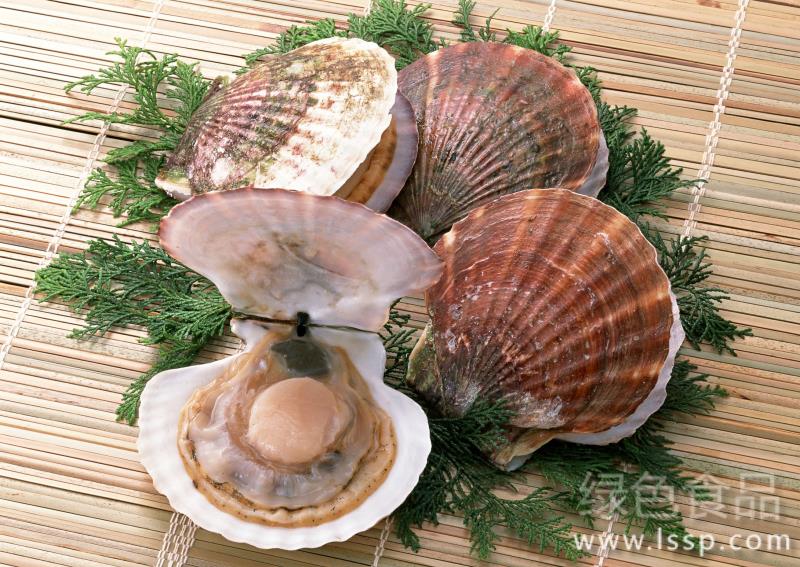
Scallop
In March or April, or in July or August, prepare enough wooden stakes, ropes and buoys for farming scallops. A 100 m long rope raft uses 24-strand flax rope or nylon rope with a diameter of 5 cm. Both ends of the rope raft are fixed with two 2 m long thick locust wooden stakes, and buoys made of plastic or hollow glass are placed on the upper end. Every 0.5 m, a special 8-layer to 10-layer scallop cage is tied with thin nylon rope as an attachment for scallop seedlings to grow on, and buoys are tied, one buoy every 20 cm, to keep the rope raft floating on the water surface. The row spacing exceeds 5 m, making it convenient for farmers' boats to pass through the farming area.
Scallop seedlings can be placed twice a year, once in May or June and once in September or October. Place seedlings in the scallop cages, about 20 scallop seedlings per layer, with 8 to 10 layers in total, and tie the scallop cages with seedlings onto the farming ropes. Bay scallops tolerate high temperatures and grow relatively quickly; seedlings placed in the first year are harvested in the same year.
Grow-out
1. Remove harmful organisms. Hermit crabs, sea stars, large seaweeds, marine vegetables and so on are all harmful organisms to scallops. Go out to sea frequently, observe more, retrieve and inspect the scallop cages and nylon rope cages with attached seedlings at any time, and promptly remove harmful organisms or foreign matter attached to them.
2. Prevent wind and waves. Farmers should go out to sea frequently and patrol more to prevent wind, theft and man-made damage.
3. Wash cages frequently and brush the discs. Scallops have high requirements for seawater, so they should be carefully observed in a timely manner, the cages rinsed frequently, and foreign matter such as seaweed removed. For scallops that have grown to a certain size, the cages should be turned in a timely manner to facilitate the intake of fresh seawater and promote healthy growth.
Scallops grow quickly and are harvested twice a year. When the scallop shell reaches 5 cm to 8 cm in length, the scallop meat is at its most plump and delicious, marking the beginning of the harvest period. At harvest, the nylon rope raft with attached scallops is cut off with a special knife.