Beef cattle market prices are fairly stable; sharing four beef cattle farming experiences
Beef cattle market prices have always been very stable, so raising beef cattle has obvious advantages: low risk, strong disease resistance, few plague diseases, and considerable returns. Today the editor shares four beef cattle farming experiences with everyone.
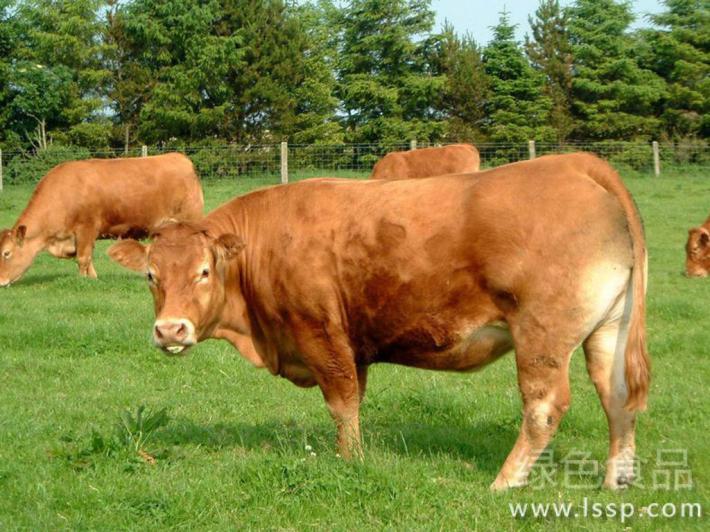
Beef cattle
1. Look at the appearance first when buying cattle
When buying beef cattle, choose beef cattle with a large mouth, large nostrils, bright eyes, a relatively long body, thick legs, and a strong tail; such beef cattle eat well and are healthy and disease-free. In addition, also look at the beef cattle's hide and rump: the skin should be light and elastic, and the rump should have plenty of soft hide, so that a single grab takes a whole handful; such beef cattle gain more meat, fatten quickly, and bring high economic returns.
2. Beef cattle feeding method: "three fixed and three watch"
The three fixed are: first, fixed personnel to raise them, to observe whether the beef cattle show any abnormal phenomena and to keep track of their feed intake, so that measures can be taken promptly if abnormalities occur; second, fixed feeding times. Generally it is 5 am, 10 am, and 5 pm, feeding at the trough 3 times, plus 1 supplementary feeding at night; before each trough feeding, first give the beef cattle a small amount of dry grass, then mix in the feed, and 2 hours later provide drinking water; in summer a little salt can be added to prevent dehydration; third, fixed feed quantity, which must not be suddenly more or suddenly less. The three watch are: watch the eating condition; watch the manure; watch rumination.
3. Do a good job of three management measures for beef cattle
First, in summer tie the beef cattle that have finished eating under a ventilated tree shade, or in a shaded area or under a cool shed, to prevent heatstroke; in winter tie the beef cattle in a place sheltered from the wind and facing the sun. Second, frequently brush the beef cattle's bodies to promote blood circulation so the beef cattle put on more fat. Third, the cattle rope should be short to reduce the amount of exercise; it is best to tie one cattle to one stake, to help weight gain and fattening.
4. Feed coarse grain carefully and match it scientifically
In areas rich in corn, corn stalks can be the main forage for beef cattle; in non-corn-producing areas, adapt to local conditions. Cut the grass into four pieces per cun; the principle is the finer the better, because fine grass is liked by cattle, is easy to digest, and saves feed. Adjust the amount of concentrate fed and the proportion for the beef cattle breed according to the season. For newly purchased feeder cattle, if little or no concentrate is fed for a long time, or if too much concentrate is fed, digestion is poor and instead fattening is slow. Therefore, for newly bought beef cattle, the daily concentrate intake is generally best at 1.5-2 kg. The proportions of the various feeds are: cornmeal 30%, wheat bran 60%, soybean cake meal 10%, salt 1-2 qian, dissolved in water and mixed into the concentrate. After 10 days, gradually increase the amount of concentrate; half a month before marketing, increase the concentrate amount to 5-7 kg per beef cattle per day.