How to raise Muscovy ducks for a high survival rate, high feed conversion, and good economic returns
The "meat mandarin duck" rumored in society today is the Muscovy duck. Muscovy ducks have a high lean meat rate and delicious meat, and are well received by the market. Muscovy ducks can be raised in water, on land, in confinement or by herding, with simple production equipment and convenient feeding and management. Moreover, Muscovy ducks have strong adaptability, can tolerate high temperatures, have few diseases and a high survival rate; generally the brooding survival rate is above 95%-98%. Now the editor will introduce Muscovy duck breeding technology to everyone.
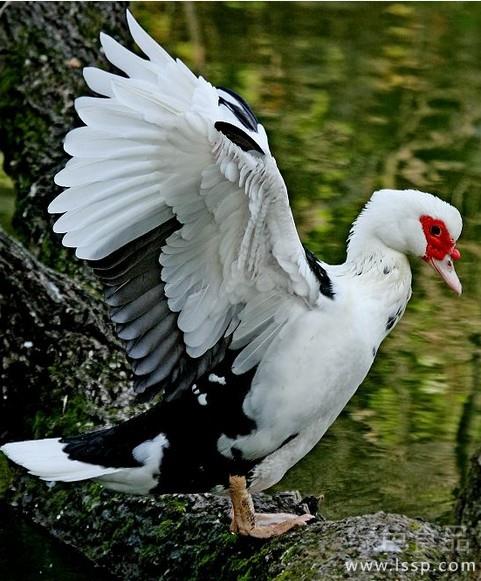
Muscovy duck
I. Raising commercial meat Muscovy ducks
1. Raising young Muscovy ducks:
(1) The key to raising young Muscovy ducks within 4-5 weeks of age is artificial heating or self-warming brooding, with the following requirements: 27°C at 1 week of age, 24°C at 2 weeks, 22°C at 3 weeks, 20°C at 4 weeks, 18°C-20°C at 5 weeks. The specific temperature should be adjusted according to the behavior and distribution of the young Muscovy ducks.
(2) Feed requirements: prepare (or purchase) complete pellet feed. For 0-3 weeks of age, pellet diameter no greater than 1.5 mm, metabolizable energy 2900-3000 kcal/kg, crude protein 19.5%-22%; Muscovy ducks after 4 weeks of age can eat complete feed pellets with a diameter of 1.5 mm, or 3.5-4 mm, with metabolizable energy 2800-3000 kcal/kg and crude protein 17%-19%.
(3) After hatching, young Muscovy ducks should drink water first and then start eating, with the interval not exceeding 18-24 hours. For drinking water, first use 0.1% potassium permanganate water or Baidusha water for 1-2 days, then add an appropriate amount of quick supplement and drugs such as norfloxacin or doxycycline to the drinking water to enhance the constitution of the young ducks and prevent disease. For starting to eat, place the feed in a large shallow dish or on burlap so the young Muscovy ducks can feed freely.
(4) Whether raised on the ground or on wire netting, straw or burlap should be laid down well, and the bedding straw and burlap should be changed frequently. The duck house should have sufficient light, with artificial lighting at night, until the young ducks reach 4 weeks of age and then use completely natural lighting.
2. Raising during the growing period: For Muscovy ducks at 4, 5-10 weeks of age, digestive ability is enhanced, feed intake is large, and they tolerate roughage. In addition to increasing the daily amount of complete feed, green feed such as green grass and green vegetables should also be supplemented. At 10 weeks of age, male Muscovy ducks can reach 3.5-4 kg and female Muscovy ducks 1.5-2 kg, and can then be marketed. In terms of management, male and female Muscovy ducks should be separated and raised in groups, with 100-300 per group being suitable, and 5-8 ducks per square meter. In the middle period, Muscovy ducks begin molting and are prone to pecking vice, so attention should be paid to beak trimming and light shading. Muscovy ducks are known as dry ducks; even in large-group raising, only a small artificial pool or water basin needs to be provided for drinking, but care must be taken that the water is clean and hygienic and that the water supply is never cut off.
Muscovy duck
II. Raising reserve breeding Muscovy ducks
1. Muscovy ducks at 9-24 weeks of age can serve as reserve breeding ducks. Select large, robust male and female Muscovy ducks, with a male-to-female ratio of 1:4-5 for retention. Reserve breeding Muscovy ducks should be restrictively fed, the nutritional level of the feed should be lowered, and body weight should be properly controlled. Before laying, the body weight of breeding female Muscovy ducks should be controlled between 2.3-2.8 kg, and that of male Muscovy ducks between 4-5 kg. The dietary metabolizable energy should be 2700-2800 kcal/kg and crude protein 14%-16%. Each breeding Muscovy duck consumes an average of 100-150 g of feed per day, and generally 25-50 g of green feed can also be added daily. When approaching the start of laying, the dietary crude protein and metabolizable energy levels can be appropriately increased, so as to gradually transition the nutritional level to that of the laying period and ensure a relatively high egg production.
2. In terms of management, the duck house should be ventilated, with 3 ducks per square meter, and sufficient nest boxes laid with straw should be provided. If there are many Muscovy ducks, a corner of the duck house can be directly enclosed and covered with straw to become a flat large "nest box" for laying. Pay attention to the broodiness of Muscovy ducks; the most effective method is to switch the duck house of broody Muscovy ducks, staying in each duck house for a little more than two days and nights. Broody Muscovy ducks must be moved between houses in the evening.
3. Pay attention to the cleanliness and hygiene of the duck house and disease prevention and control. Change the bedding once a week; when spreading new bedding, scatter lime powder on the ground. Pay attention to keeping the duck house dry, ventilated and disinfected. For large-group breeding, especially breeding Muscovy ducks, attention should be paid to regular vaccination against duck plague, viral duckling hepatitis, Muscovy duck parvovirus disease and other vaccines. Each locality should formulate immunization programs and disease prevention measures as appropriate according to the specific local epidemic situation.