Master the ten-character formula for profitable large-scale sheep farming in rural areas
Raising goats requires little investment, brings quick returns, and has broad product market channels, while rural areas have abundant feed resources available for use, such as crop straw, peanut vines, sweet potato vines, etc. Therefore, many farming households have gradually formed a trend of large-scale goat raising. However, group raising of goats has also brought some problems such as frequent diseases, feed shortage, and management difficulties. Today, the editor will teach goat farmers the ten-character formula for raising goats.
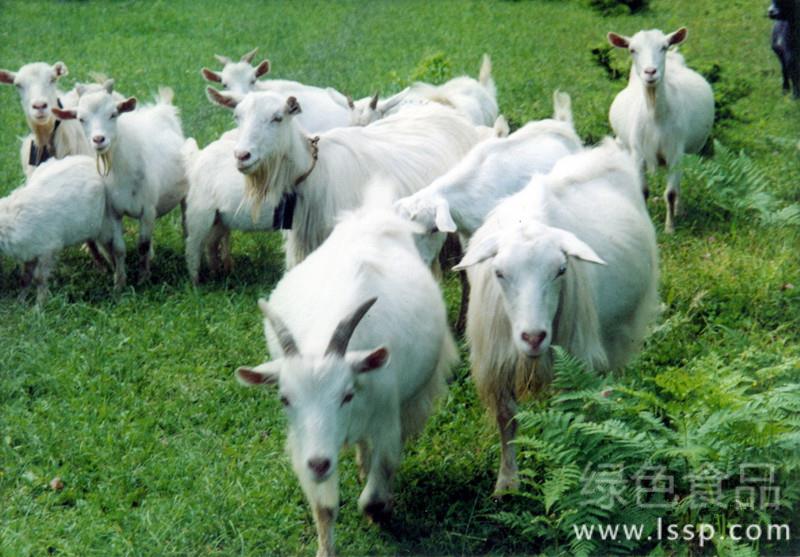
Goat
Excellent breed.Adapt to local conditions and select excellent goat breeds with large body size, fast growth, high reproduction rate, strong adaptability, good meat quality, and high profitability. For rams, the South African Boer goat is most recommended, followed by the Matou goat; for does, the Laoshan dairy goat and Wendeng dairy goat are first choices, followed by the Lubei white goat.
Suitable scale.The scale of goat raising should be appropriate, determined according to the household's existing cultivated land area, the amount of forage and feed, labor, and invested funds.
Feed.Goat feed should be mainly roughage, supplemented by concentrate. For large-scale goat raising, it is best to "grow grass to raise goats." You can sow pastures such as alfalfa, Big Hercules sweet sorghum, cup plant, Mexican corn, and Rumex, so that goats can eat fresh green grass all year round.
Water.For large-scale goat raising, clean drinking water must be provided to the goats.
Prevention.Group-raised goats are prone to diseases, mainly including lamb dysentery, streptococcosis, foot-and-mouth disease, nematodes, goat lice, etc. All goats must undergo two baths, two dewormings, four drinks, and six salt licks throughout the year. That is: in spring and autumn, use 0.5%-2% trichlorfon water with sulfur to give goats a medicated bath for 1-2 minutes once each season; in spring and autumn, use levamisole, ivermectin, or nitroxynil to deworm goats twice, feed health-care Chinese herbal medicine once each quarter, and give salt once every two months. At the same time, vaccination and comprehensive prevention and control for key goat diseases should also be done well.
Management.Large-scale goat raising should be based on self-breeding and self-rearing, with reasonable grouping. If grazing, rotational grazing by divided areas should be implemented. Also pay attention to management tasks such as brushing and hoof trimming.
Equipment.Feed grass using a hay rack, separating the grass from the goats with a fence, with gaps in the fence only large enough for the goats' heads to pass through. Feeding and watering should have corresponding feed troughs and water troughs, which not only reduces feed waste but also benefits hygiene and disease prevention. Harvesting, transporting, and processing forage should be mechanized.
Shelter.The inside of the shelter should have cement floors or be covered with bamboo mats, and outside the shelter there should be drainage ditches and appropriate goat activity areas. Goat manure should be cleaned frequently, and disinfection should be carried out regularly with 20% lime milk and 10% bleaching powder solution.
Castration.For lambs used for fattening, it is best to castrate them within 7-21 days after birth. Castration at this time helps improve the quality of goat meat, makes them docile, facilitates management, and promotes rapid fattening.
Additives.While appropriately feeding goats concentrate feed, add appropriate amounts of additives such as rumen metabolism regulators and urea slow-release agents to the feed for better results.