Octopus Artificial Breeding Techniques: Starting from Understanding the Biological Characteristics of Octopus
Octopus is rich in nutrients and delicious in taste, and has the effects of nourishing blood and boosting qi, and astringing and promoting tissue regeneration. It is an excellent green nourishing seafood and is deeply loved by the public, so the market prospect for artificial octopus breeding is relatively good.
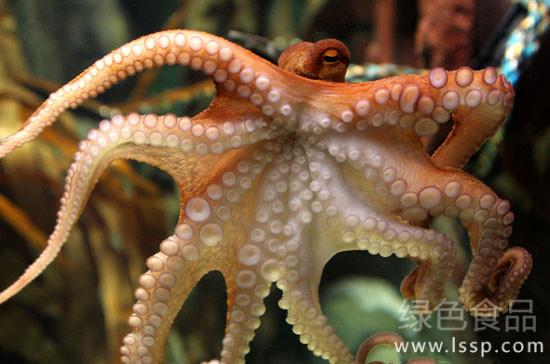
Octopus
I. Biological characteristics and artificial breeding of octopus
The water temperature that octopus can adapt to must not be lower than 7°C, and a seawater specific gravity of 1.021 is most suitable. Octopus in a low-salinity environment will die. The bottom substrate of the sea area is best gravel. Octopus in an environment with a water temperature above 12°C can lay eggs year-round. After hatching, the total length of juvenile octopus is about 3mm. Their growth depends on feeding on large animal plankton. After 45 days, when they reach 10-13mm in length, they settle to the seabed and live a benthic life.
Octopus can be cultured in cages of 3.94mX1.82mX0.9m with a mesh size smaller than the juvenile octopus. To prevent octopus from escaping, a net cover must also be added. Octopus is mostly cultured in harbors with calm waves and a water temperature of 15-23°C. Under normal circumstances, it is mostly cultured in spring to summer (June and July) and autumn (October to December).
Seedlings: The most suitable octopus seedlings are caught by cage, and those caught by bottom trawl are also acceptable. The stocking amount of octopus is determined according to water temperature and water flow conditions. Large cages are stocked with 36-42kg of octopus seedlings per cubic meter, and small cages are stocked with 25-30kg of octopus seedlings per cubic meter. To prevent different species of octopus seedlings from killing each other, the same batch of octopus seedlings should be stocked, and the octopus seedlings should be placed in the cages after they are fully fed.
Bait: Small miscellaneous fish and shellfish, and fresh frozen small miscellaneous fish can also be put in. When there is a lot of residual bait, the feeding can be reduced as appropriate or stopped for 1-2 days. This is because residual bait will pollute the water quality, but if feeding is stopped for more than 3 days, octopus will kill each other. At a water temperature of around 13°C, the feeding behavior of octopus is irregular, and when the water temperature is below 7°C, octopus does not feed.
Survival rate: The survival rate of octopus seedlings caught by cage after 2 months of culture is 70%-80%, and the survival rate of seedlings caught by hook is about 50%. When octopus seedlings are stocked in cages, the mortality rate reaches 20%-30% in 15 days, and then the mortality rate gradually decreases. After 15 days of culture, octopus is divided into three sizes, large, medium and small, and cultured in cages of different specifications. In spring and autumn, the cages are cleaned once every 15 days, and in winter once every 30 days.
Artificial breeding of octopus
II. Cooling to keep alive
Step 1: Select robust individuals of octopus and remove damaged and unqualified octopus. Place the octopus in clean seawater for 0.5-1 hour, and rely on the octopus's own activity to remove sediment, mucus and dirt in the suckers. If it still cannot be cleaned, drain the dirty water, replace it with clean seawater and let the octopus purify itself again. When adding water, do not let the water directly hit the octopus. During the whole process, try not to touch the octopus with hands or other tools. Octopus caught from the ocean can survive for a period of time after soaking in fresh water, but octopus that has been soaked in fresh water is difficult to keep alive after cooling and dormancy.
Step 2: Put a sanitary plastic bag containing ice cubes into the seawater to lower the seawater temperature to about 0°C. At this time, the octopus enters a dormant state. Then put the dormant octopus into a plastic bag and add 20% clean seawater with a water temperature close to 0°C.
Step 3: Add 2cm-thick flake ice sealed in plastic bags to the bottom and around the sides of the insulated box. Put the packaged octopus into the insulated box, then place flake ice on top, cover the insulated box with its lid, and seal it with tape.
The temperature should preferably be 0°C. A temperature below 0°C affects the survival rate of octopus and may even freeze the octopus to death. Freezing and sales should be completed within 3-5 days.