How to raise meat donkeys? Farming techniques with small feed intake, fast breeding and high efficiency
Meat donkeys are herbivorous animals that tolerate coarse feed and have a wide range of feed sources, strong stress resistance, fast breeding, and small feed intake; they are easy to raise and have good market prospects. Today the editor will introduce the farming techniques for meat donkeys.
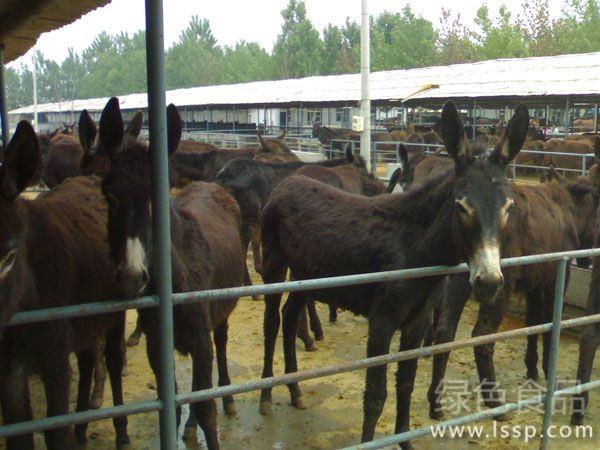
Meat donkey
I. Feeding:Meat donkeys are herbivorous animals. The best forage is dry, hard, crisp crop straw such as corn, millet and bean vine straw; forage that is half-dry and not wet, and that cannot be broken when bent, most easily causes meat donkeys to develop "impaction" syndrome, so it must not be fed. Use a chaff cutter to cut the forage into short sections 3-4 cm long, and at the same time supplement with concentrates such as roasted cottonseed, corn and peas, or wheat bran. Feed once each in the morning, at noon and in the evening every day, with evening feeding being the main one. Each time you feed, first add straw-type forage to let the meat donkey eat until mostly full, then feed forage mixed with high-protein feeds such as alfalfa and bean vines, so as to stimulate its appetite. When the meat donkey shows signs of stopping eating, then feed the mixed grass (that is, the forage made by mixing the grass left at the bottom of the trough with whole-grain feed such as peas, corn and roasted cottonseed, or wheat bran, and a small amount of water), to induce the meat donkey to reach its maximum feed intake.
II. Pen raising:For intensive meat donkey fattening, pen and stable raising is better. Generally, the meat donkey's pen and stable only need to block rain from above and shelter wind from below. Feeding troughs are set up inside the pen, and each meat donkey is given a full 60-80cm of feeding space. Between adult meat donkeys, sturdy fences should be set up according to the distance between feeding positions, to prevent the meat donkeys from disturbing each other (the fences in pens where males and females are raised together are even more important).
III. Breeding:Meat donkey breeds with a larger body size, tolerance to coarse feeding, strong disease resistance, good adaptability, good reproductive performance and high feed conversion should be selected. Mating within the same breed is currently the main breeding method for meat donkeys, and they can also be crossed with horses. For intensive meat donkey farming, artificial insemination can be used, collecting semen from improved breeds for large-scale breeding, to promote improved meat donkey breeds.
IV. Disease prevention:Compared with horses, cattle and others, meat donkeys are more tolerant to coarse feeding and also have stronger disease resistance. But meat donkeys can also get sick, and are prone to infectious anemia, glanders and tetanus, and so on; especially in intensive meat donkey farming, even more attention should be paid to the hygiene of the raising environment to prevent outbreaks of disease. To truly raise meat donkeys well, attention should be paid to the following points:
① When the meat donkeys leave the pen and stable, they should be allowed to drink enough clean water, so as to prevent them from drinking polluted or dirty water.
② Do a good job of feed house hygiene. Overnight manure in the pen and stable must not be left; the feeding troughs and water vats should be cleaned and disinfected regularly. The meat donkeys' pen and stable should be built in a place far from villages, so as to avoid infection from disease.
③ When the meat donkeys enter and leave the pen, let them have a good roll on the ground a few times, and brush each one down. This helps clean the skin, and can also promote blood circulation and improve physical health.
④ Observe frequently. Once the meat donkeys are found to be unwell, or show reduced eating, handle it promptly and do not delay the opportunity.
⑤ In pens where male and female meat donkeys are raised together, pay attention to sexual harassment. Sexual harassment can not only cause miscarriage in female meat donkeys, but because of mutual biting and collisions, it can cause wounds that induce tetanus, so the feeding-position fences should be as sturdy as possible.