A reasonable yak grazing schedule can effectively increase milk production and meat quality
The grazing schedule for yaks differs according to the type of yak herd and the different seasons. The general principle is: “In summer and autumn, go out early and return late; in winter and spring, go out late and return early,” so as to facilitate feed intake, fattening, and improvement of milk production and meat quality.
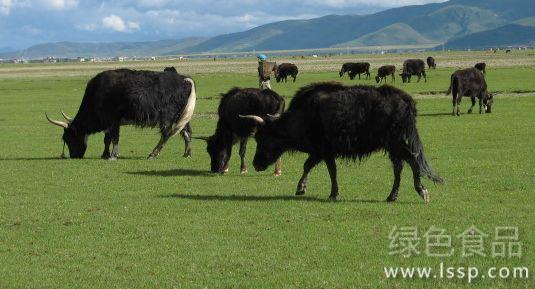
Yak
1. Grazing in summer and autumn. The main tasks of summer and autumn grazing are to increase the milk production of yaks, do a good job of fattening and breeding, ensure that yaks to be slaughtered that year are marketed before winter, and lay a good foundation for other yaks to overwinter and pass through spring. After entering summer and autumn, when the yak herd is moved to the summer and autumn pasture, the suitable daily travel distance is 10-15 km, grazing while moving forward.
In summer and autumn, it is necessary to go out to graze early and return late, extend the grazing time, and let the yaks eat more. At noon when the weather is hot, let the yaks lie down and rest and ruminate in a cool place. After going out to graze, gradually move the grazing toward ventilated and cool high-mountain pastures with good grass quality; the yaks can be allowed to graze once more on the pasture they grazed the previous day. When yaks have just gone out to graze, their hunger is strong, they are not selective about forage, and they can even eat forage with poor palatability, which reduces forage waste. When grazing on better-quality pasture, the yak herd should be well controlled so that the yaks graze in a line abreast, ensuring that each yak can fully feed, avoiding running around and trampling the forage or uneven grazing.
In summer and autumn grazing, pastures should be changed in a timely manner so that yak dung is evenly scattered on the pasture, while also reducing yak trampling of the pasture, especially the pasture around the pen, improving vegetation, increasing forage yield, and reducing pest infection.
When the distance between the settlement and the pasture exceeds 2 km, they should be moved, in order to reduce the number of daily grazing trips, the time spent driving the yaks home, and the consumption of yak physical strength. For lactating yaks with calves, move once every 10 days and change pasture every 3-5 days. Grazing should be carried out according to plan; driving the herd to good grass or rushing to graze good grassland is not advisable, so as to avoid driving the yak herd every day to run for good grass, which is not conducive to yak health and pasture development.
Yak grazing
2. Grazing in winter and spring. Maintaining body condition and maintaining pregnancy are the main tasks of winter and spring grazing, preventing yaks from becoming weak, enabling yaks to safely overwinter and pass through spring, allowing pregnant yaks to give birth safely, and increasing the calf survival rate.
In winter and spring, graze late out and early back, making full use of the warm noon for grazing and letting the yaks drink water. On sunny days, choose relatively distant hillsides and shady slopes; on windy and snowy days, graze nearby, in sheltered depressions or mountain bays. Graze the yak herd moving in the direction of the wind. Avoid grazing pregnant yaks on icy ground, and they must not drink water in the morning or on an empty stomach. In winter and spring, yaks are generally strong and fat, so choose snow-free remote pastures, high mountains, and slopes for grazing; grazing time on winter and spring pastures near the settlement can be appropriately postponed. There is much wind and snow in winter and spring, so attention should be paid to weather forecasts and the herd should be returned in a timely manner.
For pastures of poor quality or with uneven forage distribution, adopt scattered grazing, letting the yaks feed relatively dispersed and freely on the pasture, so that within a larger area each yak can eat more forage. In winter and spring, yaks are at their weakest; in addition to herding and grazing, areas with the conditions should also provide supplementary feeding to yaks. Especially on days of heavy wind and snow, with sharp temperature drops, the harm caused by cold to weak yaks is serious, so grazing should generally be stopped and supplementary feeding should be provided in sheds and pens, so that yaks can safely overwinter and pass through spring.