Bream grows fast and has strong adaptability; how does artificial breeding work?
The blunt snout bream, also known as Wuchang fish, is a herbivorous fish that grows fast and has strong adaptability. Its flesh is tender, its flavor is delicious, and it is rich in nutrients. Artificial breeding of bream includes three stages: broodstock rearing, drug-induced spawning, and artificial incubation.
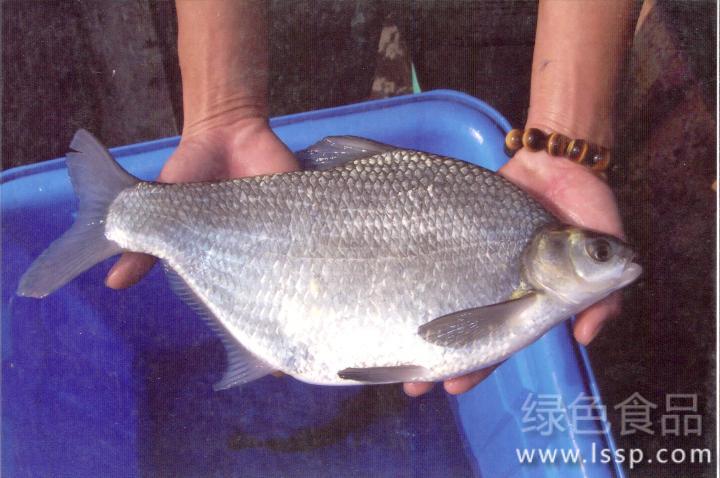
Bream
Broodstock rearing.When catching adult bream in lakes, reservoirs, or ponds, healthy, robust bream aged 3 years or more with intact scales and fins and no disease or injury can be kept for broodstock rearing, and they can also be obtained by selecting and breeding from bream fingerlings. When selecting and keeping broodstock, pay attention to the male-to-female ratio; the number of male bream should be slightly greater than that of female bream, generally with a male-to-female ratio between 1:1.5 and 1:2.5. Through short-term rearing, broodstock bream collected in the spring of that year can mature. The broodstock rearing pond has an area of about 1 mu and a water depth maintained at 1.2 m; 100-150 kg of blunt snout bream can be stocked, and 4-6 silver carp broodstock can be appropriately polycultured to regulate water quality. In early spring, overwintered blunt snout bream broodstock lose a little weight, and since green feed is scarce at this time, they should mainly be fed concentrated feed so the bream quickly recover their plumpness. Once green feed is abundant, adjust the ratio of concentrated feed to green feed to 1:1.6. Stop feeding concentrated feed 15-20 days before induced spawning of the bream; the concentrated feed is soybean cake, malt, and the like, while the green feed is bitter grass, Hydrilla verticillata, lettuce leaves, and the like. The feeding amount of green feed should be such that it is eaten within 4-6 hours each day; the maximum concentrated feed per bream broodstock per day is 25-30 g. New water should often be added to the rearing pond to promote gonadal development of the bream. Near the spawning period, when the water temperature reaches 16°C-17°C, separate the males from the females to prevent sporadic spontaneous spawning by the bream broodstock.
Drug-induced spawning of broodstock.Drug-induced spawning is relatively common in breeding; injection of spawning agents should select bream broodstock with well-developed gonads. Carp and crucian carp pituitary, chorionic gonadotropin, and LRH-A are the main types of spawning agents. For pituitary dosage, 6-8 mg per kg of female body weight gives better results; chorionic gonadotropin 600 mg, and LRH-A 60-100 micrograms give better results, with the dose for males halved. Induced spawning generally uses a single injection into the abdominal cavity; at a water temperature of 24°C-26°C, the effective time is about 8 hours.
Artificial incubation.The de-adhered blunt snout bream eggs can be placed in an incubation jar for incubation, with an egg density of 500,000-1,000,000 eggs per 100 kg of water. Artificial incubation of bream fry can also be carried out in an incubation circular channel, with an egg density of 700,000-800,000 eggs per cubic meter. Because bream eggs are relatively small and have a relatively high specific gravity, the water flow should be appropriate. The incubation water flow should be greater than that for grass carp eggs and silver carp eggs to prevent the bream eggs from sinking to the bottom and dying. Generally, at a water temperature of 25°C-26°C, they can hatch in 1-2 days; after hatching, at 4-5 days when they grow to 6-6.5 mm and the waist spot appears, the fry can be counted and released, then stocked in ponds for rearing or transported out.