How to fatten high-grade beef cattle to meet the meat quality requirements of high-grade beef
High-grade beef cattle produce high-grade beef, and high-grade beef has strict requirements for main indicators such as tenderness, flavor, and juiciness. The fattening techniques for high-grade beef cattle are as follows:
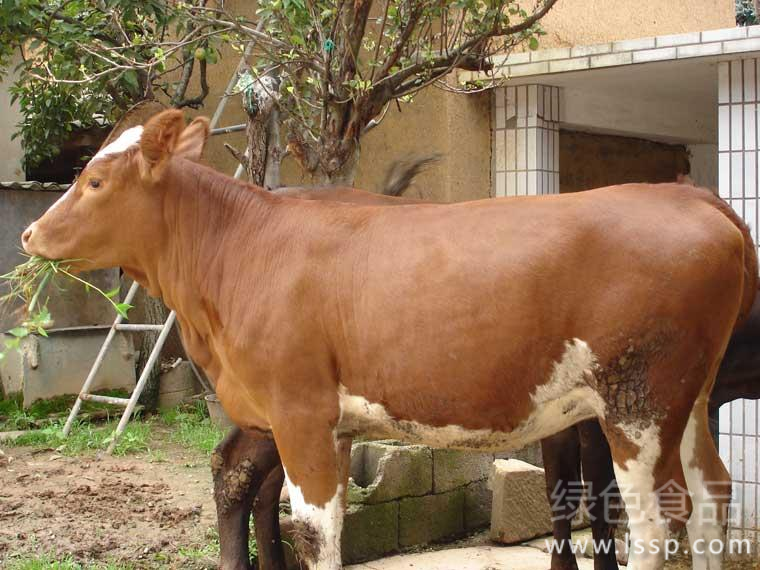
High-grade beef cattle
1. Strictly control cattle age.Select beef calves weaned at 6 months of age and weighing more than 200 kg for fattening. When fattened to 18-24 months of age (that is, before slaughter), the body weight should reach 450-500 kg; otherwise, the beef quality will not meet the standard. Therefore, when fattening high-grade beef cattle, the age of the fattening cattle must be controlled, and the pre-slaughter weight must also meet the standard; neither can be omitted.
2. Select excellent breeds.It is best to select beef cattle crossbred from excellent beef breeds and local yellow cattle for fattening. This kind of crossbred beef cattle gains weight quickly and has excellent beef quality. In addition, excellent local cattle breeds in China, such as Luxi yellow cattle and Nanyang yellow cattle, can also be fattened to produce high-grade beef.
3. General management in the early stage of the feeding period.It lasts 4 months. During this period, the beef cattle diet is mainly roughage, with concentrate accounting for 25%, crude protein content of 12%, daily dry matter intake of about 4 kg per beef cattle, and daily weight gain of about 0.5 kg.
4. Strengthened management in the later stage of the feeding period.It lasts 8 months. If the beef cattle fattening plan is 18 months of age and about 500 kg of body weight, the feeding for these 8 months is as follows:
In the early stage, concentrate accounts for 55% of the diet, crude protein content is 11%, daily dry matter intake is 6.2 kg per beef cattle, and daily weight gain is 0.7 kg.
In the later stage, concentrate accounts for 75% of the diet, crude protein content is 10.8%, daily dry matter intake is 7.6 kg per beef cattle, and daily weight gain is 1.1 kg.
5. Scientific management.Fattening beef cattle are raised in barns or pens. When raised in barns, each beef cattle should have its own post and be tied fixedly, and the halter rope should not be too long. When raised in pens, the beef cattle should be kept loose, with about 15 cattle per pen, and the floor area per beef cattle should be about 4-5 sq m, allowing the beef cattle to eat and drink freely, with concentrate accounting for 75% of the diet. In addition, attention should be paid to preventing beef cattle from bloating or having diarrhea; once disease occurs, treat it promptly. Male beef cattle should be castrated before fattening.